"Ofgem’s £71.3m collateral proposal, Oracle’s BBB- rating and a 73 GW queue turn AI data-centre grid access into a live credit test."
SIAINTEL INTELLIGENCE DOSSIER
Analysis Brief
SIAIntel Verification Panel
Analysis, data context, source mapping and editorial boundaries are presented as one evidence chain.
Key Takeaways
- Executive briefing: AI’s grid queue is becoming a credit market.
- Britain’s energy regulator has proposed a Data Centre Commitment Fee that would force large projects to secure £237,500–£712,500 for every megawatt of requested grid capacity.
- For a 100 MW data centre, that is £23.8 million–£71.3 million of collateral before the site becomes an energised, revenue-producing asset.
SIAIntel Perspective
SIAIntel frames this development not as a standalone headline, but as an intelligence brief shaped by source quality, structural implications and observable risk channels.
Data Snapshot
Coverage Area
Editorial category
AI
Read Time
Approximate duration
~14 min
Source Base
Visible evidence profile
Article context
Published
Updated: Jul 29, 2026
Jul 29, 2026
Evidence Frame
This layer summarizes visible sources, article context and editorial framing. It is analytical context, not transactional guidance.
Executive briefing: AI’s grid queue is becoming a credit market
Britain’s energy regulator has proposed a Data Centre Commitment Fee that would force large projects to secure £237,500–£712,500 for every megawatt of requested grid capacity. For a 100 MW data centre, that is £23.8 million–£71.3 million of collateral before the site becomes an energised, revenue-producing asset. The Ofgem data centre connection reform is still a consultation, not final policy, but its direction is unmistakable: requested megawatts will no longer be treated as equally credible.
The proposal lands as hyperscalers borrow at record speed and bond investors demand more compensation. These are not the same event and SIAIntel does not claim direct causality. Together, however, they create a new two-sided filter for AI infrastructure: the grid asks whether a project is deliverable, while capital markets ask who can carry the collateral and construction risk until power arrives.
| Signal | Verified number | Why it matters |
|---|---|---|
| Ofgem commitment fee | £237,500–£712,500/MW | Grid reservations acquire a material balance-sheet cost |
| 100 MW illustration | £23.8m–£71.3m | A campus-scale request becomes a financing decision |
| Detailed data-centre pipeline | 72,978 MW across about 315 projects | Applications exceed Britain’s roughly 45 GW peak demand |
| Consultation window | 29 July–16 September 2026 | The rule is open, changeable and investable only as a scenario |
SIAIntel thesis: AI grid access is becoming a time-priced, collateral-filtered and politically ranked infrastructure allocation system—not a simple technical waiting list.
SIAIntel Signal Confirmed: the power-collateral ladder is becoming policy
On 17 July, SIAIntel’s Power-Collateral framework argued that the AI race would move from announced compute to bankable megawatts. Twelve days later, Ofgem proposed turning that distinction into enforceable milestones for Britain’s largest data-centre connections.
The investable unit is therefore no longer “MW announced.” It is the highest rung a project can independently prove:
- announced MW;
- collateral-secured MW;
- customer-backed MW;
- equipment-ordered MW;
- credit-qualified MW;
- energised and billable MW.
This is the bridge to SIAIntel’s earlier AI Credit–Grid Squeeze: a grid position can create option value, but it also consumes liquidity, credit support and time.
What Ofgem actually proposed—and what it did not
Ofgem’s preferred range equals 2.5%–7.5% of its assumed average project cost of £9.5 million per MW. The regulator says security could be provided through cash, a letter of credit or an on-demand bond, subject to the final design. The aim is to deter speculative reservations without requiring the full amount to sit as idle cash.
The consultation opened on 29 July and closes on 16 September 2026. Ofgem expects decisions later in 2026. Until then, the fee, threshold, milestones and forfeiture mechanics are proposals. Any valuation that treats them as enacted law is premature.
Why SIAIntel uses 73 GW, not the louder 80 GW headline
Ofgem’s detailed analysis identifies 72,978 MW across roughly 315 transmission and distribution projects. Its same-day press release says data centres account for “at least 80 GW” inside a demand queue that rose from 41 GW to 125 GW in under a year. The documents do not reconcile the difference.
SIAIntel therefore uses 73 GW for calculations because it is tied to a disclosed project table. The 80 GW figure may reflect another cut-off date or scope, but it should not be silently combined with the detailed dataset. Ofgem’s implied £693 billion pipeline is likewise a scale illustration—73 GW multiplied by £9.5 million per MW—not a forecast of spend that will be financed or built.
The M0.5–M2–M6 filter: customer, equipment, credit
| Milestone | Proposed evidence | Economic filter |
|---|---|---|
| M0.5 | Non-binding evidence of an intended compute customer | Separates a market thesis from anonymous capacity warehousing |
| M2 | Binding procurement obligation for transformer or switchgear | Tests whether the project has entered the physical supply chain |
| M6 | Financial and technical capability | Tests balance sheet, parent support and delivery competence |
| M6 lease/sale route | Binding customer contract for at least 20% of compute capacity for at least one year under the preferred option | Turns demand into evidence rather than a presentation slide |
These milestones do not prove that a site will operate. They raise the cost of remaining in the queue without a customer, equipment order, credible sponsor or technical path.
The 68% offtaker gap creates a grid–customer loop
In a voluntary transmission-level call for information, developers representing 50.8 GW of data-centre capacity said only 32% of projects had secured an offtaker; 68% had not. The NESO results are developer self-reports and “indicative only”, so they are not verified delivery statistics. They still reveal the commercial friction Ofgem’s rule will confront.
- The customer wants a credible energisation date.
- The grid wants evidence of a credible customer.
- The developer must bridge both with capital, procurement and contractual flexibility.
The rule may clear phantom projects. It may also favour developers with anchor-tenant relationships and deep parent-company balance sheets, accelerating consolidation in the UK data-centre market.
Equipment-ordered megawatts are the hardest physical proof
A 2026 UK supply-chain study reports developer lead times of approximately 12–36 months for transformers and 6–12 months for switchgear. That makes the M2 purchase obligation more than paperwork: a project outside the factory queue is not yet firm capacity, however strong its press release.
Ofgem has separately allowed transmission owners roughly £4 billion of use-it-or-lose-it early-procurement funding. The state is reserving equipment before final projects are known while asking data centres to prove they have done the same. Capital and components are now parallel gating items.
Oracle turns the credit threshold into a live market test
Ofgem proposes minimum long-term senior unsecured ratings of BBB- from S&P, BBB- from Fitch or Baa3 from Moody’s. On 9 July, S&P downgraded Oracle to BBB-. Oracle is therefore not comfortably above the draft S&P threshold; it sits exactly on it.
| Agency | Ofgem draft floor | Oracle signal | Interpretation |
|---|---|---|---|
| S&P | BBB- | BBB- after 9 July downgrade | No rating cushion |
| Fitch | BBB- | Must be checked when evidence is filed | Agency-specific test |
| Moody’s | Baa3 | A different scale may produce a split-rating case | Draft does not clearly resolve conflicts |
| Project SPV | Equivalent credit support | Often weaker than the sponsor | Parent support must be legally committed |
The open question is operational: if several agencies rate a sponsor differently, does Ofgem use the lowest rating, any qualifying rating or a designated agency? A further Oracle downgrade could turn a bond-market event into a grid-eligibility event, depending on that rule.
Hyperscaler bonds are repricing the cost of waiting
Amazon, Alphabet, Meta and Oracle issued about $194 billion of bonds through 7 July 2026, up 79% from all of 2025, according to Reuters. Goldman Sachs expects the five hyperscalers, including Microsoft, to issue roughly $250 billion in 2026. Deal cover fell from roughly five times in February to below two times in July, and 78 of 91 sampled bonds later traded at higher yields than at issue.
- This is repricing, not proof of a funding crisis.
- Goldman Sachs estimates debt currently funds about one-third of hyperscaler capital expenditure.
- Longer grid waits increase the period during which collateral earns no data-centre revenue.
- Smaller developers and ring-fenced project companies face the sharpest funding sensitivity.
A second Reuters market snapshot found sharp growth in single-name technology credit-default-swap trading, with Oracle protection quoted far wider than Nvidia, Meta and other peers. CDS prices measure the market cost of protection; they are not a prediction that default is imminent.
CMP417 and CM093 decide whether security stacks or substitutes
The CMP417 Final Modification Report has been sent to Ofgem after the Panel unanimously recommended implementation. The complementary CM093 modification is also awaiting a decision. The two should be described as decision-stage reforms, not as draft reports two months apart.
| Security measure | Ofgem evidence | Editorial boundary |
|---|---|---|
| Current Final Sums sample | 0.9%–46% of project capex | Wide project-specific range |
| Sample average / median | 11.2% / 7.9% | Not a universal tariff |
| Estimated post-CMP417 security | 0.06%–0.41% | Depends on reform or an equivalent outcome |
| New commitment fee | 2.5%–7.5% | Could run concurrently with other security |
Non-additivity warning: these percentages cover different legal obligations, project dates and security instruments. They must not be mechanically added into a single “total collateral rate.” The risk is transitional stacking if reforms are rejected, delayed or approved on mismatched terms—not an automatic double charge in every project.
Spain has already started pricing the time value of a reserved megawatt
Spain replaced its former fixed demand guarantee with a monthly capacity-reservation charge effective 22 March 2026. The official law links the charge to the network tariff, voltage level, reserved MW and an escalating time coefficient. The first three months are exempt; non-payment can extinguish the access permit.
For a 6.4TD connection, the coefficient starts at 1.5 and rises by 0.75 every six months. Using the official 2026 P1 power tariff of €6.606205/kW-year, SIAIntel calculates the following scale scenario.
| Waiting period | Cumulative reservation charge | Model status |
|---|---|---|
| 12 months | €0.99m | SIAIntel scenario |
| 18 months | €1.98m | SIAIntel scenario |
| 24 months | €3.22m | SIAIntel scenario |
| 30 months | €4.71m | SIAIntel scenario |
Model note: 100 MW, 6.4TD and the 2026 tariff are held constant. This is not a Redeia or CNMC forecast. Existing permit holders must also update their economic-activity code within six months of the rule’s 22 March start—22 September 2026 by calendar calculation—or face automatic expiry.
If the grid is late, who carries the cost?
Ofgem’s draft holds the commitment-fee security until the relevant connection or charging date. The tracked legal text does not yet provide a simple public answer for every delay caused by the network company. That is a design question, not a settled legal conclusion.
The European Commission’s grid-connection guidance recommends milestones and reservation fees for applicants, but also waiting-time benchmarks and consequences for delays within grid operators’ control.
If a data centre is late, it can lose money or queue rights. If the grid is late, who pays the carrying cost of the trapped capital?
This is not the world’s first grid collateral regime
FERC: commercial readiness already filters generation queues
The US FERC Order No. 2023 uses cluster studies, commercial-readiness deposits, site control and withdrawal penalties for generation interconnections. Ofgem’s novelty is not inventing collateral; it is combining customer evidence, equipment procurement, credit quality and technical certification on the AI demand side.
Ireland: make AI load bring physical supply
Ireland’s CRU policy requires new data centres to provide nearby generation and/or storage matching maximum import demand and source at least 80% of annual consumption from additional Irish renewables over a six-year path. Britain’s proposal is primarily a credibility filter; Ireland’s is more directly a physical and operating obligation.
The final queue will be credit-backed—and politically ranked
The UK government reports that the transmission demand queue reached 96 GW by the end of June 2025 after growing 460% in six months, with about 140 data-centre projects representing roughly 50 GW. Its strategic-demand consultation considers reserving or reallocating capacity for priority projects, including AI Growth Zones.
That means the emerging queue is not a pure credit market. It is a credit-supported allocation regime in which commercial readiness, system flexibility and public policy can all change a project’s rank.
The unintended consequence: more temporary gas generation
Ofgem identified around 117 active gas-network cases, principally data centres seeking to operate before electricity connection. A stricter queue may reduce speculation without shortening transformer factories, planning approval or network construction.
If credible projects still wait years, capital can migrate into behind-the-meter gas. The policy succeeds only if curation is matched by faster build-out; otherwise Britain may exchange a paper queue problem for higher-cost and higher-carbon bridging power.
Winners, losers and the new AI infrastructure hierarchy
| Stakeholder | Likely effect | Metric to watch |
|---|---|---|
| Hyperscalers with strong ratings | Gain negotiating power as anchor tenants and guarantors | Legally committed parent support |
| Integrated data-centre developers | Benefit from procurement scale and repeat utility relationships | Equipment orders and energisation conversion |
| Small developers / SPVs | Face higher collateral and refinancing sensitivity | Liquidity per reserved MW |
| Transformer and switchgear suppliers | Receive stronger order visibility and scarcer production slots | Lead times and cancellation terms |
| Communities and ordinary consumers | Could gain from fewer speculative network upgrades, but still bear execution-policy risk | Cost allocation and network-delay accountability |
Audience Impact
| Audience | Immediate action | Decision signal |
|---|---|---|
| Investors | Separate requested MW from secured, ordered and energised MW | Do not capitalise the queue at one probability |
| Executives | Bind customer, equipment, credit support and connection date in one critical path | Measure cost per deliverable MW |
| Policymakers | Pair applicant penalties with operator delivery accountability | Track released capacity and actual energisation |
| General readers | Read “AI capacity” claims as a ladder, not a finished asset | Ask who supplies power, when and with whose balance sheet |
What would break the megawatt-margin-call thesis?
Ofgem materially dilutes or abandons the fee
If consultation responses produce a token fee, broad waivers or weak forfeiture, collateral stops being a decisive filter. Customer, equipment and energisation evidence would still matter.
Grid delivery accelerates faster than applications
If transmission build-out, planning and equipment supply shorten connection waits quickly, the time value of reserved capacity falls and Spain-style escalating charges become less economically important.
Capital markets reopen without a risk premium
If hyperscaler bond spreads compress, order books recover and project companies obtain abundant long-duration funding, the credit side of the margin call weakens. The distinction between announced and energised MW does not disappear.
Catalyst calendar
| Date / window | Catalyst | What changes |
|---|---|---|
| 16 September 2026 | Ofgem consultation closes | Final fee and milestone pressure becomes clearer |
| 22 September 2026 | Spain’s six-month CNAE update point | Inactive or non-compliant permits can expire |
| Later in 2026 | Ofgem data-centre reform decisions | Proposal moves toward implementation, modification or rejection |
| Decision pending | CMP417 and CM093 | Determines how existing securities interact with the new fee |
| Every quarter | Ratings, bond spreads and equipment lead times | Reprices the cost of carrying a reserved megawatt |
SIAIntel investor checklist: six questions before valuing AI megawatts
- Is the number an application, an accepted offer, a secured position or an energised connection?
- How much collateral is posted, by whom and until what date?
- Is an anchor compute customer legally bound, and for how much capacity?
- Have transformer and switchgear orders entered a factory schedule?
- Does the project company itself meet the credit test, or is parent support enforceable?
- Who absorbs cost if network delivery slips?
The power-collateral ladder and the credit–grid transmission map should now be read together: access has option value, but verification determines how much of that value survives.
Bottom line
Ofgem has not created an AI credit crisis. It has proposed a mechanism that would expose which projects can carry the cost of time. Spain is already charging for waiting, equipment suppliers are rationing production slots, and bond markets are charging more for the capital behind AI expansion.
The premium signal is not the headline fee. It is the conversion ladder that now governs AI infrastructure: announced MW → collateral-secured MW → customer-backed MW → equipment-ordered MW → credit-qualified MW → energised, billable MW.
Investment conclusion: value the proof, not the press release. In the next phase of the AI build-out, the scarce asset is not a megawatt on a slide—it is a megawatt that can survive credit, equipment, policy and time.
Frequently asked questions
Is Ofgem’s data-centre commitment fee already law?
No. It is a consultation proposal published on 29 July 2026. Responses close on 16 September, and Ofgem says decisions are expected later in 2026.
How much collateral would a 100 MW data centre need?
Under the proposed range, approximately £23.8 million–£71.3 million. The final amount, acceptable instruments and release conditions can still change.
Does the 73 GW UK pipeline mean 73 GW will be built?
No. It is an application/connection pipeline, not energised capacity. It should be probability-weighted by customer, equipment, credit, planning and network evidence.
Will hyperscalers fail Ofgem’s credit test?
That cannot be concluded. Oracle currently sits exactly at the draft S&P floor, while split-rating and parent-support mechanics remain unresolved. Project SPVs may be more exposed than their sponsors.
Why call this a “megawatt margin call”?
Because a grid reservation increasingly requires financial security and continuing proof. The phrase is an analytical metaphor, not a claim that the proposal is a securities-market margin rule.
Correction — 29 July 2026: Reuters’ $194 billion figure covers Amazon, Alphabet, Meta and Oracle. Microsoft is included only in Goldman Sachs’ separate five-company forecast of roughly $250 billion for 2026. The distinction has been corrected without changing the article URL, title or publication date.
Important notice: This article is provided for information and analysis only. It is not investment, financial, legal or tax advice.
Visual methodology
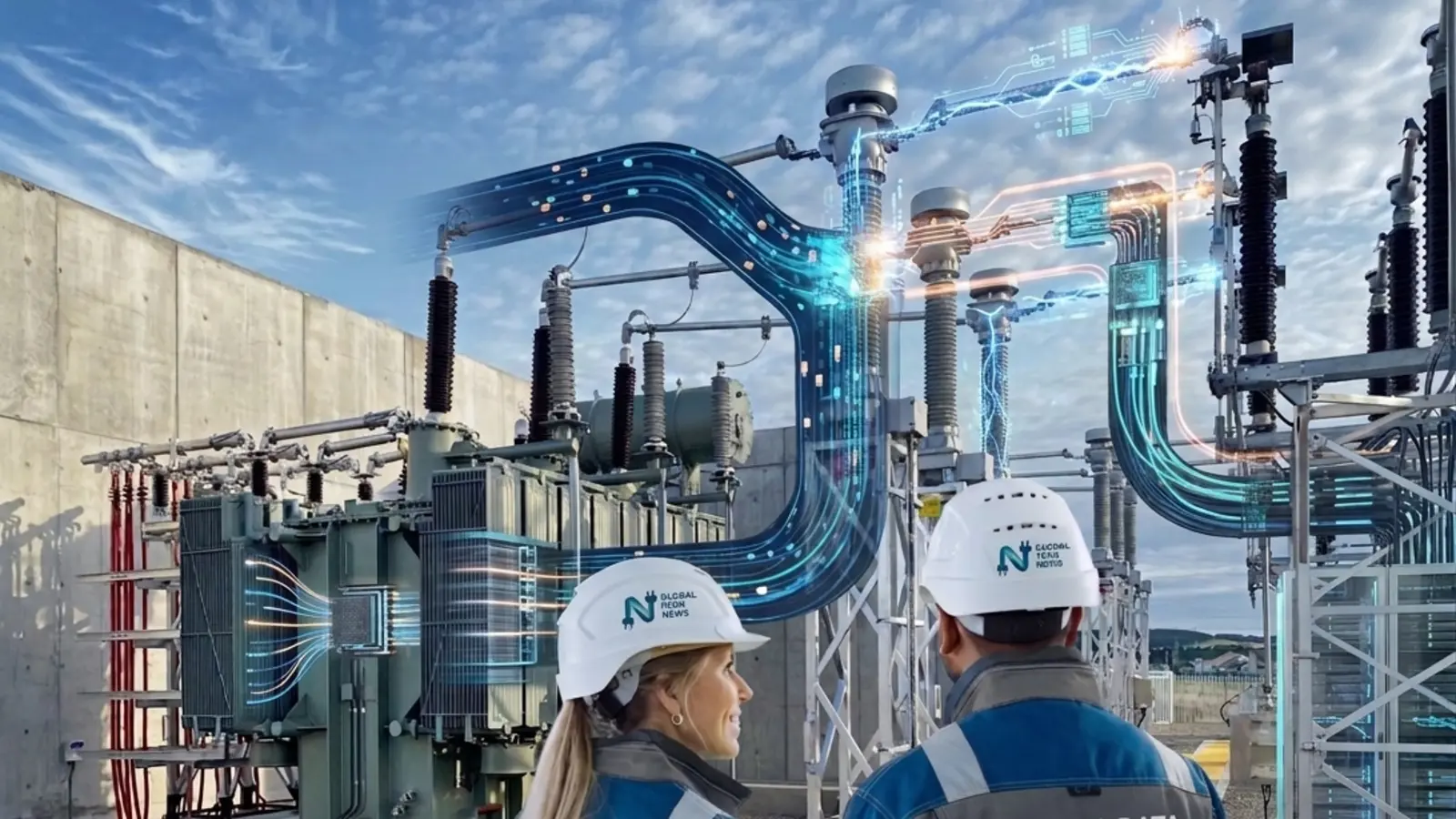
The cover is a publisher-provided photographic editorial composite with illustrative data-flow overlays. It represents the collision between AI demand, grid infrastructure and credit risk; it is not a documentary image of Ofgem or any named facility. SIAIntel created only deterministic crops for the four publication formats.
Editorial Credit
This intelligence brief was prepared by the SIAIntel Editorial Desk.
Some contributors work in sensitive public-sector, regulatory, market, or editorial roles. Their identities may be withheld when professional duties, source protection, or safety require confidentiality.
Editorial and publishing accountability: Sefa Karahan, Founder & Publisher
Related Intelligence
Related intelligence in this category · 6 briefs
Nvidia–OpenAI $250B Talks Expose AI’s Hidden Credit Circuit
Nvidia’s reported $250B OpenAI guarantee talks, project bonds and BIS warnings confirm SIAIntel’s early map of AI’s hidden credit circuit.

Korea’s $950B AI Framework Reveals the Power Wall
Korea’s reported $950B AI framework links Nvidia, SK Hynix, Samsung, HBM4, sovereign AI factories and infrastructure finance to the power bottleneck.
Meta’s $12.3B Bond Exposes Wall Street’s AI Debt Machine
Meta’s $12.3B data-center bond shows how Wall Street is turning Big Tech lease promises into investment-grade AI debt—and pricing a new risk premium.

3 GW Vanished: Data Centers Shock America’s Largest Grid
More than 3 GW of data-center load vanished from PJM. See the hidden AI grid risk, investor impact, Virginia tax cost and next regulatory catalysts.

AI’s Closed Capital Circuit Just Hit the Power Grid
AMD’s Anthropic investment, Amazon’s milestone-linked financing and OpenAI’s 25-year Georgia power deal expose the closed capital circuit behind AI infrastructure.
Wall Street May Be Underpricing the New AI Grid Rule
A five-stock event study and SEC-filed contracts show no durable equity discount after FERC—while power terms already reach project finance.