"A 9–3 Fed split and PJM’s 6.8 GW reliability gap show why AI infrastructure is being repriced through both capital and firm power."
SIAINTEL INTELLIGENCE DOSSIER
Analysis Brief
SIAIntel Verification Panel
Analysis, data context, source mapping and editorial boundaries are presented as one evidence chain.
Key Takeaways
- Artificial intelligence is encountering two constraints at once.
- The Federal Reserve has left the policy rate unchanged but exposed a harder internal debate, while PJM is short of the committed capacity required by its reliability model.
- Their significance is that they landed within the same 48-hour window on the same asset class: long-lived, power-intensive AI infrastructure.
SIAIntel Perspective
SIAIntel frames this development not as a standalone headline, but as an intelligence brief shaped by source quality, structural implications and observable risk channels.
Data Snapshot
Coverage Area
Editorial category
AI
Read Time
Approximate duration
~11 min
Source Base
Visible evidence profile
Article context
Published
Updated: Jul 30, 2026
Jul 30, 2026
Evidence Frame
This layer summarizes visible sources, article context and editorial framing. It is analytical context, not transactional guidance.
Artificial intelligence is encountering two constraints at once. The Federal Reserve has left the policy rate unchanged but exposed a harder internal debate, while PJM is short of the committed capacity required by its reliability model. One prices dollars; the other prices firm watts.
The decisions did not cause each other. Their significance is that they landed within the same 48-hour window on the same asset class: long-lived, power-intensive AI infrastructure. The investable question is no longer simply who can buy GPUs. It is who can finance years of construction and secure electricity that remains available when the grid is tight.
SIAIntel signal: AI’s new scarcity unit is the financeable, interruptible-or-firm megawatt—not the chip in isolation.
The four numbers that change the AI trade
- 9–3: the Fed held rates, while three officials preferred a 25-basis-point increase.
- 6,831 MW: PJM’s shortfall against its selected one-in-ten reliability requirement, not electricity that disappeared.
- Up to 15 years: the maximum term proposed for qualifying backstop capacity.
- $20.76 billion: an undiscounted theoretical gross envelope, not a forecast, payout or customer bill.
The signal: compute is becoming a balance-sheet product
For most of the AI boom, the market rewarded announced capacity. The next phase rewards capacity that can survive the financing stack: higher long-term yields, weaker bond demand, interconnection delay, grid penalties and customer concentration. A megawatt now carries a term, a counterparty, a curtailment clause and sometimes an equity instrument.
That extends SIAIntel’s earlier dollar-watt loop: electricity scarcity becomes a credit variable, while capital strength determines which electricity projects reach operation. The loop is now visible in public-market yields, PJM procurement design and private compute contracts.
Fed 9–3: no rate increase, but a tougher discount-rate regime
On 29 July, the Federal Reserve’s official statement kept the federal-funds target at 3.50%–3.75%. Beth Hammack, Neel Kashkari and Lorie Logan preferred a quarter-point increase. That is a policy split, not a decision to target AI, but it raises the bar for assets whose cash flows arrive far in the future.
Chair Kevin Warsh’s press-conference transcript supplied the relevant bridge. He said nominal and real yields had risen materially across the curve and cited nearly 20% four-quarter growth in AI-related high-tech equipment and software investment. The Fed discussed the price effects of that capital expenditure. It did not claim AI caused its decision.
Treasury data separate two time windows. Across 20–29 July, most of the 10- and 30-year nominal rise came from real yields. On the Fed day alone, the 10-year move came from inflation compensation, while the 30-year move mixed real rate and inflation compensation. The figures below combine the nominal Treasury curve with the real Treasury curve.
| Window | 10Y nominal | 10Y real | 30Y nominal | 30Y real | Interpretation |
|---|---|---|---|---|---|
| 20–29 Jul | +7 bp | +6 bp | +9 bp | +7 bp | Mostly a real discount-rate shock |
| 28–29 Jul | +6 bp | 0 bp | +11 bp | +6 bp | Inflation compensation plus long-end real pressure |
| 10Y compensation | +1 bp | — | +6 bp | — | Different answers by window |
| 30Y compensation | +2 bp | — | +5 bp | — | Term and inflation risk both matter |
Boundary: changes across overlapping windows must not be added. Inflation compensation here is a derived spread, not a direct inflation forecast or a decomposition of every term-premium component.
PJM’s 6.8 GW gap is a reliability shortfall—not a blackout
PJM’s 2028/29 capacity-auction results cleared 138,318 MW of unforced capacity. With 10,864 MW under the Fixed Resource Requirement, the region reached 149,182 MW—still 6,831 MW below PJM’s one-in-ten reliability requirement. The reserve margin remained 14.7%.
The same auction cleared only 525 MW of new generation and uprates, roughly one-thirteenth of the gap, at the $325/MW-day cap. PJM’s subsequent board action therefore asks bilateral contracting and self-supply to reduce the need before a centralized residual procurement.
The backstop design is economically more important than the headline gap. It proposes pay-as-bid contracts for differences against capacity-market revenue, payment only for delivered accredited capacity, no special interconnection bypass and terms of up to 15 years for resources arriving by the required date.
| PJM metric | Result | What it means |
|---|---|---|
| Auction UCAP | 138,318 MW | Committed accredited capacity |
| With FRR | 149,182 MW | Total counted toward adequacy |
| Reliability gap | 6,831 MW | Planning shortfall, not vanished electricity |
| New and uprated | 525 MW | Supply response remains slow |
| Clearing price | $325/MW-day | Auction reached its own cap |
Why $20.76 billion is useful—and easy to misuse
Applying PJM’s stated maximum willingness to pay of $555/MW-day to the initial 6,831 MW target for 365 days and 15 years gives $20.7568 billion. The arithmetic is correct; interpreting it as “PJM’s bill” is not.
| Input | Value | Status |
|---|---|---|
| Initial shortfall | 6,831 MW | Can fall after bilateral and self-supply |
| Reference level | $555/MW-day | Portfolio payment boundary, not a universal fixed price |
| Maximum term | 15 years | Later starts receive shorter commitments |
| Gross multiplication | $20.7568B | Undiscounted theoretical ceiling |
Actual commitments will be lower if the target shrinks, offers clear below the boundary, resources begin later, or capacity-market revenue offsets contract-for-difference payments. The number matters because a grid shortage is being translated into bankable duration, not because every dollar will be spent.
The curtailment risk is conditional, local and still unfinished
PJM’s interim resource-adequacy framework applies to qualifying large new loads of at least 50 MW on one site or within one mile after 1 June 2027. If those loads do not bring or contract enough new capacity, they may face reduction during actual real-time capacity scarcity.
- PJM allocates a required reduction to a zone, not automatically to a named data center.
- Transmission owners, distribution utilities and state regulators coordinate which retail customers respond.
- Only the megawatts required for the event are reduced, ahead of existing pre-emergency load-management resources.
- The framework still depends on tariff filings, federal review and state-level implementation.
“Data centers will be switched off in 2027” is therefore inaccurate. The investable risk is more specific: non-firm service can lower utilization precisely when compute prices and grid stress are highest, while firm service can demand new capacity, collateral or long-duration contracting.
Credit markets confirm selective repricing, not a sector collapse
The hyperscaler bond-market evidence is the financial counterpart to PJM’s grid signal. Amazon, Alphabet, Meta and Oracle issued about $194 billion through 7 July, already 79% more than their full-year 2025 volume. Order-book coverage fell from about five times in February to below two times in July, and new-issue concessions widened.
The technology CDS evidence points in the same direction: trading volume expanded sharply and selected spreads moved above the broad investment-grade index. Thin single-name markets can move on limited trading, so this is evidence of demand for protection—not a prediction that hyperscalers are about to default.
| Indicator | Observed signal | Analytical limit |
|---|---|---|
| Bond issuance | $194B through 7 Jul | Gross supply, not net debt |
| Order-book coverage | About 5× to below 2× | Deal mix affects comparisons |
| New-issue concession | Roughly 12 bp | Pricing varies by issuer and tenor |
| Selected CDS | Oracle ~200; Meta 93; Nvidia 78 bp | Protection price, not default probability |
Microsoft–Meta: the market is pricing the funding cushion
Microsoft’s FY2026 fourth-quarter results show $41.0 billion of capital expenditure, $55.4 billion of operating cash flow and $19.6 billion of free cash flow. Azure grew 43%, while remaining performance obligations reached $678 billion. Capacity is expensive, but demand visibility and current cash generation absorb part of the shock.
Meta’s second-quarter filing shows $31.08 billion of capital expenditure against $31.86 billion of operating cash flow, leaving $784 million of free cash flow. Operations did not stop producing cash; investment consumed nearly all of it. Long-term debt also rose to $83.66 billion from $58.74 billion at year-end.
| Company | Capex | Operating cash flow | Free cash flow | Funding read |
|---|---|---|---|---|
| Microsoft | $41.0B | $55.4B | $19.6B | Large internal cushion plus contracted demand |
| Meta | $31.08B | $31.86B | $0.784B | Capex absorbs nearly all operating cash |
The comparison is directional because company definitions and reporting periods are not perfectly identical. The strategic distinction remains: markets are separating AI growth from the ability to finance that growth without exhausting free cash flow.
Core Scientific–AMD: how 529 MW became compute collateral
Core Scientific’s quarterly SEC filing offers the clearest contract-level example. AMD directly leased 377 MW and an AMD-linked neocloud leased 152 MW. The initial 529 MW carries 15-year terms, three five-year extension options, potential base revenue of $14 billion and credit-support rights that protect AMD equipment if the intermediary defaults.
- AMD holds reservation rights for another 1,925 MW, taking potential capacity toward 2.5 GW.
- The warrant can cover up to 30 million shares at a $23.47 exercise price.
- Vesting is tied to 12,222 shares per contracted megawatt; initial leases correspond to about 6.5 million vested shares.
- Six-month capital expenditure was about $954 million.
- The company issued $3.3 billion of 7.75% notes due 2031 and reported major customer concentration.
The structure does not prove the project will fail or succeed. It proves the megawatt is no longer a technical unit alone: it can generate rent, equipment protection, debt service and equity dilution in the same transaction.
Counter-thesis: this is not an AI credit crisis
The Fed did not raise rates and did not target AI. PJM’s 6,831 MW is not a physical loss of electricity, its backstop is a proposed mechanism, and its interim service is not an automatic disconnection order. Microsoft still converts heavy AI spending into substantial free cash flow, and well-capitalized buyers can contract their own generation.
That anti-thesis narrows rather than destroys the main conclusion. The signal is selective repricing: projects with firm power, credible counterparties and visible cash flow retain access; projects dependent on cheap refinancing, speculative load forecasts or interruptible service pay a higher price—or wait.
Audience Impact
Investors
Track real yields, new-issue concessions, free-cash-flow conversion and contracted power together. GPU orders alone no longer describe the risk.
AI and data-center operators
Treat grid firmness, curtailment rights, collateral and start-date penalties as core unit economics, not a utility footnote.
Utilities and lenders
Stress-test counterparty concentration, construction delay and capacity accreditation across the same scenario. A signed load request is not bankable demand by itself.
Policymakers
Separate planning shortfalls from physical outages and publish who controls retail curtailment. Ambiguous responsibility raises financing costs before any emergency occurs.
What changes next
- PJM’s filing language and the scope of any FERC approval.
- How much bilateral supply and self-supply reduce the 6,831 MW residual target.
- Backstop bids, delivery dates and capacity-market offsets.
- Hyperscaler bond coverage, concessions and free-cash-flow conversion after the next capex step-up.
The earliest decisive data will not be another AI model launch. It will be a procurement result, a financing spread, a utility service agreement or a delivery milestone that reveals the price of a firm megawatt.
Bottom line: the scarce asset is financeable firm power
The Fed and PJM did not coordinate and did not cause each other’s actions. They independently tightened the two constraints surrounding the same trade. Credit markets decide who can finance power; grid rules decide who receives firm service and on what terms.
That is why the next chapter of the AI power-financing trade and the closed capital-grid circuit will be written in covenants, capacity accreditation, curtailment clauses and cash-flow durability. Chips remain essential. They are no longer sufficient.
Frequently asked questions
Did the Fed target AI?
No. It held rates and debated inflation. AI investment appeared in the chair’s macroeconomic discussion, not as a policy target.
Did PJM lose 6.8 GW of electricity?
No. The 6,831 MW figure is a shortfall against PJM’s chosen reliability requirement for committed accredited capacity.
Will data centers automatically be curtailed?
No. The proposal is conditional on qualifying new load, insufficient capacity and real-time scarcity, with customer selection coordinated locally.
Is $20.76 billion PJM’s expected bill?
No. It is an undiscounted multiplication of the initial target, reference level and maximum term—a boundary, not a forecast.
Image methodology and licence
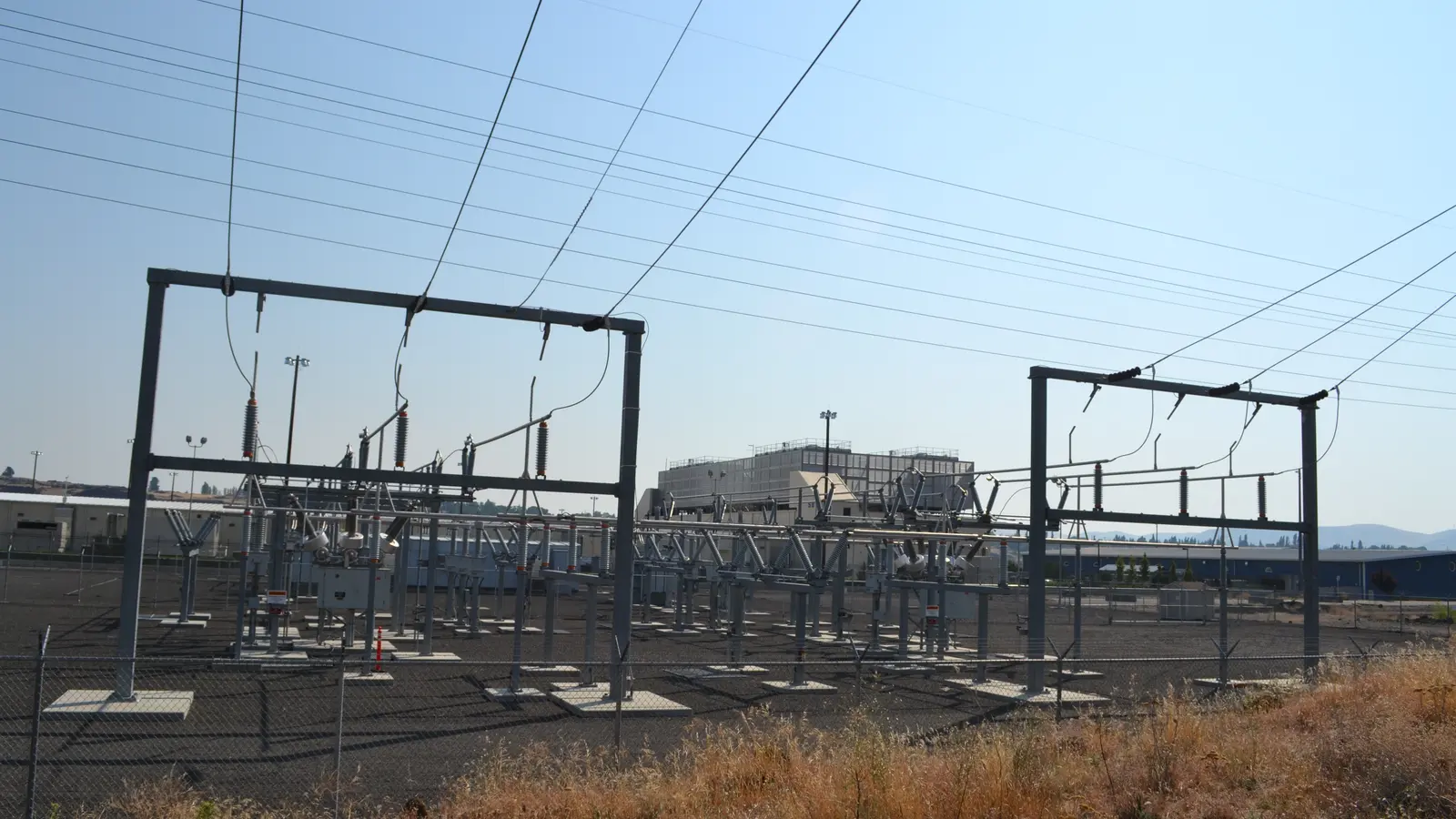
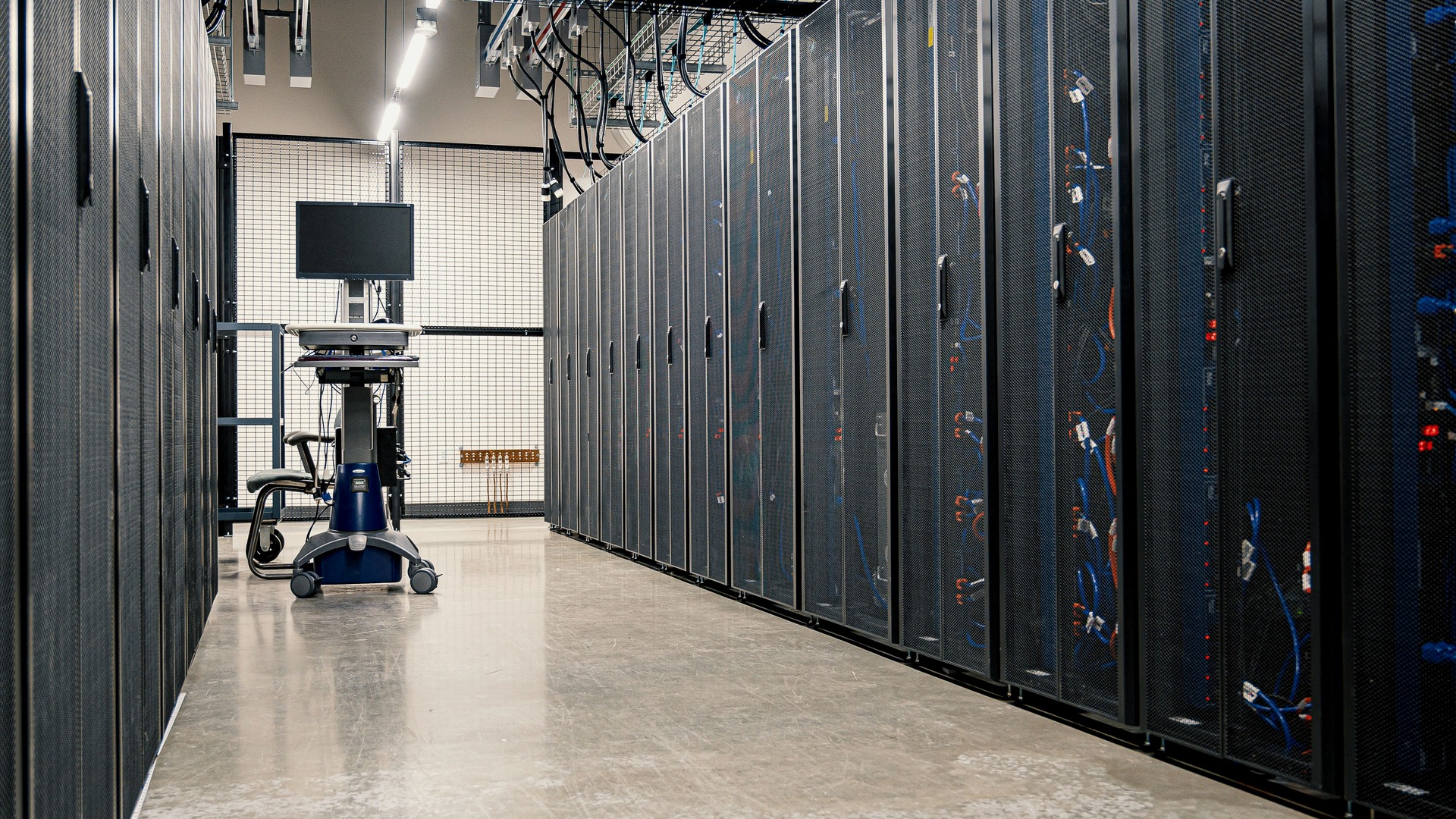
The lead image is Visitor7’s real photograph of the Google data center in The Dalles. It is representative of the data-center–substation relationship and is not a PJM facility or a photograph of the events described. SIAIntel cropped, resized and converted the image to WebP without generative alteration under CC BY-SA 3.0; attribution and share-alike terms apply.

Editorial Credit
This intelligence brief was prepared by the SIAIntel Editorial Desk.
Some contributors work in sensitive public-sector, regulatory, market, or editorial roles. Their identities may be withheld when professional duties, source protection, or safety require confidentiality.
Editorial and publishing accountability: Sefa Karahan, Founder & Publisher
Related Intelligence
Related intelligence in this category · 6 briefs
AI’s Megawatt Margin Call Has Begun: Ofgem Turns Grid Access Into a Credit Test
Ofgem’s £71.3m collateral proposal, Oracle’s BBB- rating and a 73 GW queue turn AI data-centre grid access into a live credit test.
Nvidia–OpenAI $250B Talks Expose AI’s Hidden Credit Circuit
Nvidia’s reported $250B OpenAI guarantee talks, project bonds and BIS warnings confirm SIAIntel’s early map of AI’s hidden credit circuit.
Korea’s $950B AI Framework Reveals the Power Wall
Korea’s reported $950B AI framework links Nvidia, SK Hynix, Samsung, HBM4, sovereign AI factories and infrastructure finance to the power bottleneck.
Meta’s $12.3B Bond Exposes Wall Street’s AI Debt Machine
Meta’s $12.3B data-center bond shows how Wall Street is turning Big Tech lease promises into investment-grade AI debt—and pricing a new risk premium.

3 GW Vanished: Data Centers Shock America’s Largest Grid
More than 3 GW of data-center load vanished from PJM. See the hidden AI grid risk, investor impact, Virginia tax cost and next regulatory catalysts.

AI’s Closed Capital Circuit Just Hit the Power Grid
AMD’s Anthropic investment, Amazon’s milestone-linked financing and OpenAI’s 25-year Georgia power deal expose the closed capital circuit behind AI infrastructure.