SIAIntel’s 4.5% Treasury warning line has been crossed as chip stocks enter a bear market. The July 29 FOMC meeting is the next test of the Warsh Squeeze.
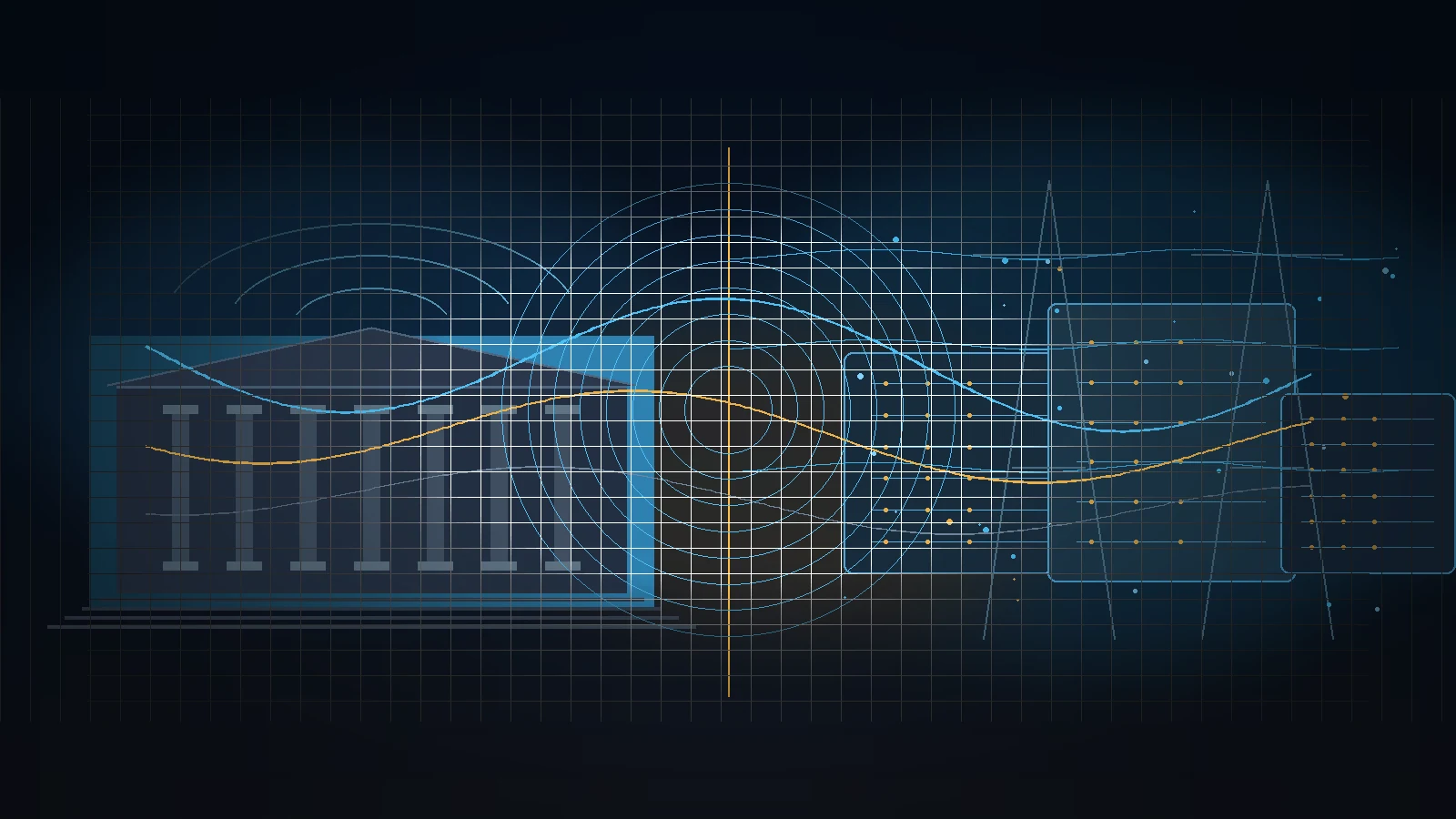
SIAIntel warned that a quieter, less predictable Federal Reserve could tighten financial conditions through risk premiums before another rate increase arrived. The 10-year Treasury yield has now crossed the 4.5% warning line, while semiconductor stocks have entered a bear market.
The Warning Was Not “AI Will Fail”
The original SIAIntel thesis was more specific—and more useful—than a generic call for an AI bubble. In “The Warsh Squeeze: A Quieter Fed Meets AI’s Power Shock”, published on June 21, SIAIntel argued that a less predictable Federal Reserve could tighten financial conditions through uncertainty, term premiums and a higher cost of capital even before delivering another nominal rate increase.
The article’s monitoring box recorded the 10-year Treasury yield at 4.46% and explicitly identified a break above 4.5% as a signal that the “Warsh Premium” was building. The underlying mechanism was straightforward: when investors receive less policy guidance, they demand more compensation for uncertainty; when bond yields rise, distant corporate earnings are discounted more aggressively; and when the most expensive assets are priced on years of future AI growth, their valuations become unusually sensitive to that repricing.
What has now been confirmed
On July 20, Reuters reported the benchmark 10-year Treasury yield at 4.56%, above SIAIntel’s warning line. It also reported the 30-year yield back above 5%, noting that this level can pull capital toward fixed income and raise the valuation hurdle applied to future corporate earnings. That is the core transmission channel described by the Warsh Squeeze.
What has not been confirmed
This evidence does not validate every part of the original dossier. It does not yet prove that FERC-related grid costs are being systematically capitalized into AI equity valuations, that electricity access is widening credit spreads, or that crypto is reliably leading the stress cycle. The confirmation is narrower but powerful: the Fed uncertainty → higher yields → higher discount rate → AI valuation pressure sequence is now visible in the market.
The 4.5% Treasury Line Moved From Forecast to Market Fact
The importance of 4.5% is not mystical. It is an observable regime marker. At the time of the original analysis, the yield sat just below the line. By July 20, Reuters placed it at 4.56%. Readers can also monitor the official historical series through the Federal Reserve Bank of St. Louis 10-year Treasury dataset.
A few basis points alone do not create a crisis. The significance lies in what moved with them. Energy-related inflation concerns were pushing long yields higher; futures markets were pricing at least one Federal Reserve rate increase by year-end; and the 30-year yield was again above the level at which bonds compete more directly with equities for long-duration capital.
Why the long end matters more than one FOMC vote
The market can tighten without the Fed raising rates at its next meeting. Mortgage rates, corporate borrowing costs, infrastructure financing and equity discount rates are influenced by the Treasury curve. If the long end remains elevated because investors demand more inflation or uncertainty compensation, financial conditions can become more restrictive even while the policy rate is unchanged.
That distinction is central to the SIAIntel signal. The thesis was never dependent on an immediate rate increase. It was dependent on the possibility that a less communicative Fed would remove the market’s guidance cushion and transfer more price-discovery risk to investors.
AI Stocks Were the Natural Pressure Point
High-growth AI assets are long-duration assets in financial terms. A large share of their market value depends on profits expected far into the future. When the discount rate rises, the present value of those distant cash flows falls more sharply than the value of near-term, mature cash generation.
The valuation equation changed before the technology story did
AI demand can remain strong while AI stocks fall. Semiconductor orders can grow while investors decide that the price paid for each dollar of future earnings is too high. Reuters captured this distinction when it described a powerful chip rally reversing as markets questioned whether enormous capital expenditure could produce returns sufficient to justify near-perfect valuations.
On July 17, Reuters reported that the Philadelphia Semiconductor Index had fallen just over 20% from its late-June record, confirming a bear market, after losing about 10% in one week. The index still remained more than 60% higher for the year—evidence that the selloff was a repricing of an exceptionally crowded trade, not proof that AI demand had disappeared.
The reversal also had a distinct competitive catalyst. China’s Moonshot AI unveiled Kimi K3, a 2.8-trillion-parameter open-weight model that it said was approaching the performance of leading U.S. frontier systems. Reuters reported that the launch intensified investor scrutiny of whether the enormous AI spending commitments of U.S. technology companies would generate adequate returns. That concern does not contradict the Warsh Squeeze; it supplies the earnings-and-competition shock that higher discount rates can amplify.
Leverage made the signal louder
Reuters also reported that leverage had accumulated through retail margin, leveraged ETFs, short-dated options and hedge-fund exposure. When yields rise against a crowded position, losses can force selling that is larger and faster than the initial fundamental change would justify. That is why a valuation warning can become a market-structure event.
The flow data added a second confirmation. U.S. growth funds suffered net withdrawals while bond funds attracted nearly $10 billion in the week covered by LSEG Lipper data reported by Reuters. The numbers do not prove a permanent rotation, but they show that the bond-versus-growth trade was no longer theoretical.
Warsh Matters—But He Is Not the Only Cause
The strongest version of the story would claim that Kevin Warsh caused the AI selloff. That would be analytically weak. Oil volatility, conflict involving the United States and Iran, disruption fears around the Strait of Hormuz, inflation data, profit-taking, Chinese AI competition and excessive leverage all influenced markets.
The defensible Warsh link
The Warsh connection is nevertheless real. After his first meeting as chair, Reuters described investors preparing for a less predictable Fed as the central bank stepped back from signaling future moves. The report said the shift could inject fresh volatility into markets and noted that the June meeting increased expectations for a possible rate hike.
By mid-July, Warsh was still resisting detailed forward guidance. Reuters reported on July 15 that he continued to emphasize inflation control without revealing a clear reaction function. Half of his colleagues expected a rate increase by year-end, while Warsh had submitted no dot of his own.
During the July 17 global selloff, a portfolio manager told Reuters’s market-reaction survey that the Fed and Warsh’s increasingly hawkish posture were likely triggers for the cascade out of chip stocks. Another market participant emphasized the simpler mechanism: yields were moving higher, so the market was selling.
The causal boundary must stay visible
The Warsh Volatility Premium Is the Real Signal
A volatility premium is the additional return investors demand when policy outcomes become harder to forecast. Under a highly communicative Fed, markets can position gradually around expected moves. Under a deliberately quieter Fed, a larger share of the adjustment may occur after data releases, speeches or policy decisions.
Three ways the premium can appear
- Higher Treasury term premiums: investors demand more compensation to hold long-duration government debt.
- Lower equity multiples: future AI earnings are discounted at a higher required rate of return.
- Wider financing dispersion: companies with strong cash flow and secured power access separate from leveraged developers dependent on external capital.
Warsh’s public commitment to the 2% inflation target reinforces this asymmetry. In early July, Reuters reported that he rejected tolerance for persistent above-target inflation while continuing to avoid explicit rate-path guidance. A market that hears determination but receives fewer navigational details has to price a broader range of outcomes.
The Earnings Test: Can AI Cash Flow Beat the New Hurdle?
The next phase is not simply about whether technology companies report higher revenue. Investors must compare AI-driven growth with the capital required to produce it. If Treasury yields remain high, companies need stronger cash returns to justify the same valuation.
July 22: Alphabet, Tesla and IBM
Alphabet’s official investor calendar schedules its second-quarter call for July 22. Tesla also plans to release second-quarter results after the market closes on July 22, while IBM has scheduled its earnings announcement for the same day. These reports will test whether revenue, margins and free cash flow are keeping pace with the cost of AI expansion.
July 23: Intel and the semiconductor reset
Intel’s investor calendar places its second-quarter earnings call on July 23. After the SOX bear-market signal, investors will be watching guidance, data-center demand, pricing and capital intensity rather than headline growth alone.
Reuters estimated that semiconductor companies could make an unusually large contribution to second-quarter S&P 500 profit growth, even as the sector’s July decline showed that strong earnings may no longer be sufficient. The market’s required return has changed. That tension—large expected profits versus falling share prices—is now the core earnings-season test.
The Next Policy Test Is July 29—But Not for the Reason Many Think
The Federal Reserve’s official calendar lists the two-day FOMC meeting for July 28–29, with the policy decision at 2:00 p.m. Eastern Time and the chair’s press conference at 2:30 p.m. Traders can monitor shifting probabilities through the CME FedWatch tool, which derives meeting probabilities from 30-day federal funds futures.
What would strengthen the thesis?
- Rates remain unchanged, but Warsh offers little forward guidance and emphasizes persistent inflation risks.
- The 10-year yield holds above 4.5% or the 30-year yield remains near or above 5%.
- AI companies report strong demand but face negative share-price reactions because margins, cash flow or CAPEX returns disappoint.
- Credit conditions become more selective for leveraged AI infrastructure developers.
What would weaken it?
- Warsh provides a clearer reaction function that narrows the range of policy outcomes.
- Treasury yields fall materially and remain below the warning line.
- AI earnings demonstrate that cash returns are scaling faster than capital costs.
- The chip selloff reverses without wider credit, funding or economic stress.
Strategic Impact Matrix
| Audience | What the confirmation means | What to monitor next |
|---|---|---|
| General readers | Higher long-term yields can raise borrowing costs even without an immediate Fed hike. | Mortgage, auto-loan and consumer-credit repricing after July 29. |
| Investors | AI growth and AI equity returns can diverge when the discount rate rises. | Free cash flow, CAPEX returns, leverage and sensitivity to the 10-year yield. |
| Technology companies | Revenue growth alone may not defend valuations; financing and power costs matter more. | Cash conversion, debt issuance, data-center commitments and power-secured capacity. |
| Banks and private credit | Higher rates increase dispersion between cash-rich hyperscalers and leveraged developers. | Covenants, refinancing needs, project delays and credit spreads. |
| Developing markets | A less predictable Fed can amplify dollar and external-debt volatility. | Dollar strength, sovereign spreads and energy-import costs. |
| Policymakers | Communication policy itself can alter financial conditions and market stability. | Whether reduced guidance improves discipline or creates excessive volatility. |
Counter-Thesis: This May Still Be a Crowded-Trade Reset
A responsible confirmation piece must retain the strongest opposing explanation. Several investors in Reuters’s July 17 survey argued that the selloff was largely technical: profits were being taken from crowded winners, leveraged positions were being unwound and portfolios were rotating rather than abandoning risk broadly.
That interpretation is plausible. The SOX index remained sharply higher for the year even after entering bear-market territory. Semiconductor demand could remain strong, earnings could beat expectations and lower energy prices could pull yields back down. In that scenario, the July decline would look less like the start of a structural AI financing crisis and more like a violent reset of excessive positioning.
Why the signal still matters under the counter-thesis
Even a technical correction confirms one part of the SIAIntel framework: expensive, leveraged AI exposure becomes fragile when the risk-free alternative offers a higher return and the Fed provides less guidance. The thesis does not require the AI industry to collapse. It requires the market to demand more proof before capitalizing distant growth at extreme multiples.
Catalyst Calendar
| Date | Catalyst | Why it matters |
|---|---|---|
| July 22 | Alphabet, Tesla and IBM results | First major test of AI revenue, margins, CAPEX discipline and cash conversion under higher yields. |
| July 23 | Intel results | Tests whether semiconductor fundamentals can stabilize the SOX bear-market repricing. |
| July 28–29 | FOMC meeting | Tests the policy path and whether communication uncertainty remains a tightening force. |
| July 29, 2:30 p.m. ET | Warsh press conference | Tests whether the Fed narrows or widens the market’s range of plausible rate outcomes. |
| Post-FOMC | Treasury and AI equity reaction | A sustained 10-year move above 4.5% would strengthen the confirmed signal; a durable reversal would weaken it. |
SIAIntel Bottom Line
The intellectually honest conclusion is therefore not “Reuters proved SIAIntel was right about everything.” It is that independent market reporting now strongly supports the rate-and-valuation mechanism at the heart of the Warsh Squeeze. The grid-cost component remains open. The credit transmission remains incomplete. The July 29 FOMC meeting will determine whether the signal deepens, stabilizes or begins to reverse.
Frequently Asked Questions
What exactly did SIAIntel get right?
It identified a break above 4.5% in the 10-year Treasury yield as a warning that a Warsh-related volatility premium was building, and it linked that move to pressure on high-duration AI valuations.
Did Kevin Warsh single-handedly cause the AI stock selloff?
No. Warsh’s communication style and hawkish inflation stance were one channel. Oil, geopolitical risk, inflation expectations, profit-taking, Chinese AI competition and leverage also mattered.
Does a semiconductor bear market mean the AI boom is over?
No. The SOX index remained substantially higher for the year. A bear-market decline can reflect valuation compression and crowded positioning even while underlying demand continues to grow.
Why are Treasury yields so important for AI stocks?
Higher Treasury yields increase the return available from lower-risk assets and raise the discount rate applied to profits expected far in the future. That tends to pressure high-multiple growth stocks first.
What is the next decisive event?
The July 29 FOMC decision and Warsh press conference are the next policy checkpoint, followed by the reaction in long-term Treasury yields and AI-sensitive equities.
Source Coverage Summary
This master embeds sources inside the evidence chain rather than placing a detached link list at the end. Orange anchors identify the supporting material at the point where each claim is made.
- Coverage mix: original SIAIntel signal, Reuters market reporting and analysis, official Federal Reserve/CME materials, official company investor calendars, and FRED data.
- Primary-source layer: Federal Reserve calendar, CME FedWatch methodology/tool, FRED Treasury series and four company investor-relations announcements.
- Counter-thesis layer: Reuters interviews describing profit-taking, rotation, crowded positioning and technical deleveraging.
- Editorial boundary: the rates–valuation mechanism is strongly confirmed; the broader grid and credit thesis remains under observation.
- Investment boundary: analytical monitoring framework, not investment advice.
Source Map
6 highlighted sources
Editorial Credit
This intelligence brief was prepared by the SIAIntel Editorial Desk.
Some contributors work in sensitive public-sector, regulatory, market, or editorial roles. Their identities may be withheld when professional duties, source protection, or safety require confidentiality.
Editorial and publishing accountability: Sefa Karahan, Founder & Publisher
Related Intelligence
Related intelligence in this category · 3 briefs
Meta’s $12.3B Bond Exposes Wall Street’s AI Debt Machine
Meta’s $12.3B data-center bond shows how Wall Street is turning Big Tech lease promises into investment-grade AI debt—and pricing a new risk premium.

Fed May Pause. AI’s $1.5T Buildout Could Keep Rates High
US PPI went flat, but AI infrastructure commitments, bond supply and grid bottlenecks may keep long-term financing costs elevated even if the Fed pauses.

Yen Nears 164: SIAIntel’s Carry-Trade Signal Passes Its First Test
The yen is near 164. SIAIntel audits its July 6 carry-trade signal, Japan intervention risk, BOJ catalysts and cross-asset market impact.