"Meta’s $12.3B data-center bond shows how Wall Street is turning Big Tech lease promises into investment-grade AI debt—and pricing a new risk premium."
SIAINTEL INTELLIGENCE DOSSIER
Analysis Brief
SIAIntel Verification Panel
Analysis, data context, source mapping and editorial boundaries are presented as one evidence chain.
Key Takeaways
- Wall Street is no longer financing artificial intelligence only through Big Tech corporate bonds.
- It is building a parallel market in which long-term data-center leases, guarantees and project-company cash flows are transformed into investment-grade securities..
- Meta’s planned $12.3 billion Sopaipilla Investor transaction is the clearest live test.
SIAIntel Perspective
SIAIntel frames this development not as a standalone headline, but as an intelligence brief shaped by source quality, structural implications and observable risk channels.
Data Snapshot
Coverage Area
Editorial category
AI
Read Time
Approximate duration
~10 min
Source Base
Visible evidence profile
Article context
Published
Updated: Jul 25, 2026
Jul 25, 2026
Evidence Frame
This layer summarizes visible sources, article context and editorial framing. It is analytical context, not transactional guidance.
Executive Briefing
Wall Street is no longer financing artificial intelligence only through Big Tech corporate bonds. It is building a parallel market in which long-term data-center leases, guarantees and project-company cash flows are transformed into investment-grade securities.
Meta’s planned $12.3 billion Sopaipilla Investor transaction is the clearest live test. The bond is associated with a roughly 960 MW to 1 GW campus in El Paso, Texas, while BlackRock-linked funds own most of the project and Meta supplies the long-duration rent stream.
The key signal is not that Meta faces an imminent liquidity problem. It is that investors are beginning to price AI data-center project debt separately from Meta’s own corporate credit, creating what SIAIntel calls an AI shadow yield curve.
- Signal: AI infrastructure is developing its own project-debt yield curve.
- Market test: Sopaipilla was initially marketed around T+287.5 bp, not yet finally priced.
- Accounting rule: uncommenced leases are future commitments, not automatically hidden debt.
- Catalyst: final bond pricing and Meta’s July 29 earnings disclosure.
The $12.3 Billion Test
Financial Times reporting says the single 2048 tranche was being marketed around 287.5 basis points over US Treasuries and roughly 7.5% yield, about 40 basis points above the earlier Meta-linked Hyperion transaction. These are initial marketing levels, not final pricing.
The issuer is Sopaipilla Investor, a special-purpose holding company. The structure lets capital providers fund construction outside Meta’s direct bond stack while relying on Meta’s future rent payments and contractual support as the main credit engine.
That distinction matters. A Meta corporate note is a direct unsecured claim on the whole company. A data-center SPV note depends on project documents, completion protections, rent mechanics, termination clauses, reserve accounts and the liquidity of a much smaller security.
Who Owns the Project Risk?
BlackRock units Global Infrastructure Partners and HPS Investment Partners are reported to control 80% of the project, with Meta retaining 20%. JPMorgan and Morgan Stanley are running the sale. The model combines infrastructure equity, private credit expertise and public-bond distribution.
The ratings show that the legal wrapper is not treated as identical to Meta. S&P’s preliminary A+ sits one notch below Meta’s AA- corporate rating, while Fitch and KBRA are reported at AA-. That disagreement is itself a price-discovery signal.
The Numbers Wall Street Is Actually Pricing
| Metric | Verified level | Why it matters |
|---|---|---|
| Sopaipilla notes | $12.3B, due 2048 | A live price for Meta-linked AI project debt |
| Initial price talk | T+287.5 bp; about 7.5% | Preliminary, not final pricing |
| Project ownership | BlackRock-linked funds 80%; Meta 20% | Risk is split between tenant and outside capital |
| Meta uncommenced leases | $182.88B at March 31, 2026 | Future data-center obligations entering service through 2036 |
| Meta contractual commitments | $237.67B | Cloud, servers, networks, data centers and other contracts |
| Five-hyperscaler uncommenced leases | $662B at end-2025 | Sector-wide future credit and cash-flow migration |
The transaction’s most important figures are not additive. They describe different layers—project debt, corporate debt, uncommenced leases, contractual commitments and contingent cloud purchases—and must not be summed into a fictional total liability.
The AI Shadow Yield Curve Is Now Measurable
Meta’s April 2026 SEC pricing term sheet shows its direct 2046 senior note at a Treasury spread of 122 basis points. Sopaipilla’s initial talk near 287.5 basis points implies a directional gap of about 165.5 basis points.
This is not a perfect apples-to-apples spread. The securities were marketed on different dates, have different benchmarks, amortization profiles, legal recourse, liquidity and construction exposure. The comparison is a diagnostic, not a fair-value model.
Even with those cautions, the gap is too large to dismiss as a change in base rates alone. The market appears to demand compensation for the project wrapper, construction timeline, lease mechanics, weaker trading liquidity and the possibility that data-center technology ages faster than the debt.
| Security / indicator | Spread or yield | Interpretation |
|---|---|---|
| Meta direct 2046 note | T+122 bp at April 2026 pricing | Direct unsecured corporate credit |
| Sopaipilla 2048 initial talk | T+287.5 bp; roughly 7.5% | Project-SPV premium before final pricing |
| Directional difference | About 165.5 bp | Not apples-to-apples; a signal requiring same-day validation |
The correct test after pricing is Sopaipilla versus a same-day Meta corporate curve, same-day A+/AA- industrial spreads and the secondary price of the earlier Beignet/Hyperion notes. That will isolate the project premium more cleanly.
The risk did not disappear from the AI buildout. It changed legal form—from direct corporate debt into leases, guarantees, SPVs and investment-grade project securities.
An AI shadow yield curve exists when the same hyperscaler’s payment promise produces different yields depending on whether it sits in a corporate bond, a lease-backed SPV, a residual-value guarantee or a private-credit facility.
The $662 Billion Accounting Nuance
Moody’s analysis reported by Fortune found $969 billion of total future lease commitments across Amazon, Alphabet, Meta, Microsoft and Oracle at the end of 2025. Of that, $662 billion related to leases that had not yet commenced and therefore were not current balance-sheet lease liabilities.
That $662 billion is not proof of fraud, hidden accounting or missing debt. The underlying assets and services have not yet commenced, so recognition follows the applicable lease rules. The economic issue is that these commitments will progressively become cash outflows and reported liabilities as projects enter service.
Moody’s estimated the uncommenced amount at roughly 113% of the five companies’ adjusted debt. The alpha is not an accounting scandal; it is the future migration of AI infrastructure promises into balance sheets, credit adjustments and bond portfolios.
Meta’s Commitments Are Accelerating
Meta’s March 2026 10-Q reports $182.88 billion of leases not yet commenced, mostly data centers, colocation and network infrastructure; $237.67 billion of non-cancelable contractual commitments; and up to $14.72 billion of contingent cloud-capacity purchases.
| Reporting date | Leases not yet commenced | Change in regime |
|---|---|---|
| June 30, 2025 | $52.56B | Baseline |
| September 30, 2025 | $58.14B | Gradual increase |
| December 31, 2025 | $103.77B | First major step-up |
| March 31, 2026 | $182.88B | About 3.48x the June level |
Meta’s uncommenced leases rose from $52.56 billion in June 2025 to $58.14 billion in September, $103.77 billion in December and $182.88 billion in March 2026. The June filing and the September filing establish the early legs of that acceleration.
The March lease figure is about 3.1 times Meta’s $58.75 billion carrying amount of long-term notes. The contractual-commitment figure is about four times the notes balance. The two categories should not be added because the disclosures do not prove zero economic overlap.
Why the Rating Split Matters
S&P’s preliminary Sopaipilla rating places the notes at A+, one notch below Meta. That is a formal statement that the project cash-flow package is close to, but not equivalent to, direct Meta credit.
Fitch’s expected rating notice reaches AA-. The split does not mean one agency is wrong; it reveals different weights on Meta’s contractual support, structural protections and residual project risks.
S&P’s Beignet analysis explains the precedent: the earlier $27.3 billion Meta-linked notes were also rated A+, lacked a direct asset pledge and relied on contractual mechanisms that transferred substantial construction and operating risk back to Meta.
- No direct equivalence between an SPV note and a Meta corporate bond.
- Construction cost, delay and termination protections determine recovery.
- Long debt duration collides with short hardware and model cycles.
- Heavy issuance supply can raise spreads even when tenant credit is strong.
Risk Was Repackaged, Not Removed
Meta’s 2025 Form 10-K shows how the economic exposure changes form. The Hyperion structure carried an initial lease commitment, a residual-value guarantee threshold near $28 billion and maximum disclosed loss exposure of $45.95 billion, while the project entity remained unconsolidated.
BlackRock’s AI Credit-Conversion Machine
BlackRock is therefore doing more than supplying capital. GIP contributes infrastructure ownership, HPS contributes credit structuring, and the bond syndicate converts a future Big Tech rental stream into a security that fixed-income institutions can buy.
The machine can be repeated across campuses: create an SPV, fund it with outside equity and rated debt, allocate construction and residual-value risks through contracts, then use a hyperscaler lease as the anchor cash flow. The bottleneck shifts from Big Tech’s balance sheet to investor appetite for project paper.
This Is Becoming an Asset Class
Hut 8’s Beacon Point pricing demonstrates that the format extends beyond Meta: a $4.25 billion, 6.129% fully amortizing, non-recourse project bond due 2042. The closing release said the deal was substantially oversubscribed and broadened its institutional credit investor base.
That counterexample is important. The sector is not experiencing uniform rejection. Investors will fund strong structures, but they increasingly differentiate tenant quality, project protections, power access, maturity, supply volume and price.
How AI Risk Reaches Insurers and Pension Portfolios
Rating agencies are the bridge into regulated portfolios. An investment-grade label can make data-center construction debt eligible for insurers, pension strategies and fixed-income funds that could not hold an unrated development loan.
Reuters’ hyperscaler cash-flow analysis estimates that capital spending could rise about $534 billion by 2027 against roughly $340 billion of additional operating cash flow—about $1.57 of extra investment for each additional dollar of cash generation.
Counter-Thesis: Meta Is Not in Distress
Meta’s first-quarter results show why this is not a distress story: $56.31 billion of revenue, $32.23 billion of operating cash flow and $81.18 billion of cash and marketable securities, alongside a raised 2026 capex range of $125 billion to $145 billion.
The bearish case is not near-term default. It is duration mismatch: hardware and model economics can change in four to six years while leases, guarantees and project notes can extend for two or three decades.
The bullish case is that creditworthy tenants, rising AI demand and carefully allocated construction risk can create a deep new investment-grade infrastructure market. A successful Sopaipilla sale at tighter spreads would support that view.
The Next Confirmation Window
What to Watch
Meta’s investor calendar puts the next major corporate disclosure on July 29, 2026. Before that, the bond’s final spread, yield, order book, allocations and any change in issue size will provide the cleanest market verdict.
- Final Treasury spread and yield versus initial price talk.
- Order-book size, investor allocation and any resizing of the deal.
- Same-day spreads on Meta corporate notes and Beignet/Hyperion paper.
- Changes to capex, leases and contractual commitments in Meta’s next filing.
Confirmation would be a persistent premium versus Meta’s direct curve, weakness in earlier Meta-linked project bonds, more rating-agency debt adjustments and a continuing rise in uncommenced leases. Falsification would be strong oversubscription, sharp spread tightening and improving secondary prices.
SIAIntel Verdict
The investable winners may not be only chipmakers. Infrastructure managers, project-finance desks, rating agencies, utilities, grid developers and insurers are becoming the transmission system between AI demand and long-duration capital.
SIAIntel’s conclusion is that Wall Street has created a new credit layer between Big Tech and the physical data center. Sopaipilla is valuable because it makes that layer visible in a live market price.
The headline number is $12.3 billion, but the strategic number is $662 billion: the sector-wide pool of uncommenced lease commitments waiting to migrate into cash requirements, adjusted debt and project securities.
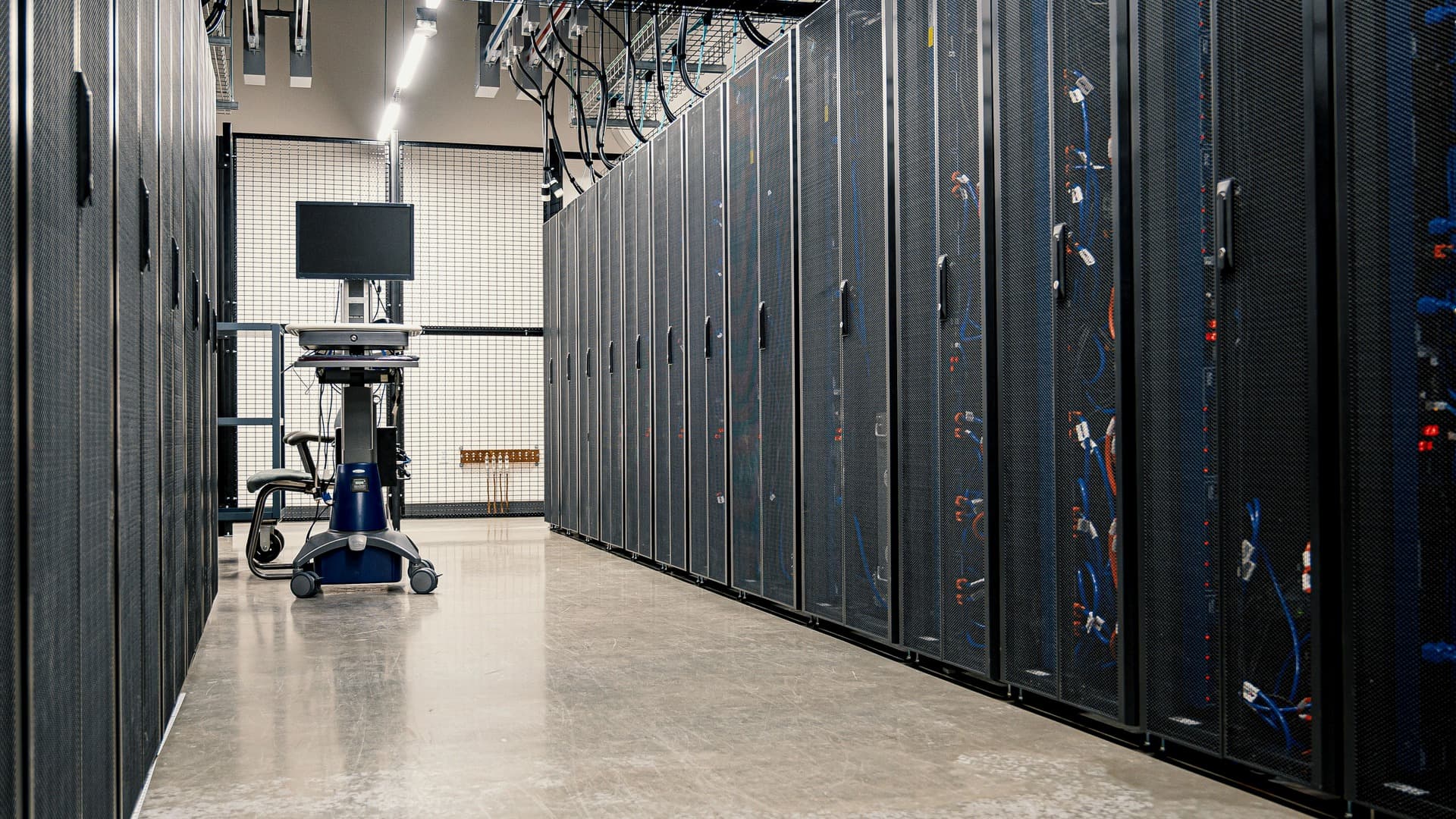
Methodology: figures were separated by accounting category; preliminary marketing levels were not presented as final pricing; and the directional spread was explicitly treated as non-comparable. Hero image: a real data-center photograph by Brett Sayles on Pexels, used under the Pexels license.
Editorial Credit
This intelligence brief was prepared by the SIAIntel Editorial Desk.
Some contributors work in sensitive public-sector, regulatory, market, or editorial roles. Their identities may be withheld when professional duties, source protection, or safety require confidentiality.
Editorial and publishing accountability: Sefa Karahan, Founder & Publisher
Related Intelligence
Related intelligence in this category · 6 briefs

3 GW Vanished: Data Centers Shock America’s Largest Grid
More than 3 GW of data-center load vanished from PJM. See the hidden AI grid risk, investor impact, Virginia tax cost and next regulatory catalysts.

AI’s Closed Capital Circuit Just Hit the Power Grid
AMD’s Anthropic investment, Amazon’s milestone-linked financing and OpenAI’s 25-year Georgia power deal expose the closed capital circuit behind AI infrastructure.
Wall Street May Be Underpricing the New AI Grid Rule
A five-stock event study and SEC-filed contracts show no durable equity discount after FERC—while power terms already reach project finance.
The AI War Enters the Age of Power and Collateral
China is institutionalising AI access while the United States turns large-scale electricity access into a test of grid readiness, operating flexibility and financial collateral.
Texas Has 438 GW of Data-Center Requests. How Much Is Real?
Nearly 90% of ERCOT’s 438 GW queue comes from data centers. On August 7, Batch Zero will show which AI projects advance—and which remain speculative.
While Everyone Watches Chips, AI’s Next Bottleneck Is Power, Grids and Capital
AI’s next bottleneck is moving beyond chips toward power grids, data-center infrastructure, nuclear energy agreements and capital intensity.