ByteDance’s $29.6B unsecured loan shows AI funding moving onto global bank balance sheets as bonds, revolvers and private credit expand.

30-Second Signal
ByteDance has secured a $29.6 billion, three-year unsecured loan from nearly 30 banks after lender demand pushed the facility above its original $20 billion target. Chinese banks subscribed to more than 60% of the deal, while Citigroup and JPMorgan coordinated the financing. ByteDance formally describes the proceeds as general corporate funding, but people familiar with the transaction told Reuters that the money will mainly support artificial-intelligence investment, including chips and overseas data-centre infrastructure.
This is not simply another large technology financing. The important word is unsecured: lenders are extending tens of billions against the corporate credit of an AI-heavy borrower rather than against a specific data-centre asset. At the same time, the European Central Bank estimates hyperscalers may require more than $1 trillion of capital expenditure through 2028. The Federal Reserve July SLOOS adds the banking backdrop: C&I standards were broadly unchanged, demand from large and middle-market firms strengthened, and standards for syndicated or club loans to investment-grade firms were easier than the midpoints of their historical ranges.
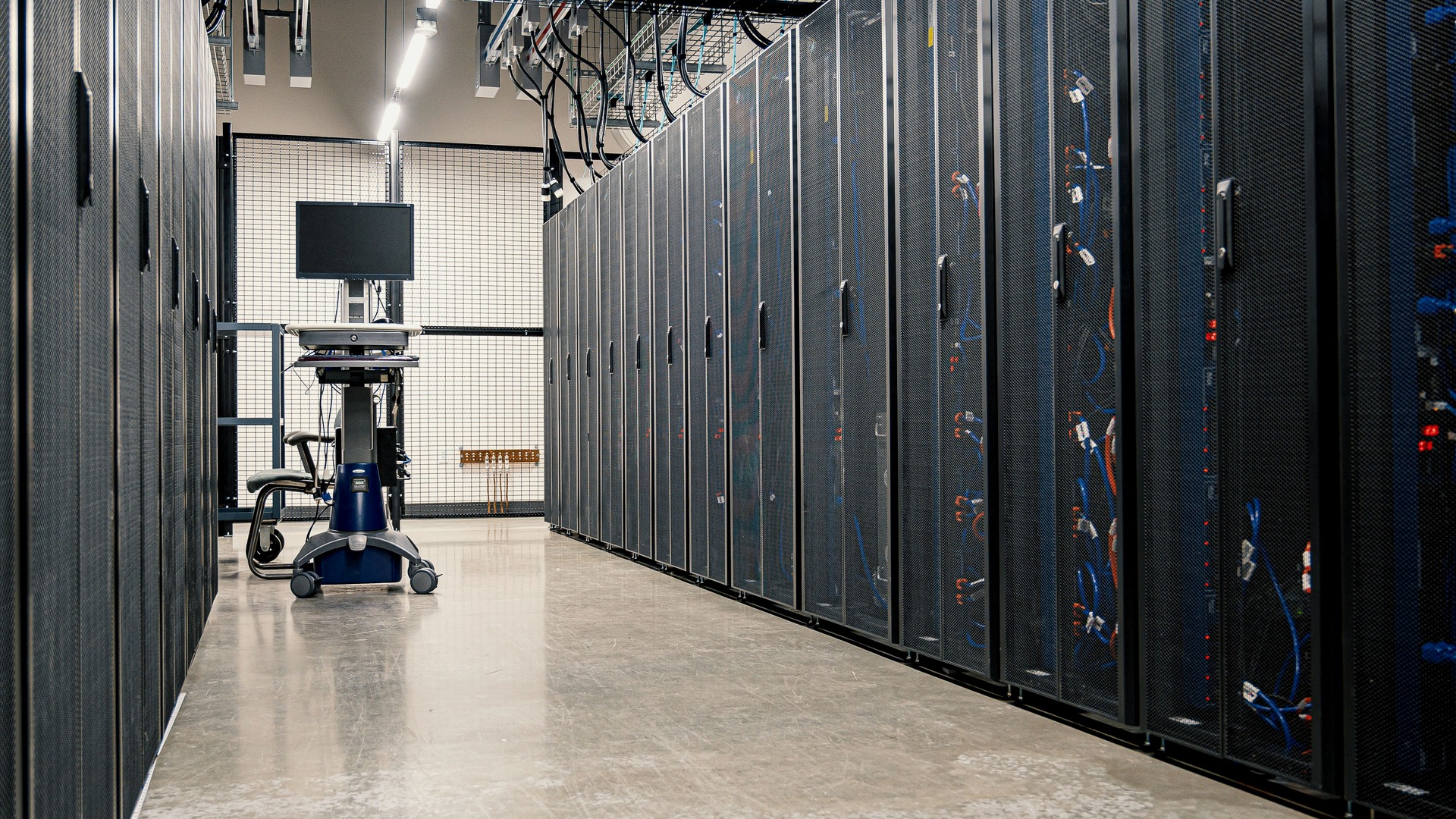
*Visual disclosure: the hero is an AI-generated editorial composite. It is an explanatory visualization, not a photograph of a specific ByteDance office, lender meeting or data centre.*
> SIAIntel signal: AI capital demand has moved beyond equity, bonds and project finance. Global banks are now committing large unsecured balance-sheet capacity directly to the AI build-out.
The Bank-Credit Shift
The bank channel matters because the rest of the financing stack is already crowded. Reuters/LSEG reported that Alphabet, Amazon, Meta, Microsoft and Oracle had issued about $220 billion of debt in 2026, helping push global corporate bond issuance to a record $4.9 trillion. A large syndicated loan does not remove that bond demand; it gives the biggest borrowers another pool of capital and can keep investment moving even when public-market yields rise.
ByteDance is not alone. Reuters on SoftBank confirmed a $40 billion unsecured bridge loan in March to support OpenAI-related investment and general corporate purposes. Reuters on Anthropic reported that Anthropic is working to finalise a $15 billion revolving credit facility as part of its pre-IPO financing architecture. These are different borrowers and structures, so their amounts should not be added as if they were one exposure. The common signal is that banks are becoming a more visible provider of liquidity and commitment lines behind AI expansion.
The AI Financing Stack
The same capital cycle is expanding into infrastructure and private markets. Reuters on Nscale reported that Nscale is seeking about $3.5 billion of pre-IPO funding after signing a six-year, $45 billion compute-capacity agreement with Anthropic. The ECB Financial Stability Review says AI-related companies and infrastructure are relying increasingly on credit financing and that this trend warrants monitoring, even though aggregate business-debt growth remains far below crisis-style thresholds.
There is already evidence that credit quality is separating by borrower. A Reuters review of 44 BDCs found aggregate private-credit fair value below reported cost in the first half of 2026, with stress concentrated in a limited set of leveraged software and AI-exposed service companies. That does not make ByteDance equivalent to those borrowers. It means the label “AI credit” is becoming less useful than the underlying questions: who generates cash, who owns hard assets, who depends on future utilisation, and who can refinance without guarantees or collateral?
The emerging stack is now: internal cash → bonds → bank loans and revolvers → project finance → private credit → convertible and pre-IPO capital. As more layers become active at once, the system gains funding resilience but also becomes more interconnected.
Who Holds the Risk
For banks, the near-term opportunity is attractive. Large facilities generate fees, deepen corporate relationships and can be distributed across syndicates. Oversubscription of the ByteDance loan is evidence of lender appetite, not evidence of distress. An unsecured structure can be rational for a borrower whose enterprise cash flows and liquidity are viewed as strong enough to support repayment without a dedicated collateral package.
The risk appears through concentration and repetition. If the same small group of global banks repeatedly provides loans, revolvers, bridge facilities and underwriting to the same AI ecosystem, exposures that look diversified by instrument may still depend on a common economic assumption: sustained growth in compute demand and the ability of AI companies to monetise it. Banks also face refinancing risk if three-year facilities mature into a period of tighter credit or higher funding costs.
Bond investors carry a different version of the same pressure. Heavy technology issuance competes for portfolio capacity at the same time sovereign borrowers are also issuing aggressively. Private-credit funds may receive the riskier or more complex slice when top-tier borrowers can fund themselves more cheaply in syndicated bank and investment-grade markets.
Who Feels It
Global banks: gain fee income and access to high-growth clients, but must manage borrower, sector and correlated-syndicate concentration.
AI platforms: receive another source of capital beyond bond markets. That can reduce near-term funding friction and preserve investment speed.
Chip and data-centre suppliers: benefit when large borrowers can fund accelerator purchases and long-duration compute commitments without waiting for equity issuance.
Bond investors: may see bank loans absorb some financing, but total AI capital demand can still keep corporate supply elevated and require wider concessions.
Private credit: can become more exposed to borrowers that lack the scale, ratings or cash generation needed for cheap unsecured bank funding.
Regulators: need to distinguish a productive investment cycle from a correlated credit cycle. The relevant question is not whether AI debt exists; it is whether exposures grow faster than cash flows, collateral values and underwriting discipline.
The Counter-Case
The bearish interpretation should be constrained. ByteDance’s deal was increased because lenders wanted more exposure. The facility is unsecured precisely because participating banks appear comfortable with the company’s corporate credit. Fed survey evidence does not show a broad shutdown in C&I lending, and major AI leaders still have substantial revenues, liquidity and access to multiple markets.
It would therefore be wrong to claim that banks are “funding an AI crisis” or that this loan predicts losses. Large unsecured corporate loans are normal for strong borrowers. Diversifying funding sources can also reduce rollover pressure because a company is not dependent on a single bond market or investor class.
The testable thesis is narrower: the AI capital cycle has become large enough that bank balance sheets are now a material part of the funding architecture. If credit standards stay disciplined and AI cash flows scale with investment, that can be healthy financial intermediation. If borrowing accelerates while utilisation, margins or refinancing capacity weaken, the same architecture becomes a transmission channel for stress.
Confirmation Dashboard
| Signal | What it would mean |
|---|---|
| More $10B+ unsecured AI-linked facilities | Bank-credit channel is scaling |
| ByteDance refinances early or extends tenor cheaply | Lender confidence remains strong |
| AI borrowers add revolvers after large bond issuance | Funding channels are becoming interconnected |
| C&I standards tighten while AI borrowing remains strong | Risk pricing is beginning to change |
| AI bond spreads widen but bank facilities stay cheap | Exposure may migrate toward bank balance sheets |
| Data-centre utilisation or contracted demand weakens | Underlying capex assumptions face pressure |
| Private-credit markdowns spread into stronger borrowers | Credit-quality stress is broadening |
| Syndicated loan pricing rises materially | Banks are demanding more compensation |
These are monitoring markers, not investment recommendations.
SIAIntel Bottom Line
ByteDance’s $29.6 billion facility does not prove that AI finance is dangerous. It proves that AI has become large enough to consume another type of balance sheet.
The sequence is visible: hyperscaler cash funded the first wave; bond issuance widened the pool; infrastructure finance and private credit funded specialised assets; now giant unsecured bank facilities and revolvers are entering the core financing stack. That increases the system’s ability to fund productive investment, but it also means future AI credit risk will not sit in one market.
The next question is therefore not whether banks want AI exposure today. Oversubscription answers that. The question is whether underwriting remains selective when the same financial system must price AI credit, sovereign borrowing, higher long-term yields and enormous infrastructure demand at the same time.
SIAIntel final signal: the AI boom is no longer only consuming chips, electricity and data-centre capacity. It is consuming bank balance-sheet capacity — and that creates a new credit transmission channel to watch.
Source Map
6 highlighted sources
SIAINTEL AI CREDIT
AI Bank-Credit Transmission Console
ByteDance’s $29.6B unsecured facility shows the AI financing stack expanding directly into global bank balance sheets.
ByteDance facility
$29.6B
Unsecured; three-year term
Original target
$20B
Expanded after lender demand
Participating banks
≈30
Nearly 30 lenders
Chinese-bank share
>60%
More than 60% of subscriptions
Lender demand expanded the facility
The reported final size rose from a $20B original target to $29.6B. The chart compares deal size only; it does not measure bank risk.
AI financing-channel dashboard
These instruments should not be added as one exposure. The table tracks how different funding channels are becoming active at the same time.
| Channel | Observed signal | What it shows | What to watch |
|---|---|---|---|
| Unsecured bank loan | $29.6B ByteDance facility | Corporate bank balance sheets are joining the AI funding stack | More $10B+ unsecured AI-linked facilities |
| Bridge finance | $40B SoftBank unsecured bridge | Banks can fund strategic AI investment before permanent financing | Refinancing terms and extension use |
| Revolver | $15B Anthropic facility in preparation | Committed liquidity is becoming part of AI capital architecture | Pricing, covenants and syndicate breadth |
| Public bonds | $220B issued by five hyperscalers in 2026 | Bank credit is expanding alongside, not replacing, bond supply | Spreads, concessions and crowding-out pressure |
SIAIntel scenario map
Editorial weights, not statistical probabilities.
Scenario 1
Selective expansion — 50%
Large cash-generative borrowers keep attracting oversubscribed unsecured facilities.
Bank credit deepens without broad deterioration in underwriting.
Scenario 2
Credit channel broadens — 30%
More AI borrowers add large loans and revolvers while bond issuance stays heavy.
Funding resilience rises, but correlated exposure across instruments increases.
Scenario 3
Risk pricing tightens — 20%
Loan spreads, covenants or C&I standards tighten as refinancing demand rises.
AI capex remains fundable but becomes more selective and expensive.
Evidence boundary
Observed deal terms and market figures are source locked. Scenario weights are editorial monitoring constructs, not default or loss forecasts.
Editorial Credit
This intelligence brief was prepared by the SIAIntel Editorial Desk.
Some contributors work in sensitive public-sector, regulatory, market, or editorial roles. Their identities may be withheld when professional duties, source protection, or safety require confidentiality.
Editorial and publishing accountability: Sefa Karahan, Founder & Publisher
Related Intelligence
Related intelligence in this category · 3 briefs

Fed May Pause. AI’s $1.5T Buildout Could Keep Rates High
US PPI went flat, but AI infrastructure commitments, bond supply and grid bottlenecks may keep long-term financing costs elevated even if the Fed pauses.

AI’s Closed Capital Circuit Just Hit the Power Grid
AMD’s Anthropic investment, Amazon’s milestone-linked financing and OpenAI’s 25-year Georgia power deal expose the closed capital circuit behind AI infrastructure.
Meta’s $12.3B Bond Exposes Wall Street’s AI Debt Machine
Meta’s $12.3B data-center bond shows how Wall Street is turning Big Tech lease promises into investment-grade AI debt—and pricing a new risk premium.