The Mecca Pact enters its industrial test as Türkiye, Saudi Arabia and Pakistan prepare to discuss joint defence production in Istanbul.

30-Second Signal
Reuters on the first committee puts joint production on the agenda, while the official defence statement anchors the collective-security framework.
President Erdoğan’s joint-project message links the pact to defence-industry projects, while SSB export data show an already-expanding Turkish production base.
ASELSAN’s H1 release shows a large backlog, while GAMI’s localization framework makes local production a structural Saudi procurement condition.
The Saudi FY2026 budget, Pakistan’s Ministry of Defence Production and Reuters on the proposed DSRB complete the fiscal, industrial and financing context without implying a signed trilateral order.
SIAIntel treats Istanbul as an industrial transmission test: security architecture matters only when it produces funded procurement, capacity and financing.
What SIAIntel Sees
SIAIntel sees a possible transmission chain rather than a booked-revenue event: security commitment → common requirements → procurement → joint development → factory capacity → financing. The first two links now have evidence; the later links remain a thesis. That distinction is the edge. If Istanbul produces only diplomatic language, the industrial call stays early. If it produces funded programmes, the pact starts to acquire an economic mechanism.
The 24-Day Transition
Political agreements often move slowly after the signing ceremony. This one has moved quickly into a ministerial-and-military mechanism. President Erdoğan’s official August 8 message said the agreement would advance security and defence cooperation and develop joint defence-industry projects. The distinction matters: collective defence is the legal-political layer; joint projects are the potential economic transmission layer.
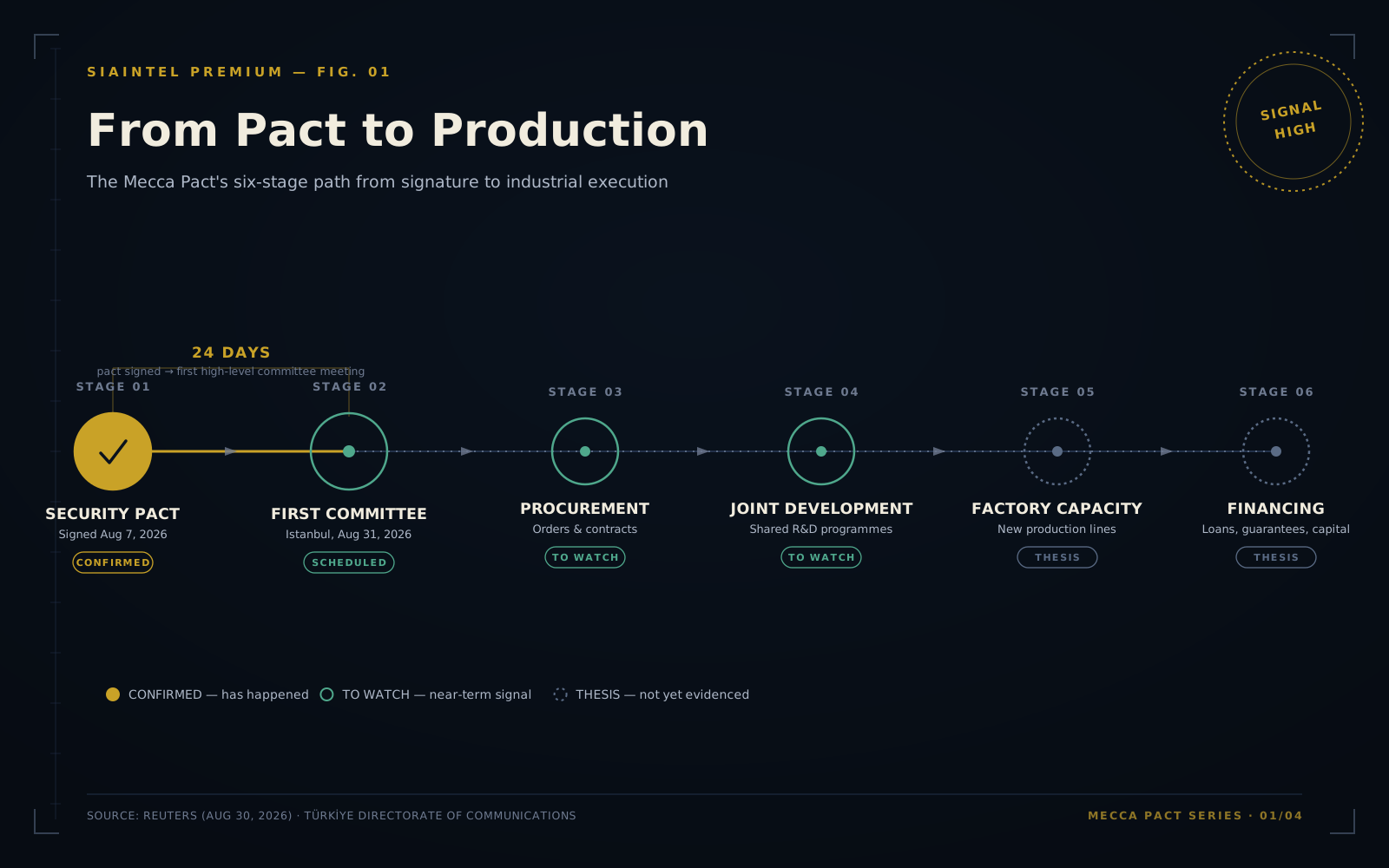
SIAIntel is therefore not calling the pact a new NATO, a common budget or a guaranteed order book. None of those claims is supported. We are testing whether a security framework can become a repeatable procurement and production framework.
Why Türkiye Is the Industrial Hinge
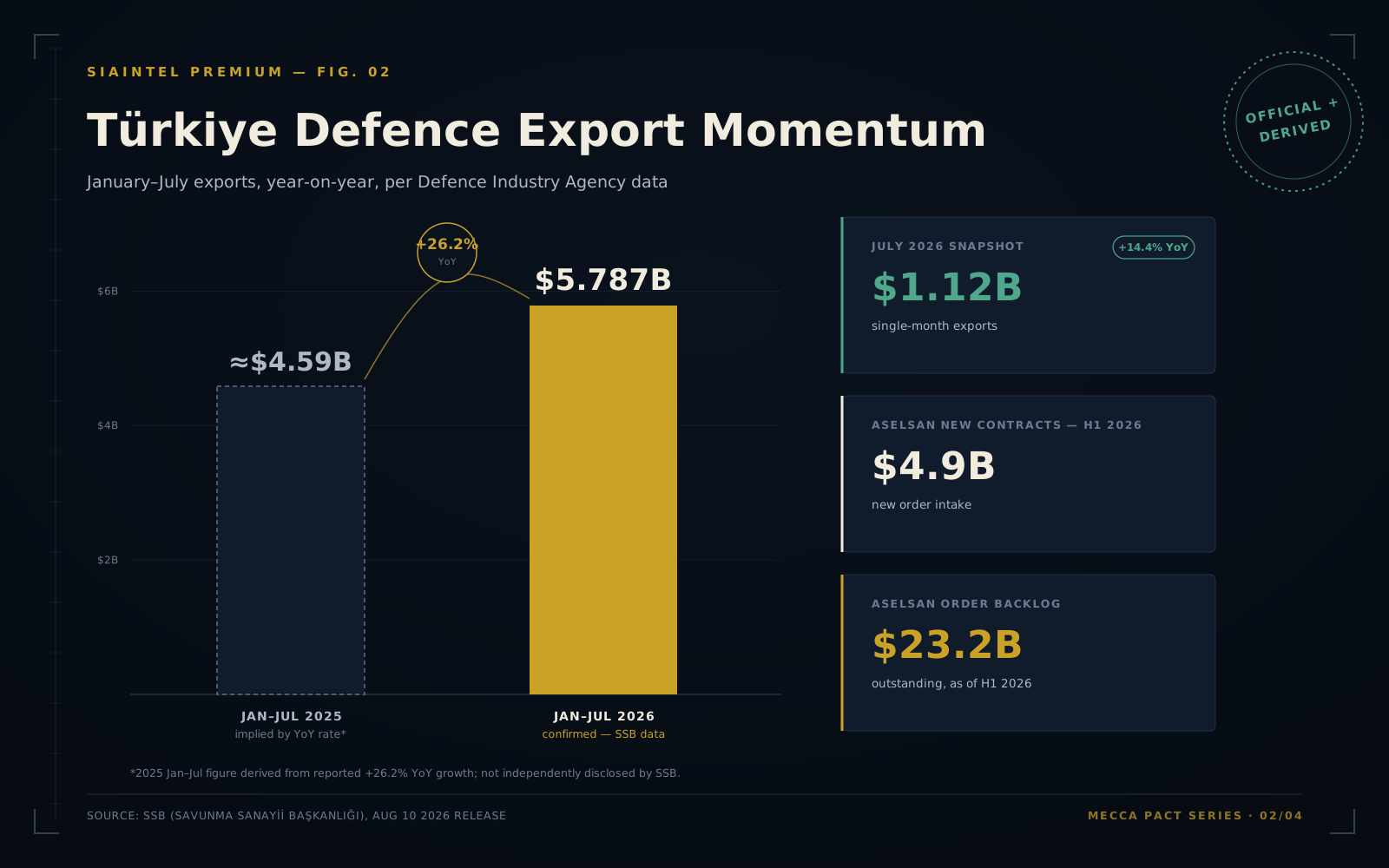
Türkiye enters the process with export momentum already visible. The Defence Industry Agency reported that defence and aerospace exports reached $5.787 billion in January–July 2026, up 26.2% from a year earlier; July alone reached $1.12 billion. The scale question is becoming more important than the proof-of-capability question.
ASELSAN adds a second hard signal. Its first-half 2026 earnings release shows $4.9 billion of new contracts and a $23.2 billion backlog. A larger trilateral procurement cycle would therefore enter an industrial system that already has long-duration orders rather than an empty factory base.
The second-order exposure is broader than prime contractors: radars, air defence, missiles, drones, electronic warfare, optics, specialty metals, energetics, machining, cables, semiconductors, software and electricity all become relevant if order volumes force new capacity.
Three Partners, Three Different Balance Sheets
Saudi Arabia’s strategic contribution is not simply purchasing power. The General Authority for Military Industries targets localization of more than 50% of military spending on equipment and services by 2030, explicitly linking procurement, manufacturing and interoperability. Its FY2026 budget statement allocates roughly SAR 240 billion to the military sector and identifies capability development and localization among the sector’s functions. That creates a structural preference for partnerships that move production, skills or technology into the Kingdom.
Pakistan contributes a different industrial and military base. The Ministry of Defence Production is actively promoting indigenization, defence exports, public-private partnerships and investment opportunities with domestic manufacturers. The thesis is not that these three strengths will automatically combine; it is that the new mechanism gives them a formal table on which to try.
The Capital Layer Nobody Should Ignore
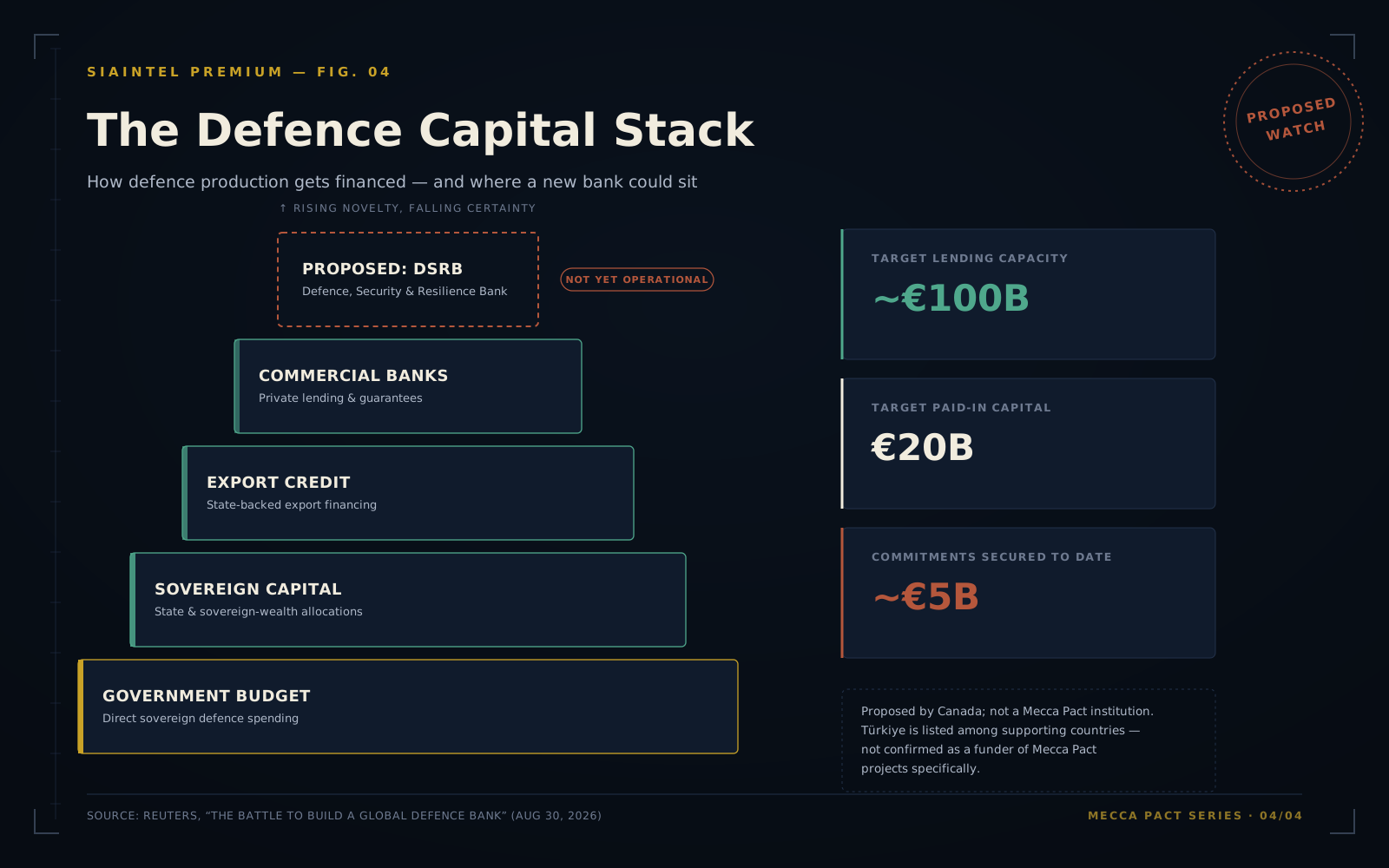
Joint production becomes economically meaningful only when someone funds factories, inventories, working capital and long procurement cycles. A separate development shows why defence is increasingly becoming a capital-markets story. Reuters reported on August 30 that the proposed Defence, Security and Resilience Bank is targeting about €100 billion of lending capacity, with around €5 billion of support secured so far, and listed Türkiye among supportive countries.
The proposed DSRB is not a Mecca Pact bank, is not yet operational and has not committed to fund trilateral projects. SIAIntel treats it only as evidence of a wider shift: governments are searching for mechanisms that can turn security priorities into cheaper, longer-duration capital for defence production.
What Would Make the Signal Investable?
Procurement: a defined purchasing programme, quantity, delivery schedule or budget. Co-production: a named weapon system or production line. Technology transfer: a disclosed division of intellectual property, manufacturing know-how or development responsibility. Financing: a sovereign fund, export-credit agency, bank, guarantee or committed project envelope.
One of those would advance the thesis. Several appearing together would suggest something larger: the early formation of a regional defence-industrial architecture.
Scenario Matrix
There is no confirmed Saudi KAAN order tied to this pact, no disclosed common procurement budget, no confirmed trilateral defence company, no evidence that the proposed DSRB will finance Mecca Pact projects, and no basis yet for assigning incremental earnings to ASELSAN, TUSAŞ, Baykar, ROKETSAN or any other company solely because the agreement exists.
This separation is important. The pact is confirmed. The August 31 meeting is scheduled. Industrial cooperation is on the agenda. The investment upside remains a thesis awaiting contracts.
Base — institutional build-out. The committee creates working groups and common technical requirements but no immediate large contract. Türkiye gains a longer opportunity pipeline, while earnings impact remains unbooked.
Bull — procurement becomes industrial policy. One or more named systems receive co-production, technology-transfer and financing structures. Factory investment and supplier orders become measurable, moving the signal from diplomatic architecture toward revenue visibility.
Risk — pact stays political. Meetings continue but procurement remains national, financing is not pooled and localization demands fragment programmes. The security framework survives while the industrial multiplier disappoints.
SIAIntel Prediction Ledger
Mode: NEW THESIS. Initial status: OPEN — INDUSTRIAL UPSIDE UNCONFIRMED. The ledger will move to CONFIRMED only if a named programme is paired with an identifiable contractor or production structure and committed money, quantity or financing. A memorandum without budget, delivery schedule or industrial allocation does not clear the threshold.
What Breaks the Thesis
The industrial thesis weakens if the August 31 mechanism produces no procurement or co-production workstream and subsequent meetings remain limited to training and political coordination. It also weakens if announced projects stay one-off national purchases with no shared development, localization or capacity expansion. A third falsifier is financing: if capital structures remain entirely disconnected from new production commitments, the proposed security-to-capital transmission chain has not formed.
Final Assessment
Political architecture is now real; industrial monetization is not. The next evidence threshold is contractual rather than diplomatic.
SIAIntel Signal
HIGH / INDUSTRIAL UPSIDE UNCONFIRMED — named company + named programme + committed money/order remains the decisive trigger.
Source Map
6 highlighted sources
SIAINTEL DEFENCE-INDUSTRIAL INTELLIGENCE
From Pact to Production Console
The political agreement is confirmed. This console tracks the industrial transmission test: procurement, localization, factory capacity and financing.
Türkiye Jan–Jul exports
$5.787B
Jan–Jul 2026
Export growth y/y
+26.2%
Jan–Jul 2026 y/y
ASELSAN backlog
$23.2B
H1 2026
Saudi military budget
SAR 240B
FY2026
Türkiye defence exports accelerated in 2026
January–July 2025 is derived from the official 26.2% year-on-year growth rate; 2026 is the reported official value.
Defence capital is becoming a separate strategic layer
The proposed DSRB figures are context only and are not presented as financing for the Mecca Pact.
Three partners, three industrial roles
The pact only becomes economically material if these complementary roles translate into named programmes and committed orders.
| Layer | Observed strength | Transmission channel | SIAIntel reading |
|---|---|---|---|
| Türkiye | Export and contractor scale | Prime systems + suppliers | Industrial hinge |
| Saudi Arabia | Procurement + localization mandate | Capital + local production | Demand and localization anchor |
| Pakistan | Military-production base | Indigenization + manufacturing | Production complement |
| Capital layer | DSRB proposal | Long-duration defence finance | Context; not pact-linked |
Industrial transmission scenarios
The thesis advances only when political coordination becomes funded production.
Scenario 1
Institutional build-out
Working groups and common requirements appear without a large near-term order.
Opportunity pipeline expands; earnings remain unbooked.
Scenario 2
Procurement becomes industrial policy
Named systems receive co-production, technology transfer and financing structures.
Factory and supplier orders become measurable.
Scenario 3
Pact stays political
Meetings continue while procurement remains national and localization fragments programmes.
Security framework survives but the industrial multiplier disappoints.
Evidence boundary
Only observed official, company and newswire data are plotted. No common procurement budget, named trilateral programme or DSRB financing commitment is treated as confirmed.
Editorial Credit
This intelligence brief was prepared by the SIAIntel Editorial Desk.
Some contributors work in sensitive public-sector, regulatory, market, or editorial roles. Their identities may be withheld when professional duties, source protection, or safety require confidentiality.
Editorial and publishing accountability: Sefa Karahan, Founder & Publisher
Related Intelligence
Related intelligence in this category · 3 briefs

Fed May Pause. AI’s $1.5T Buildout Could Keep Rates High
US PPI went flat, but AI infrastructure commitments, bond supply and grid bottlenecks may keep long-term financing costs elevated even if the Fed pauses.
Meta’s $12.3B Bond Exposes Wall Street’s AI Debt Machine
Meta’s $12.3B data-center bond shows how Wall Street is turning Big Tech lease promises into investment-grade AI debt—and pricing a new risk premium.

Signal Confirmed: Hormuz Peace Dividend Reversed
Brent closed at $96.28 before U.S. tanker strikes. SIAIntel tests whether repeated Hormuz attacks can weaken the hidden oil-flow buffer.