"AI growth is moving beyond chips as electricity, water, grid access, transformers and cooling capacity become the next strategic bottlenecks."
SIAINTEL INTELLIGENCE DOSSIER
Analysis Brief
SIAIntel Verification Panel
Analysis, data context, source mapping and editorial boundaries are presented as one evidence chain.
Key Takeaways
- Executive Briefing AI infrastructure demand is moving from a chip-only story into a power-grid, cooling, water and permitting constraint.
- Infrastructure Signal The infrastructure signal is that AI compute is becoming tied to firm power access, grid interconnection, cooling density, water availability and permitting capacity.
- Main Analysis AI Data Centers Are Quietly Repricing the Global Power Grid The artificial intelligence boom is still described as a race for chips, models and cloud capacity.
SIAIntel Perspective
SIAIntel frames this development not as a standalone headline, but as an intelligence brief shaped by source quality, structural implications and observable risk channels.
Data Snapshot
Coverage Area
Editorial category
AI
Read Time
Approximate duration
~10 min
Source Base
Visible evidence profile
5 visible sources
Published
Updated: Jun 08, 2026
Jun 08, 2026
Evidence Frame
This layer summarizes visible sources, article context and editorial framing. It is analytical context, not transactional guidance.
Executive Briefing
AI infrastructure demand is moving from a chip-only story into a power-grid, cooling, water and permitting constraint.
Infrastructure Signal
The infrastructure signal is that AI compute is becoming tied to firm power access, grid interconnection, cooling density, water availability and permitting capacity.
Main Analysis
AI Data Centers Are Quietly Repricing the Global Power Grid
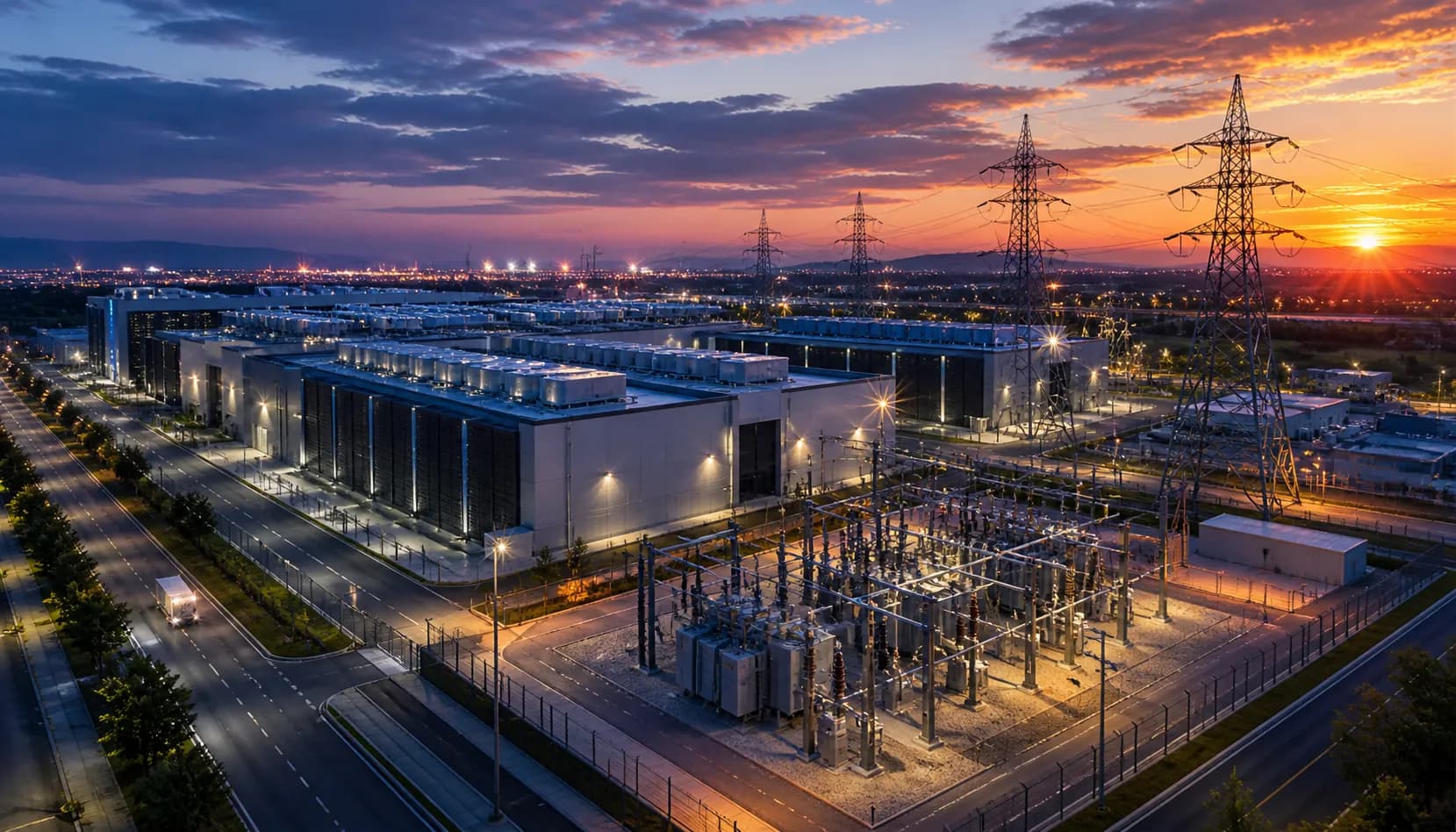
The artificial intelligence boom is still described as a race for chips, models and cloud capacity. That frame is becoming too narrow.
The next constraint may be more physical: electricity, water, transformers, cooling systems, grid permits and the political tolerance for rising power costs.
The International Energy Agency's updated projection sees electricity consumption from data centers rising from 485 TWh in 2025 to 950 TWh in 2030, accounting for around 3% of global electricity demand. AI-focused data centers grow faster than the broader sector, roughly tripling over the same period.
That is the signal markets may be underpricing: AI is no longer only a semiconductor cycle. It is becoming a grid cycle.
From Chips to Cables
The first phase of the AI trade rewarded compute scarcity: GPUs, memory, cloud capacity and model access.
The second phase may reward infrastructure scarcity: grid connections, gas turbines, transformers, substations, high-voltage equipment, power purchase agreements, cooling systems and local permitting capacity.
In other words, the AI bottleneck is moving from silicon to steel, copper, water and regulation.
That does not mean chip supply no longer matters. It means chips are no longer the only bottleneck that can decide how fast AI capacity scales. A data center with GPUs but no firm power connection is not a finished asset. It is stranded compute.
The Japan-Scale Power Benchmark
The older version of the AI energy debate was abstract: "data centers use a lot of electricity."
The new version is sovereign-scale. The IEA's Energy and AI work framed projected data center electricity consumption by 2030 as slightly more than Japan's total electricity consumption today. Its updated 2026 projection sharpens the number to 950 TWh by 2030.
That comparison matters because it turns a technology growth story into an energy-security problem.
Data centers do not simply add incremental demand. They concentrate large, always-on loads in specific regions, often faster than utilities, regulators and local grids can adapt.
For companies, that changes site selection. For governments, it changes industrial policy. For consumers, it raises a harder question: who pays for the grid upgrades?
Bring Your Own Power: The Grid Queue Becomes the New AI Moat
The next stage of AI infrastructure may be defined by a simple idea: if the grid cannot deliver power fast enough, the data center developer may try to bring its own.
This is not yet the universal model. But it is becoming an important signal.
PJM, the largest U.S. power grid operator, has proposed measures to manage AI-driven demand growth, including requiring major new power users such as data centers to supply their own power or agree to curtailment during shortages. The plan reflects a broader pressure point: AI load is arriving faster than some grid systems can add generation and transmission.
The core inference is not that data centers will abandon the public grid. The measured conclusion is that energy procurement, private generation, grid curtailment rights and behind-the-meter structures are becoming part of AI infrastructure strategy.
The old moat was compute access. The new moat may be power access.
Europe's Regulatory Turn
Europe is already moving from observation to regulation.
Reuters reported that the European Union plans to develop minimum energy-efficiency standards for data centers by 2027. EU data center capacity is projected to rise from 12 GW in 2025 to 28 GW by 2030, while the sector's electricity use could exceed its current share of the EU energy mix.
That policy shift matters because it puts AI infrastructure into the same political category as heavy industry, energy security and climate compliance.
For hyperscalers, the question is no longer only whether they can secure enough GPUs. It is whether they can secure enough clean, reliable and politically acceptable power.
For utilities, the question is whether new data center load creates durable growth or forces expensive grid upgrades before costs and benefits are fairly allocated.
For governments, the question is whether AI sovereignty can be pursued without creating energy bottlenecks elsewhere in the economy.
Water Is the Hidden AI Constraint
Power is the visible constraint. Water may become the quieter one.
Reuters reported that United Nations researchers expect data centers to consume twice as much power and water by 2030 as AI demand expands. AP's report on the same UN-linked findings said data centers consumed 448 TWh of electricity in 2025, produced 208 million tons of CO2, and used around 1.2 trillion gallons of water.
That turns data center siting into a local political question.
A region may have fiber, land and tax incentives. But if it lacks water resilience, cooling capacity, grid headroom or public tolerance for infrastructure expansion, it may not be able to absorb AI load without conflict.
The AI race is therefore not only about where compute is cheapest. It is about where electricity, water, cooling and regulation can scale together.
Capital Realignment: Who Enters the AI Supply Chain?
The companies exposed to this shift are not limited to chipmakers.
Power equipment makers, grid infrastructure suppliers, utilities, cooling specialists and energy developers are becoming part of the AI value chain.
GE Vernova has raised its 2026 outlook as data center and AI-related demand increased orders for power equipment and grid infrastructure. Reuters reported that the company's backlog reached 163 billion dollars, a signal that the AI infrastructure cycle is already showing up beyond semiconductors.
NextEra Energy has also pointed to the scale of the opportunity. Reuters reported that the company expects to add between 15 GW and 30 GW of new power generation capacity by 2035 to support data centers.
The investment implication is not a simple rotation out of technology. It is more complex: the AI value chain is widening.
Compute still matters. But grid equipment, thermal management, power generation, tariff design, energy storage, gas turbine availability and water permitting now matter too.
Türkiye and the Emerging-Market Compute Test
Türkiye's role in this story should be framed carefully.
It is not yet a global hyperscale AI infrastructure hub. But Ankara's emerging data center pipeline shows how emerging markets are trying to convert geography, incentives and energy policy into compute capacity.
Trendyol and Castle Investments are developing a data center in Ankara with an estimated total development cost of around 500 million dollars. The first phase is expected to deliver 9.6 MW of IT capacity and become operational in the third quarter of 2026; Data Center Dynamics has also reported the broader facility as a 48 MW project.
Khazna Data Centers has also announced plans for an AI-ready facility in Ankara's Başkent Organized Industrial Zone, designed with flexibility for AI, cloud and critical workloads.
For Türkiye, the opportunity is clear: geography, cloud demand, regional connectivity and industrial incentives can support a data center strategy.
The risk is just as clear: data centers are energy-intensive. If power reliability, water management, permitting and grid investment do not scale with demand, AI infrastructure can become a cost pressure rather than a productivity engine.
That is the emerging-market lesson. Compute capacity is not only a digital policy. It is an energy policy.
SIAIntel Infrastructure Watch
This is not a buy list. It is a signal map.
AI's infrastructure bottleneck is not concentrated in one company or one sector. It is spreading across power generation, grid equipment, cooling systems, water permits, utility regulation and national industrial policy.
1. Grid queue and bring-your-own-power signals
Watch: interconnection queues, behind-the-meter power, private power purchase agreements, energy island models, curtailment rules.
Why it matters: the faster AI load grows, the more power access becomes a competitive moat. The signal to track is not only who has GPUs, but who has firm power.
2. Grid equipment and electrification
Watch: GE Vernova, Eaton, Schneider Electric, ABB, Siemens Energy.
Signals: transformer lead times, switchgear backlogs, substation buildout, copper prices, electrical steel supply, vendor backlog updates.
Why it matters: if transformers, substations and high-voltage equipment become scarce, AI capacity can be delayed even when chips and capital are available.
3. Utilities, power generation and tariffs
Watch: NextEra Energy, Constellation Energy, Vistra, regional utilities and state regulators.
Signals: utility rate cases, special data-center tariffs, demand charges, gas turbine order books, power purchase agreements.
Why it matters: the cost of AI infrastructure can move from corporate capex into utility planning, tariff design and regional electricity prices.
4. Cooling, water and data center infrastructure
Watch: Vertiv, Schneider Electric, Eaton, Modine, Generac.
Signals: liquid cooling adoption, water permits, local opposition, drought exposure, wastewater constraints, high-density rack deployment.
Why it matters: AI workloads raise both power density and cooling complexity. Water and thermal management may become siting constraints, not just engineering details.
5. Countries, regulators and policy watch
Watch: United States, European Union, China, Gulf states, Türkiye.
Signals: EU data center efficiency standards, FERC/PJM rules, state public utility commission filings, national AI infrastructure incentives, water-use restrictions.
Why it matters: AI infrastructure is becoming a sovereignty issue. The countries that align energy, permitting, water and compute policy may attract the next wave of capacity.
6. Counter-signal watch
Watch: model efficiency, chip efficiency, workload migration, on-site renewables and storage, demand-response models.
Why it matters: the power-bottleneck thesis is not one-way. Smaller models, better chips, workload shifting and flexible energy systems could reduce some of the pressure.
The key signal is not whether AI demand keeps growing. It is where the first physical constraint appears: grid capacity, water access, transformer supply, cooling density, electricity prices or regulation.
Boundary
This is not an AI-collapse story.
The argument is narrower and more important: the AI buildout is entering a phase where physical infrastructure may shape the pace, cost and geography of growth.
The next AI bottleneck may not be the model.
It may be the grid.
Practical Impact
Companies must plan AI capacity around power procurement, grid interconnection, transformers, cooling and water constraints. Investors should watch utilities, grid equipment, power developers, thermal management and semiconductor demand as one connected infrastructure chain.
Country and Bloc Impact Map
- Developed Markets: United States, Japan and Europe face grid connection, permitting, utility capex and energy-efficiency pressure as AI infrastructure expands.
- United States: near-term data-centre load growth pressures grid planning, utility capex and regional interconnection queues.
- Japan: the Japan-scale electricity benchmark turns AI expansion into a sovereign energy-security comparison.
- Europe: constrained grids, energy-efficiency standards and permitting can slow AI infrastructure expansion.
- Turkey/Türkiye: emerging-market AI infrastructure opportunity depends on reliable power, water management and grid investment.
- Emerging Markets: countries with weaker grid headroom face a harder trade-off between AI capacity, electricity affordability and infrastructure investment.
SIAIntel Watch
Watch grid interconnection queues, transformer backlogs, utility rate cases, data-centre power purchase agreements, cooling density, water permits and energy-efficiency rules.
Editorial Safety Note
This analysis is not investment advice. It maps infrastructure signals, policy risk and market transmission channels.
Sources
- IEA Energy and AI -- supports global data-centre electricity demand baseline and the 415 TWh / 1.5% estimate.
- IEA data-centre electricity demand outlook -- supports the 2030 demand scenario around 945 TWh.
- DOE/LBNL U.S. data center energy report -- supports U.S. load growth and 2028 risk framing.
- EIA data center server energy use -- supports U.S. commercial power-demand context.
- DOE clean energy resources for data center demand -- supports grid planning and the EPRI 2030 estimate.
Editorial Credit
This intelligence brief was prepared by the SIAIntel Editorial Desk.
Some contributors work in sensitive public-sector, regulatory, market, or editorial roles. Their identities may be withheld when professional duties, source protection, or safety require confidentiality.
Editorial and publishing accountability: Sefa Karahan, Founder & Publisher
Related Intelligence
Related intelligence in this category · 6 briefs
Korea’s $950B AI Framework Reveals the Power Wall
Korea’s reported $950B AI framework links Nvidia, SK Hynix, Samsung, HBM4, sovereign AI factories and infrastructure finance to the power bottleneck.
Meta’s $12.3B Bond Exposes Wall Street’s AI Debt Machine
Meta’s $12.3B data-center bond shows how Wall Street is turning Big Tech lease promises into investment-grade AI debt—and pricing a new risk premium.

3 GW Vanished: Data Centers Shock America’s Largest Grid
More than 3 GW of data-center load vanished from PJM. See the hidden AI grid risk, investor impact, Virginia tax cost and next regulatory catalysts.
AI’s Closed Capital Circuit Just Hit the Power Grid
AMD’s Anthropic investment, Amazon’s milestone-linked financing and OpenAI’s 25-year Georgia power deal expose the closed capital circuit behind AI infrastructure.
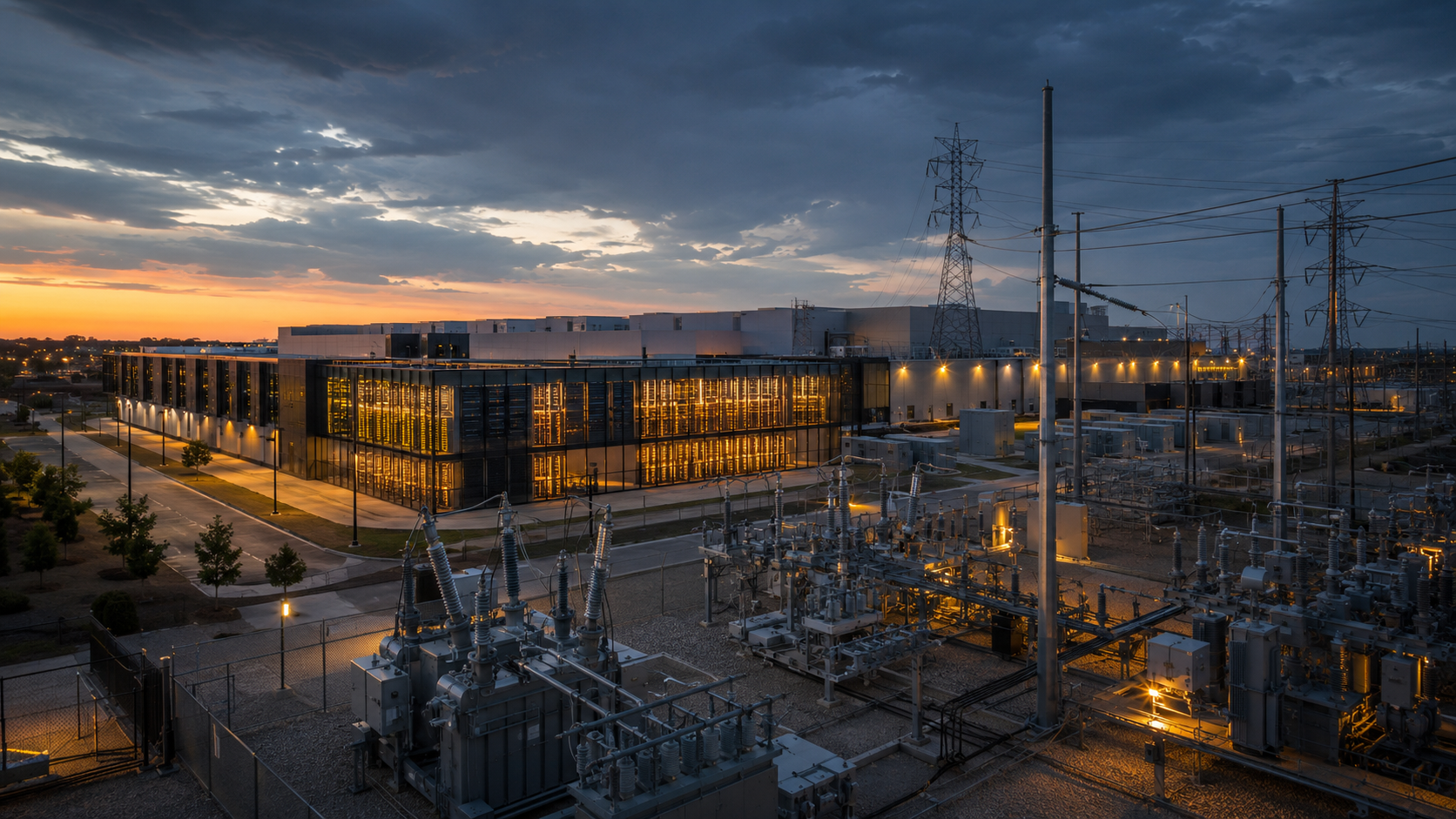
Wall Street May Be Underpricing the New AI Grid Rule
A five-stock event study and SEC-filed contracts show no durable equity discount after FERC—while power terms already reach project finance.
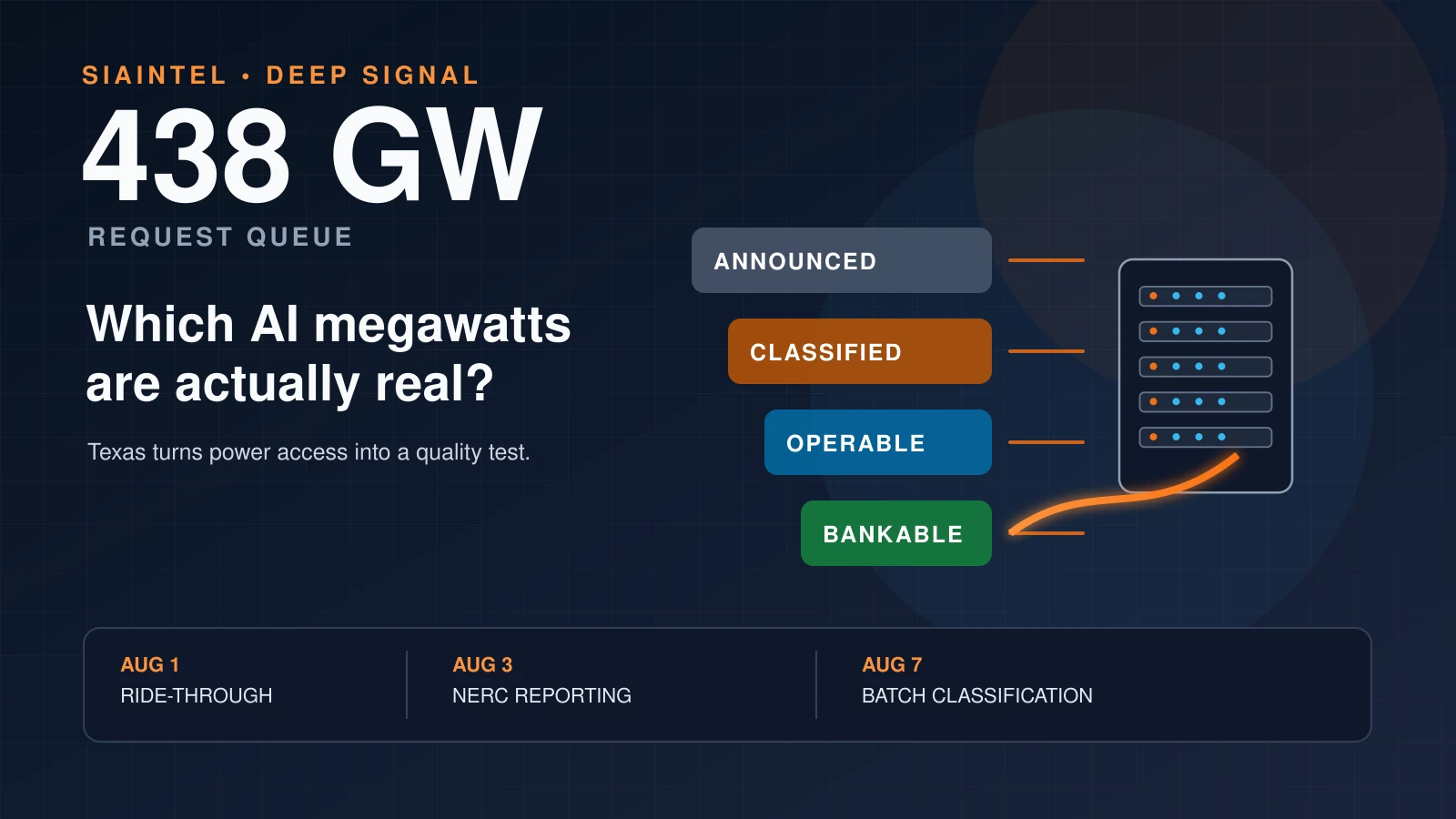
The AI War Enters the Age of Power and Collateral
China is institutionalising AI access while the United States turns large-scale electricity access into a test of grid readiness, operating flexibility and financial collateral.