"As EU data center capacity heads toward 28 GW by 2030, AI power demand is reshaping electricity prices, grid investment, industrial competitiveness and the green transition."
SIAINTEL INTELLIGENCE DOSSIER
Analysis Brief
SIAIntel Verification Panel
Analysis, data context, source mapping and editorial boundaries are presented as one evidence chain.
Key Takeaways
- The hidden cost will move through grid investment, clean-power procurement, industrial tariffs and household bills..
- Europe is still debating artificial intelligence as a race for chips, cloud capacity and software leadership.
- But the deeper stress is moving into a less glamorous layer of the economy: electricity infrastructure.
SIAIntel Perspective
SIAIntel frames this development not as a standalone headline, but as an intelligence brief shaped by source quality, structural implications and observable risk channels.
Data Snapshot
Coverage Area
Editorial category
AI-INFRASTRUCTURE
Read Time
Approximate duration
~4 min
Source Base
Visible evidence profile
Article context
Published
Updated: Jun 14, 2026
Jun 14, 2026
Evidence Frame
This layer summarizes visible sources, article context and editorial framing. It is analytical context, not transactional guidance.
Reader Takeaway: AI is becoming a power-system story. The hidden cost will move through grid investment, clean-power procurement, industrial tariffs and household bills.
AI is becoming an electricity-system story
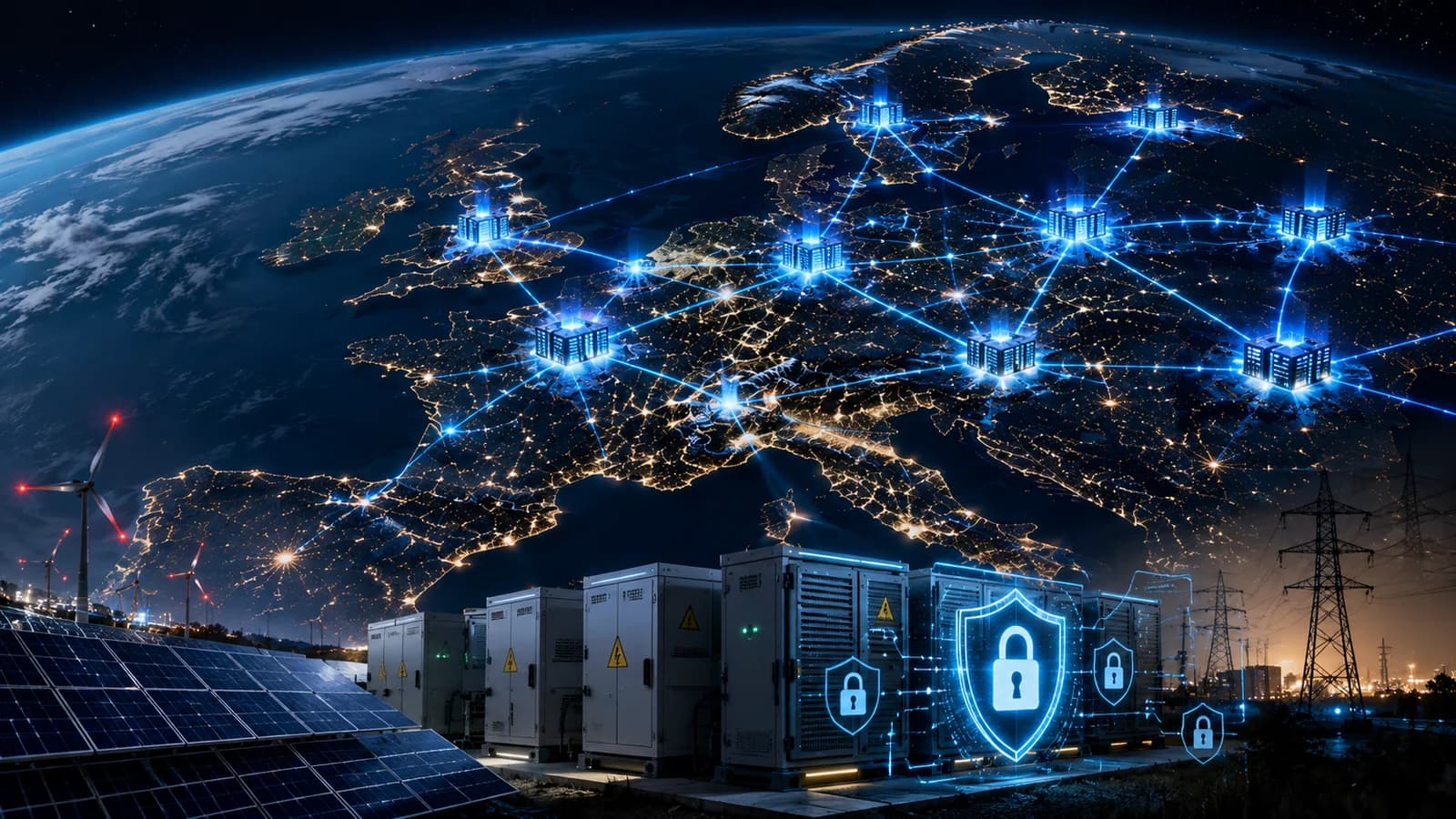
Europe is still debating artificial intelligence as a race for chips, cloud capacity and software leadership. But the deeper stress is moving into a less glamorous layer of the economy: electricity infrastructure. Data centers do not merely consume power; they require stable, continuous and increasingly large loads that must be connected to real grids, backed by real generation and financed through real tariffs.
That shift changes the macro story. If EU data center capacity rises from roughly 12 GW toward 28 GW by 2030, the question is no longer whether Europe can host more AI infrastructure. The question is who pays for the grid, generation and security architecture needed to make that infrastructure reliable. Reuters data-centre standards IEA Energy and AI
The new bottleneck is the grid
For AI infrastructure, the binding constraint may no longer be only chips, capital or land. In parts of Europe, the scarce asset is grid access. A hyperscale data center can be built faster than the transmission and distribution capacity required to serve it. That mismatch turns AI from a digital investment cycle into a physical infrastructure cycle.
The cost is unlikely to stay inside the technology sector. Grid expansion is financed through regulated returns, public investment, connection charges and network tariffs. If demand accelerates faster than infrastructure, the bill can spread across industry, public budgets and end consumers. Reuters Amazon grid-delay report European Commission grids package
Germany shows the price-floor risk
Germany is the clearest stress point because it combines heavy industry, data-center demand, energy-transition pressure and a politically sensitive power-price debate. The country’s 2025 average day-ahead wholesale electricity price reached 89.32 €/MWh, up 13.8% from the previous year. At the same time, the confirmed grid reserve need for winter 2026/27 rose to 7,407 MW.
Those numbers do not prove that AI is the cause of Germany’s electricity-price pressure. They show something more useful: AI demand is arriving on a system that already has a fragile price floor. New data-center load therefore becomes a multiplier, not an isolated technology story. Bundesnetzagentur SMARD data Bundesnetzagentur grid reserve
The hardware security premium
The most important cost shock may come from a less visible part of the clean-energy system: solar inverters. Europe is tightening restrictions on Chinese-made inverters in publicly funded projects because these devices sit inside critical electricity infrastructure and can raise cybersecurity and foreign-interference concerns.
That security logic is legitimate. But it has a price. Chinese suppliers account for roughly 70% of Europe’s inverter market, and EU-made alternatives may cost 20–40% more. If restrictions affect more than 14 GW of new solar projects per year, Europe may face a new layer of energy-transition inflation. SIAIntel calls this the hardware security premium: the extra cost and delay created when trusted infrastructure replaces cheaper high-risk supply. Reuters Chinese inverter curbs
The green transition paradox
Europe needs faster clean power to serve AI demand, electrified industry and climate targets. But the same system also needs more secure hardware, stronger grids and deeper strategic autonomy. These goals reinforce each other politically, but they can collide financially.
The causal chain is simple: AI data centers increase continuous electricity demand; that demand raises grid load and connection pressure; faster clean energy deployment becomes necessary; cybersecurity filters raise the bar for critical hardware; secure hardware becomes more expensive; clean power becomes costlier; and the pressure moves into industrial electricity prices and household bills.
Strategic Impact Matrix
Households face the risk that AI-related grid investment appears indirectly through network tariffs rather than visibly through data-center contracts. Industrial companies face a competitiveness test if electricity-price floors stay elevated. SMEs may absorb the same tariff pressure with less hedging capacity. Grid operators gain investment relevance but also public scrutiny. Hyperscalers may need to prove that their clean-power claims do not shift system costs onto others. Policymakers face the hardest trade-off: faster AI, cleaner power and secure hardware cannot all be treated as cost-free priorities.
Capital, Risk & Strategic Priority Lens
The signals to watch are grid connection queues, data-center power purchase agreements, network tariff changes, inverter procurement rules, reserve capacity needs and EU data-center efficiency labels. The positive case is that AI demand accelerates grid modernization and clean-power investment. The negative case is that Europe builds AI capacity while pushing the hidden infrastructure bill into consumers, industrial users and public budgets.
This is not investment advice. It is a warning about cost transmission. AI is no longer only a software story. In Europe, it is becoming a sovereign infrastructure stress test.
Editorial Credit
This intelligence brief was prepared by the SIAIntel Editorial Desk.
Some contributors work in sensitive public-sector, regulatory, market, or editorial roles. Their identities may be withheld when professional duties, source protection, or safety require confidentiality.
Editorial and publishing accountability: Sefa Karahan, Founder & Publisher
Related Intelligence
Related intelligence in this category · 6 briefs
AI’s Megawatt Margin Call Has Begun: Ofgem Turns Grid Access Into a Credit Test
Ofgem’s £71.3m collateral proposal, Oracle’s BBB- rating and a 73 GW queue turn AI data-centre grid access into a live credit test.
Nvidia–OpenAI $250B Talks Expose AI’s Hidden Credit Circuit
Nvidia’s reported $250B OpenAI guarantee talks, project bonds and BIS warnings confirm SIAIntel’s early map of AI’s hidden credit circuit.
Korea’s $950B AI Framework Reveals the Power Wall
Korea’s reported $950B AI framework links Nvidia, SK Hynix, Samsung, HBM4, sovereign AI factories and infrastructure finance to the power bottleneck.
Meta’s $12.3B Bond Exposes Wall Street’s AI Debt Machine
Meta’s $12.3B data-center bond shows how Wall Street is turning Big Tech lease promises into investment-grade AI debt—and pricing a new risk premium.

Yen Nears 164: SIAIntel’s Carry-Trade Signal Passes Its First Test
The yen is near 164. SIAIntel audits its July 6 carry-trade signal, Japan intervention risk, BOJ catalysts and cross-asset market impact.

3 GW Vanished: Data Centers Shock America’s Largest Grid
More than 3 GW of data-center load vanished from PJM. See the hidden AI grid risk, investor impact, Virginia tax cost and next regulatory catalysts.