"NOAA puts a very strong El Niño above 90%. SIAIntel tracks the hidden inflation route through rivers, canals, hydropower and food logistics."
SIAINTEL INTELLIGENCE DOSSIER
Analysis Brief
SIAIntel Verification Panel
Analysis, data context, source mapping and editorial boundaries are presented as one evidence chain.
Key Takeaways
- The less obvious one is whether food, power and trade become more expensive even if global harvest volumes remain broadly adequate.
- The 30-second decision The Pacific has moved from a weather watch to a macro transmission risk.
- Climate Prediction Center raised the probability of a very strong El Niño above 90% for the Northern Hemisphere fall and winter.
Data Snapshot
Coverage Area
ECONOMY
Editorial category
Read Time
~16 min
Approximate duration
Source Base
13 visible source citations
Source Map highlights 6 unique sources
Published
Aug 13, 2026
Updated: Aug 13, 2026
Source Map
6 highlighted sources
Reuters reported the updated CPC assessment on 13 August
NewswireMarket reporting / newswire context
Reuters mapped the agricultural and energy divergence across Latin America
NewswireMarket reporting / newswire context
The Panama Canal Authority describes its El Niño water-management posture here
SourceReferenced source context
Reuters’ emerging-market analysis details the Colombia and Peru channels
NewswireMarket reporting / newswire context
SIAINTEL DATA INTELLIGENCE
El Niño System-Friction Console
Climate risk across food, freight and power.
Very strong probability
>90%
CPC Aug. 13
Historic probability
69%
Oct–Dec 2026
Historic RONI threshold
≥2.5°C
Separate extreme threshold
Critical window
Oct–Dec
Historic-risk window
Two probability thresholds
Very strong is above 90%; historic intensity is a separate 69% risk.
RONI intensity thresholds
Very strong begins at ≥2.0°C; the historic-risk threshold is ≥2.5°C.
System-friction map
Water-dependent transport, power and fisheries can transmit inflation.
| System | Signal | Cost channel | Watch |
|---|---|---|---|
| Amazon | Drought risk | Lower river payload | Gauges + freight |
| Panama | Draft pressure | Less cargo per transit | Draft notices |
| Hydropower | Reservoir risk | More thermal generation | Reservoirs + gas |
| Peru fisheries | Warm-water stress | Fishmeal/feed pressure | Catch + prices |
Four transmission paths
The signal depends on climate stress reaching economic systems.
Scenario 1
Base friction
Harvests hold; logistics worsen
Delivered costs rise
Scenario 2
Resilience
Buffers absorb disruption
Food inflation stays contained
Scenario 3
Logistics stress
River and canal capacity worsen
Freight transmits first
Scenario 4
Break case
Rain normalizes or intensity misses
Infrastructure stress fades
Evidence rule
>90% is plotted at 90 as a conservative floor; 69% is a separate historic threshold.
Evidence Stack & Decision Relevance
This panel shows which decision areas the story prioritizes for citizens, companies, investors and policy makers; the full capital and risk lens should be read in the article below.
Citizens and households
Relevant for budget resilience, debt management, income security and cost-of-living exposure.
Companies, SMEs, B2B and B2C
Relevant for cash flow, pricing power, supply-chain resilience, customer risk and efficiency investment.
Investors and portfolio managers
Not an investment recommendation; a monitoring frame for risk regime, liquidity, valuation discipline and balance-sheet quality.
Regulators and policy makers
Provides signals for financial stability, capital flows, debt sustainability, investment climate and policy credibility.
The full Strategic Impact Matrix and Capital, Risk & Strategic Priority Lens appear below.
Evidence Frame
This layer summarizes visible sources, article context and editorial framing. It is analytical context, not transactional guidance.
SIAIntel Premium Intelligence | Signal File — 13 August 2026
NOAA has raised the probability of a very strong El Niño above 90%, while the chance that October–December reaches a separate “historic” threshold is 69%. The obvious market question is whether crops fail. The less obvious one is whether food, power and trade become more expensive even if global harvest volumes remain broadly adequate.
The 30-second decision
The Pacific has moved from a weather watch to a macro transmission risk. On 13 August, the U.S. Climate Prediction Center raised the probability of a very strong El Niño above 90% for the Northern Hemisphere fall and winter. Reuters reported a separate 69% probability that the October–December 2026 RONI measure reaches at least 2.5°C, a threshold described as historic because it would exceed previous events in the modern record back to 1950. These are different thresholds and should not be merged into one statistic. Reuters reported the updated CPC assessment on 13 August.
The SIAIntel thesis is not “El Niño equals global food shortage.” The global food system has larger inventories, more resilient seeds, irrigation, forecasting and diversified trade than in earlier decades. The risk is subtler: a powerful El Niño can create economic friction across rivers, canals, hydropower, fisheries, roads and processing at the same time that some major crop belts receive beneficial rain. Reuters’ 11 August resilience analysis is the strongest counterweight to a simplistic shortage thesis.
That creates the signal we want to track:
> The first material inflation shock may emerge through logistics and regional price fragmentation before it appears as a global harvest failure.
Markets will watch tonnes of soybeans, corn and wheat. SIAIntel will also watch river depth, canal draft, reservoir levels, freight premiums, thermal-power dispatch and fisheries output.
What changed today: the probability regime shifted
The July CPC assessment already pointed to an unusually powerful event. The 13 August update matters because it pushed the probability of the “very strong” category above 90%. The separate 69% “historic” probability is even more important for risk management because it describes a more extreme threshold, not a synonym for “very strong.” Reuters’ same-day update makes the distinction explicit.
That does not mean the economic outcome is certain. ENSO strength raises the odds of characteristic regional patterns; it does not guarantee identical rainfall or temperature outcomes in every location. The correct reading is therefore probabilistic: the climate forcing is becoming strong enough that multiple infrastructure and commodity systems now deserve simultaneous monitoring.
This is why the story is more than seasonal weather. A macro shock becomes more likely when the same climatic driver touches food supply, electricity costs, shipping capacity and central-bank reaction functions at once.
The geographic paradox: wetter south, drier north
The core error in a one-line El Niño narrative is treating Latin America as one weather zone. It is not.
Across the southern cone, El Niño often brings more rain to Argentina, Uruguay, Paraguay and southern Brazil. That can improve soil moisture and support soy, corn and wheat output. Reuters’ 13 August regional analysis says the developing event could strengthen from September and that wetter conditions may benefit important crop areas, while also raising risks from excessive humidity, fungal disease, flooded roads and fields that become difficult to work. Reuters mapped the agricultural and energy divergence across Latin America.
Farther north, the same event can tilt rainfall the other way. Northern Brazil and parts of the Amazon basin face greater drought risk. That matters not only for farms but for waterways, power generation, wildfire exposure and communities dependent on rivers.
The paradox is economically important: stronger harvests in one export zone can coexist with higher delivery costs somewhere else. A global crop balance sheet may therefore look comfortable while local freight, power or processing costs are deteriorating.
The hidden bottleneck: the farm can work while the route fails
A crop is not an export until it reaches a buyer.
Brazil’s commodity system increasingly depends on a network of highways, ports and inland waterways that moves production from the interior toward global markets. The Amazon river network is a particularly important corridor for agricultural cargo. If drought lowers navigable depths, vessels may have to carry less cargo, wait for safer conditions or reroute.
That changes the question from “How much was harvested?” to “How much can be moved per vessel, at what cost, and on what schedule?”
This distinction is the heart of the SIAIntel signal. Reduced payload does not destroy a tonne of soybeans. It changes the economics of delivering it. More voyages, slower turnaround, storage pressure and route substitution can lift the delivered price even when farm output is strong.
The best early-warning indicator may therefore be a divergence: healthy production forecasts alongside rising freight premiums or falling river gauges. That combination would show the shock moving from meteorology into commerce.
Panama makes the logistics thesis global
The Amazon is not the only water-dependent transport system in the region. The Panama Canal provides a second, independent test.
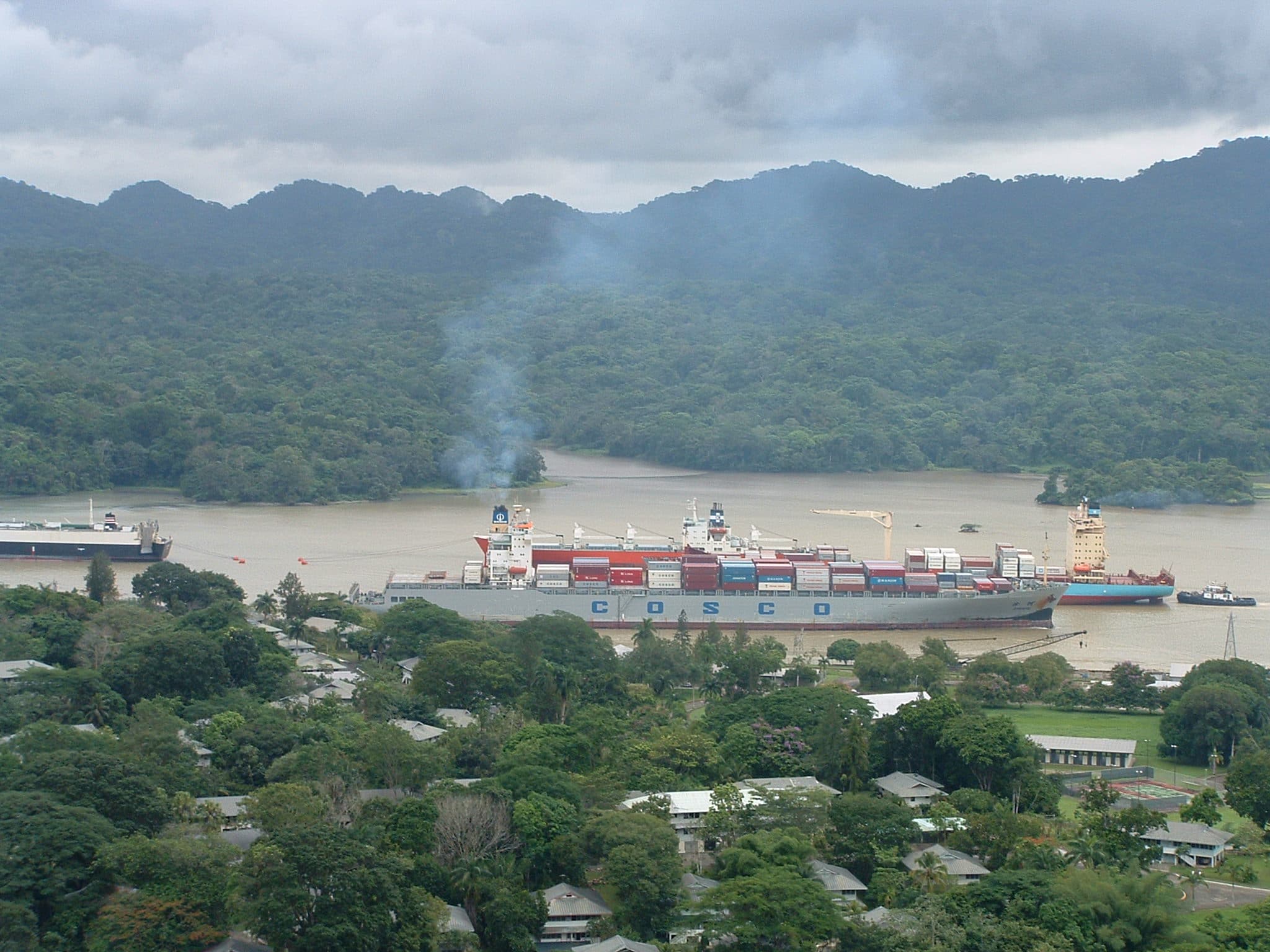
The Panama Canal Authority has been managing water risk through operational planning and draft adjustments. Its own El Niño preparedness material says the canal has been working to preserve operational stability and avoid transit restrictions where possible, while acknowledging the importance of rainfall and reservoir conditions. The Panama Canal Authority describes its El Niño water-management posture here.
Reuters reported on 13 August that the canal is tightening shipload weights as water risk builds. Lower permitted draft means a ship may have to carry less cargo, which can increase the cost per transported unit. At the same time, the authority has said it does not expect to cut daily transit slots unless strictly necessary. Reuters’ Latin America analysis supports the narrower claim: the current signal is about draft and cargo economics, not an assertion that daily passages have already been broadly curtailed.
That nuance matters. The SIAIntel thesis does not require the canal to “close.” A small reduction in usable ship capacity can be economically meaningful long before a dramatic disruption appears in headlines.
Amazon river constraints plus Panama draft pressure would create two separate manifestations of the same system-friction theme: water scarcity changing transport economics.
Water risk becomes power risk
The second transmission channel is electricity.
Hydropower converts rainfall and reservoir storage into a macro variable. When inflows weaken, power systems can dispatch more thermal generation, which can expose electricity prices to natural gas, oil or other fuel costs. When rainfall improves, the opposite can occur.
Colombia offers the clearest monetary-policy lens. Reuters noted on 27 July that below-average rainfall can hit both food supply and electricity prices and that the country’s reliance on hydropower makes reservoir levels a key inflation indicator. Standard Chartered economist Dan Pan described Colombia as particularly exposed to higher food and energy inflation from El Niño disruptions. Reuters’ emerging-market analysis details the Colombia and Peru channels.
Ecuador provides a recent operating precedent. The Associated Press reported that drought depleted hydroelectric water levels during last year’s energy crisis and contributed to widespread outages; authorities are now preparing thermal generation and other contingency measures in advance of stronger El Niño impacts. AP’s regional preparedness report shows how “water risk” can become a power-system problem before it becomes a national food shortage.
This channel can work in opposite directions across the continent. Wetter southern basins can support hydropower while drier northern systems face more expensive replacement generation. The macro result is not a uniform energy shock but regional dispersion in power costs and industrial margins.
Fisheries are the overlooked food channel
El Niño changes ocean temperatures as well as rainfall. That means the food-system effect is not limited to fields.
Reuters reported that Peruvian fishing activity fell sharply in the first five months of 2026 as warmer waters altered marine ecosystems. Peru is important to global fishmeal and fish-oil supply chains, which in turn feed into aquaculture and animal-feed economics. Reuters’ 13 August regional analysis connects the developing event to fisheries as well as crops, energy and transport.
This is another reason headline grain inventories can miss the first inflation impulse. A supermarket basket is exposed to multiple biological and logistical systems at once. Grain may be plentiful while seafood, feed, coffee, sugar or other weather-sensitive categories tighten.
The correct risk map is therefore multi-commodity, not a single chart of global corn or wheat stocks.
Inflation can enter through the side door
Consumers do not buy a crop at the farm gate. The final price embeds transportation, electricity, processing, storage, insurance, financing, packaging and distribution.
That means a large harvest does not automatically equal cheap food.
If a strong El Niño lowers river depths, reduces vessel payload, raises thermal-power use, disrupts fisheries and creates road or flood damage in wetter regions, several cost layers can rise simultaneously. The resulting inflation may look fragmented at first: one food category, one electricity market, one freight route.
But fragmented shocks can accumulate.
This is the “side door” thesis: the climate event does not need to destroy global production to interrupt disinflation. It only needs to make enough parts of the supply chain less efficient.
For central banks, that distinction is crucial. A one-off food spike can sometimes be looked through. Persistent second-round effects through electricity, transport and expectations are harder to ignore.
Central banks are already part of the story
The central-bank channel is not theoretical.
Reuters’ 27 July review says Colombia is among the region’s most exposed economies because El Niño-related dryness can affect food and electricity at the same time. It also reports that Peru’s central bank has warned inflation could exceed target and growth could suffer because of high oil prices and El Niño effects on fishing and agriculture. The Reuters emerging-market report gives us two independent policy examples rather than a generic warning.
Argentina sits on the other side of the distribution. More rainfall can support grain output, export revenues and foreign-exchange inflows. That contrast is important because it prevents a lazy “El Niño is bad for every emerging market” conclusion.
The policy signal is therefore dispersion. Countries with hydropower dependence, high food weights in consumer baskets or vulnerable currencies may face stickier inflation even while agricultural exporters in wetter zones benefit.
For investors, the confirmation is not one universal rate move. It is a widening gap between countries whose inflation paths improve and those whose climate-sensitive components stop disinflating.
Counter-thesis: why this may not become a food crisis
The strongest case against an extreme food-inflation narrative is the resilience of the modern agricultural system.
Reuters reported on 11 August that near-record inventories, drought-tolerant seeds, improved weather forecasting, precision agriculture, irrigation and more diversified export supply have strengthened the world food system compared with previous major El Niño episodes. That resilience case is documented here.
This matters because it changes what we are forecasting.
SIAIntel is not predicting a global famine or an inevitable collapse in total crop output. The base case can include adequate global grain supply and still produce meaningful inflation stress in selected goods and regions.
The counter-thesis would win if inventories absorb local losses, rivers remain navigable, Panama avoids material cargo constraints, reservoir levels stay comfortable and weather-sensitive commodity prices fail to reprice. In that case, a historically strong climate event could remain economically manageable.
That is why “historic El Niño” should not be translated into “historic economic damage” automatically. The event’s strength is a risk amplifier, not a deterministic loss estimate.
Who feels it first?
Households: Food and electricity are the most direct channels. Lower-income households are more vulnerable because food and energy consume a larger share of budgets. The effect may arrive unevenly through coffee, sugar, seafood, grains, vegetable oils, meat or utility bills rather than through one synchronized global food-price surge.
Companies: Exporters and processors face margin uncertainty. A farmer can enjoy a good yield while the exporter pays more for freight. A food manufacturer can secure raw material but face higher electricity, insurance or storage costs. Utilities may need more thermal fuel when hydro output weakens.
Investors: The obvious assets are agricultural futures. The less obvious watchlist includes logistics, ports, shipping, natural gas, hydropower-sensitive utilities, insurers, fisheries, fertilizer demand, food processors and currencies of climate-exposed emerging markets.
Governments: Fiscal costs can rise through disaster response, power subsidies, wildfire control, water infrastructure or support to affected agricultural regions. AP reports that governments across Latin America are already activating contingency plans for water, energy, transport, fire and flood risks. AP’s preparedness survey shows that the policy response has begun before peak climate intensity.
SIAIntel Intelligence Box
Signal class: Climate-to-inflation transmission / system friction.
Current trigger: Above 90% probability of a very strong El Niño during the Northern Hemisphere fall and winter, with a separate 69% probability of the October–December RONI reaching the ≥2.5°C historic threshold. Reuters, 13 August.
Core inference: Markets may over-focus on global harvest tonnage and underprice the cost of moving, powering, processing and financing food.
Hidden chain: Pacific warming → rainfall divergence → river/canal constraints + hydropower dispersion + fisheries disruption → higher delivered costs → stickier regional inflation.
What is confirmed: The probability regime has strengthened; Latin American governments and infrastructure operators are preparing; Colombia and Peru already treat El Niño as a policy risk; Panama and Amazon water conditions matter for transport economics.
What is not confirmed: A global food shortage, a broad closure of the Panama Canal, or a uniform inflation shock across all of Latin America.
Confidence: High that the transmission channels exist; medium that they become large enough to materially change global headline inflation; higher for selected regional inflation and freight effects.
30/60/90 watchlist
Next 30 days
Watch CPC strength updates and the pace of Pacific warming. Track Amazon and Madeira basin river gauges, rainfall anomalies in northern Brazil, and the first material changes in Brazilian agricultural freight premiums. Monitor Panama Canal draft advisories rather than relying on dramatic “closure” headlines.
In the southern cone, watch whether beneficial rain becomes excessive. The bullish harvest effect weakens if fields become inaccessible, roads flood or fungal disease pressure rises.
30–60 days
Watch hydropower reservoir trajectories in Colombia, Brazil and Ecuador; thermal generation dispatch; natural-gas demand; and electricity-price expectations. At the same time, follow Peru’s fishing data and fishmeal pricing for evidence that the ocean channel is transmitting into food/feed markets.
The strongest confirmation would be healthy grain forecasts plus worsening transport or power metrics.
60–90 days
The October–December window is where the historic-strength probability becomes most relevant. By then, markets should have clearer evidence on whether the event is primarily an agricultural benefit in some regions, a logistics/power cost shock in others, or both.
Watch central-bank language. If inflation reports or policy statements increasingly cite food, electricity or weather risks while headline crop supply remains adequate, the SIAIntel thesis will have moved from a scenario to an observable macro regime.
What would confirm the thesis?
We upgrade the signal if at least three of the following occur together:
1. Amazon-basin river gauges fall materially below seasonal norms and cargo operators reduce payloads or reroute. 2. Panama Canal draft limits tighten further or cargo-per-transit economics deteriorate even without daily slot cuts. 3. Colombian or other hydropower-dependent systems show falling reservoir expectations and more expensive thermal dispatch. 4. Weather-sensitive commodities such as coffee, sugar, fishmeal or selected food oils reprice despite comfortable global grain inventories. 5. Agricultural freight premiums rise while soy, corn or wheat production forecasts remain healthy. 6. Central banks explicitly identify El Niño-linked food or electricity pressure as a reason to delay easing or revise inflation risks upward.
The single most important pattern is divergence: benign farm output with deteriorating infrastructure economics.
What would break the thesis?
The signal weakens if the event peaks below current strength expectations, northern rainfall improves, major river corridors remain navigable, Panama maintains normal cargo economics, hydropower reservoirs remain comfortable and weather-sensitive commodity prices stay contained.
It also weakens if the modern food system’s resilience absorbs regional shocks exactly as the counter-thesis suggests. Large inventories and flexible trade can redirect supply. Better forecasting can change planting and logistics decisions before damage occurs.
A strong El Niño can therefore occur without a major inflation event. That is not a contradiction. It is the reason SIAIntel is tracking economic transmission, not merely ocean temperature.
Bottom line
The next inflation shock may not look like a shortage.
It may look like a full warehouse beside a shallow river; a healthy crop behind a more expensive freight route; a hydropower system buying more thermal fuel; a canal allowing ships through but with less cargo; or a central bank delaying relief because food and electricity stopped disinflating.
That is the asymmetry in the 2026 El Niño.
The climate probability has become more extreme, but agricultural resilience is also stronger. Those two facts can coexist. The resulting risk is not necessarily “less food for the world.” It is more friction in the systems that move, power and price food.
With the probability of a very strong event now above 90% and a 69% chance of reaching a separate historic threshold in October–December, the correct market question is no longer whether El Niño exists.
It is where the cost appears first.
SIAIntel base signal: watch the infrastructure around the harvest, not only the harvest itself.
Sources and methodology
This analysis uses the 13 August CPC probability update as reported by Reuters, Reuters reporting on Latin American agriculture, energy, fisheries and transport, Reuters’ emerging-market policy review, Reuters’ food-system resilience analysis, the Panama Canal Authority’s official El Niño preparedness material, and AP reporting on government contingency measures. The article distinguishes observed facts from SIAIntel inference and treats regional outcomes as probabilistic rather than deterministic.
Primary evidence links are embedded in the relevant sections above. No claim of a global food shortage, canal closure or uniform Latin American outcome is assumed.
Editorial safety note: This publication is for news and analytical intelligence. It is not investment, legal or financial advice and is not a recommendation to buy, sell or hold any asset.
Editorial Credit
This intelligence brief was prepared by the SIAIntel Editorial Desk.
Some contributors work in sensitive public-sector, regulatory, market, or editorial roles. Their identities may be withheld when professional duties, source protection, or safety require confidentiality.
Editorial and publishing accountability: Sefa Karahan, Founder & Publisher