"Aluminium can look liquid on the LME while origin, tariffs, war damage and cable conversion make grid-ready metal much tighter."
SIAINTEL INTELLIGENCE DOSSIER
Analysis Brief
SIAIntel Verification Panel
Analysis, data context, source mapping and editorial boundaries are presented as one evidence chain.
Key Takeaways
- second signal LME aluminium stocks are near a 36-year low while post-April-2024 Russian production cannot be newly warranted, making headline inventory less fungible than it looks.
- EGA says Al Taweelah suffered significant kinetic damage while Gulf supply has outsized import importance for the EU, Japan and U.S..
- Together, those facts concentrate physical recovery risk in markets with high import dependence.
Data Snapshot
Coverage Area
ECONOMY
Editorial category
Read Time
~16 min
Approximate duration
Source Base
22 visible source citations
Source Map highlights 6 unique sources
Published
Aug 15, 2026
Updated: Aug 15, 2026
Source Map
6 highlighted sources
post-April-2024 Russian production cannot be newly warranted
SourceReferenced source context
EGA says Al Taweelah suffered significant kinetic damage
SourceReferenced source context
Gulf supply has outsized import importance for the EU, Japan and U.S.
SourceReferenced source context
SIAINTEL PHYSICAL LIQUIDITY INTELLIGENCE
Deliverable Metal Fracture Console
A source-locked view of the gap between exchange aluminium and the qualified tonne a grid project can actually receive on time.
LME registered stock
≈250k t
Approximate level reported on August 13
Russian-branded share
95%
Share of available end-July warrant stock
Gulf share of U.S. imports
21%
Primary aluminium import exposure
Al Taweelah cells restarted
89 / 1,262
89 of 1,262 cells in EGA’s July 2 update
Visible LME origin mix
The residual warrant pool was overwhelmingly Russian-branded at end-July.
Gulf trade centrality
The Gulf has a modest world-output share but a much larger role in major import markets.
Deliverability filter map
Each layer can reduce the tonnes that are economically useful to a time-sensitive grid project.
| Filter | Observed condition | Project question | Failure channel |
|---|---|---|---|
| Regulatory | New post-cutoff Russian output cannot refresh LME warrants | Is the tonne acceptable in this jurisdiction? | Origin / compliance basis |
| Geography | Residual stock is concentrated in Asian warehouses | Can metal reach the conversion plant on time? | Freight / working capital |
| Production | Al Taweelah recovery is cell-by-cell after kinetic damage | Is shipment recovery backed by current hot metal? | Inventory-buffer depletion |
| Conversion | The grid needs qualified conductor, not an exchange ingot | Is rod/conductor capacity available before energisation? | Completion / delay risk |
Deliverable-metal decision matrix
The signal is tied to observable changes in usable inventory, physical basis and conversion time.
Scenario 1
Fracture persists
Benchmark stays calm while usable free float remains constrained.
Project-time liquidity is tighter than price liquidity.
Scenario 2
Physical easing
Non-Russian stock rebuilds and regional premiums and lead times normalize.
The wedge between LME and project supply narrows.
Scenario 3
Three walls tighten
Legacy stock, Gulf recovery and tariff fragmentation deteriorate together.
Physical basis and completion risk rise before the benchmark reprices.
Scenario 4
Thesis weakens
Usable inventory, production and conversion capacity recover together.
The benchmark again becomes a good proxy for project availability.
Evidence boundary
Observed stock, origin, trade-share and restart figures are shown directly. They are not combined into a synthetic scarcity index.
Evidence Stack & Decision Relevance
This panel shows which decision areas the story prioritizes for citizens, companies, investors and policy makers; the full capital and risk lens should be read in the article below.
Citizens and households
Relevant for budget resilience, debt management, income security and cost-of-living exposure.
Companies, SMEs, B2B and B2C
Relevant for cash flow, pricing power, supply-chain resilience, customer risk and efficiency investment.
Investors and portfolio managers
Not an investment recommendation; a monitoring frame for risk regime, liquidity, valuation discipline and balance-sheet quality.
Regulators and policy makers
Provides signals for financial stability, capital flows, debt sustainability, investment climate and policy credibility.
The full Strategic Impact Matrix and Capital, Risk & Strategic Priority Lens appear below.
Evidence Frame
This layer summarizes visible sources, article context and editorial framing. It is analytical context, not transactional guidance.
30-second signal
LME aluminium stocks are near a 36-year low while post-April-2024 Russian production cannot be newly warranted, making headline inventory less fungible than it looks.
EGA says Al Taweelah suffered significant kinetic damage while Gulf supply has outsized import importance for the EU, Japan and U.S.. Together, those facts concentrate physical recovery risk in markets with high import dependence.
U.S. Section 232 policy set a 50% tariff wall while more than 2,500 GW of projects remain in grid queues, linking metal flow to project timing.
Transmission cable procurement can take two to three years, while the EGA-Century Oklahoma project targets 750,000 tonnes a year; the market is therefore pricing not just tonnes, but tonnes in time and space.
SIAIntel Deep Signal — August 15, 2026
Aluminium is usually priced as if one tonne can be compared with another tonne. For many financial purposes that abstraction works. A benchmark contract compresses a global industrial system into a number that traders, treasurers and procurement teams can hedge. But the abstraction breaks when the buyer is not looking for metal in general. A power-grid project needs acceptable metal, in the correct geography, converted into a qualified conductor, within a delivery window that may determine when a billion-dollar asset can begin earning revenue.
That distinction is becoming economically important. Reuters' August 13 LME stock and positioning analysis shows an unusually small exchange stock pool heavily dominated by legacy Russian material, while the LME's own Russian-metal sanctions and warrant framework defines the legal cutoff and warrant rules that make those headline tonnes less interchangeable than they appear. Gulf production was hit by war damage. U.S. trade policy has raised the cost and changed the direction of physical flows. At the same time, electricity networks are under pressure to connect data centres and other large loads faster than transmission equipment can be manufactured and delivered.
The result is not a claim that the world is running out of aluminium. It is a more precise problem: the tonne visible on a futures screen is becoming a less complete representation of the tonne an infrastructure project can actually use.
The market is not one market
The first signal comes from the London Metal Exchange. Reuters reported on August 13 that registered aluminium stocks had fallen to roughly 250,000 tonnes, the lowest level since 1990, after halving since the start of the year. At the end of July, 245,250 tonnes were available on warrant and 95% was Russian-branded. Yet the benchmark cash-to-three-month spread was only around an $8-per-ton backwardation.
Those facts look contradictory only if every tonne is assumed to be interchangeable. The better interpretation is that the market is splitting into several liquidity pools: exchange-valid metal, jurisdictionally acceptable metal, regionally accessible metal and product-ready metal. The benchmark still clears financial risk, but it increasingly compresses physical differences that matter to infrastructure buyers.
The Russian pool is a legacy-constrained reservoir
The Russian share is not simply a static sanctions statistic. The LME's own sanctions framework prohibits the warranting of Russian aluminium produced on or after 13 April 2024. Metal produced before that date sits inside a legacy regime divided into Type 1 and Type 2 warrants, with different cancellation and withdrawal rules for UK persons.
That means the LME cannot be replenished with newly produced Russian aluminium under the normal warrant system. But it would also be inaccurate to say the Russian pool can only fall. Pre-cutoff metal can still circulate under the legacy rules and Type 1 warrants can be re-warranted under specified conditions. SIAIntel therefore treats the remaining Russian inventory as a legacy-constrained reservoir: old metal can rotate, but current Russian production cannot simply refill it.
This introduces a variable commodity screens rarely show: metal vintage risk. The date on which a tonne was produced can now affect its route through the financial and physical system.
Geography and ownership shrink the free float
Reuters' August 13 analysis shows that much of the residual Russian stock is located in Gwangyang, Port Klang and Kaohsiung, while one entity controlled roughly 80%-90% of warranted aluminium. The same report said off-warrant inventory had fallen to only 85,645 tonnes, far below the large shadow stocks that once cushioned the market.
A tonne in an approved Asian warehouse still has value, but it is not economically identical to a tonne already positioned near a Western consumer. Freight, financing, insurance and time have to be added before it becomes relevant to a U.S. or European project. Ownership concentration further reduces the meaning of headline inventory because warehouse metal may be tied to financing structures rather than naturally circulating.
SIAIntel's preferred measure is therefore not total LME stock. It is usable free-float inventory after origin, geography and ownership filters.
Lending rules can make a tight market look orderly
The LME classifies very large holdings as dominant positions and applies lending rules designed to prevent a market corner. Reuters noted that the largest aluminium position was large enough to require lending into the cash market under the exchange's rules.
That mechanism is healthy market plumbing. But it changes the interpretation of a quiet spread. If a dominant holder must lend metal, the cash market can remain orderly even while the underlying stock pool is unusually small and concentrated. A modest backwardation therefore cannot be treated as proof that physical consumers face no scarcity.
This is one of the central SIAIntel conclusions: the exchange can suppress the symptom of a squeeze without creating new physical metal. Financial liquidity and project liquidity can diverge for long periods before the benchmark price fully reflects the difference.
August 17 is a plumbing test, not a price prophecy
Reuters identified four sizeable short positions on the August prime prompt date, with one position estimated at 155,000 to 225,000 tonnes. Compared with the 245,250 tonnes available at the end of July, one short position alone was equivalent to roughly 63%-92% of the warrant pool.
That does not mean a squeeze is inevitable. Shorts can roll, borrow, transact or deliver eligible metal, and the LME's lending regime exists precisely to keep concentration from becoming disorderly. The useful intelligence value of August 17 is therefore not a binary forecast about price.
The test is whether lending activity, cancelled warrants, front spreads and physical premiums remain orderly while the market processes a large delivery exposure. A quiet settlement would prove the exchange can bridge the imbalance. It would not prove that a Western cable maker has abundant acceptable metal available on its own timetable.
The Gulf's 8% global share understates its importance
The International Aluminium Institute says the Gulf accounts for around 8% of global primary aluminium production, but approximately 19% of EU primary imports, 28% of Japanese imports and 21% of U.S. imports. That makes the region far more important to marginal Western and Japanese supply than its global production share suggests.
The right denominator is not global output. It is trade-network centrality. A disruption in a region that supplies one-fifth or more of several major import markets can create large regional premiums without producing an equally dramatic change in the annual global balance.
IAI's preliminary April data put Gulf production at 10,989 tonnes per day, 26.7% below March and well below the pre-conflict baseline. That is why a global recovery narrative can coexist with persistent tightness in specific physical markets.
This was kinetic damage, not merely a Hormuz delay
The Gulf shock should not be reduced to rerouted ships. Reuters reported after the March attacks that Iranian strikes hit major aluminium producers in the UAE and Bahrain, intensifying supply concerns. EGA's own July 2 update states that its Al Taweelah site sustained significant damage after Iranian attacks on Khalifa Economic Zone Abu Dhabi triggered an emergency shutdown.
This distinction matters because reopening a sea route can restore logistics faster than it restores an electrolysis system. Smelter damage changes the recovery function from shipping normalisation to engineering reconstruction. Reduction cells, power systems, casthouse infrastructure and associated utilities have to return in sequence.
The market therefore needs two separate risk indicators: route availability and industrial operating capacity. Treating them as one variable understates the persistence of a kinetic supply shock.
Recovery has three clocks
EGA's Al Taweelah complex had 1,262 reduction cells. In its July 2 update, the company said 89 cells had been restarted and that returning hot-metal production to pre-incident levels could take up to a year. That is much more informative than a generic headline saying the plant is restarting.
A second clock began when EGA restarted the Al Taweelah alumina refinery on July 10. EGA expected alumina output to reach 50% of refinery capacity within days, while stating that the timing of further ramp-up would depend on supply-chain dynamics and that smelter ramp-up did not require full refinery recovery.
The physically correct sequence is therefore alumina → reduction cells/hot metal → casting and customer shipment. Those clocks can diverge materially. Investors who compress them into one “restart” variable may overestimate how quickly sustainable deliverable supply is coming back.
Shipments can recover before production does
EGA also disclosed a subtle but important bridge between damaged production and apparently improving customer deliveries. The company had metal on the water and in overseas warehouses when the conflict began, while outbound disruption caused finished aluminium to accumulate inside the UAE. By July, it said it was selling more metal than it was producing at Jebel Ali and that accumulated UAE stocks were declining.
That creates an inventory-buffer illusion. Customers can receive more metal even while the production engine remains below normal. Shipment data can therefore improve ahead of hot-metal output because old inventory is being converted into current deliveries.
The buffer is stabilising if production catches up before inventory is depleted. It becomes a warning if finished stocks keep falling while restoration milestones slip. SIAIntel will track hot-metal output, finished inventory and shipments separately rather than treating all three as “supply recovery.”
Section 232 is the third wall
The physical market is also being fragmented by U.S. trade policy. The April 2026 White House proclamation set a 50% Section 232 rate on covered aluminium and steel articles, with specified lower-rate exceptions. A tariff of that magnitude changes regional netbacks, premiums and the incentive to move metal into or away from the U.S. market.
The key point is not that the tariff automatically attracts all non-Russian metal to America. It is that it breaks the global arbitrage corridor. Metal can be physically available in one region but uneconomic in another after tariff, freight and premium are applied. That fragmentation can help explain why an LME stock pool becomes more Russian-heavy as more attractive non-Russian units find better uses outside the exchange.
Deliverable Metal Fracture is therefore not only a sanctions-and-war story. It also has a policy-made component: governments are changing the economics of where acceptable tonnes circulate.
The U.S. is building a tariff door inside the tariff wall
On July 20, the White House created an aluminium onshoring incentive that allows an approved company building, expanding or refurbishing a U.S. smelter to import a quantity of primary aluminium corresponding to the future facility's anticipated output at half the otherwise applicable Section 232 rate.
That is a revealing policy design. The United States is simultaneously making generic imports expensive and offering a preferential flow channel to companies that commit capital to domestic smelting. It is not simply a tariff. It is metal-flow industrial policy.
For the aluminium market, this creates a new class of buyer whose delivered economics can differ from competitors even when both reference the same LME base price. Financial benchmarks remain global while landed cost becomes increasingly policy-specific.
Oklahoma is a second-order recovery watchpoint
EGA and Century Aluminum announced in January a joint project in Inola, Oklahoma targeting 750,000 tonnes per year of primary aluminium capacity. EGA would own 60% and Century 40%. The project is strategically important because it would materially expand U.S. primary production after decades without a new smelter of that scale.
There is no evidence that the Al Taweelah damage has delayed the Oklahoma project, and SIAIntel does not claim that it has. The relevant signal is second-order: EGA is now simultaneously restoring a major damaged production complex and participating in a huge U.S. greenfield build. If repair capital, engineering teams or technology resources become constrained, the two programmes could compete for corporate bandwidth.
Oklahoma should therefore be monitored as a recovery-capacity watchpoint, not presented as a confirmed casualty of the war.
Who pays if the fracture persists?
Utilities face a procurement problem that can move from metal cost into schedule risk. A utility may have approval and financing for a transmission upgrade yet still encounter a manufacturing queue for conductor, cable or transformers.
Data-centre developers face the sharpest time asymmetry. Compute equipment can be purchased on a much faster cycle than major grid infrastructure. Securing GPUs and land without securing the transmission path can leave expensive capital waiting for power.
Cable and conductor manufacturers can benefit from higher conversion margins and fuller order books, but they also face feedstock basis risk, working-capital demands and contractual exposure if input costs or delivery schedules move unexpectedly.
Commodity traders and hedgers must distinguish an exchange position from a physical procurement solution. A benchmark hedge can protect a component of price while leaving regional premium, freight, origin and conversion risk open.
Infrastructure lenders should treat conductor availability as a completion-risk variable. A project whose debt model assumes a fixed energisation date may be economically more sensitive to a missed manufacturing slot than to a moderate move in the LME price.
Consumers and regulators ultimately face the allocation question. If grid upgrades become more expensive or slower, costs may appear in tariffs, connection charges, delayed generation or limits on new large loads. The distribution depends on the regulatory regime, but the physical bottleneck exists before the accounting decision about who pays for it.
The grid does not buy LME ingots
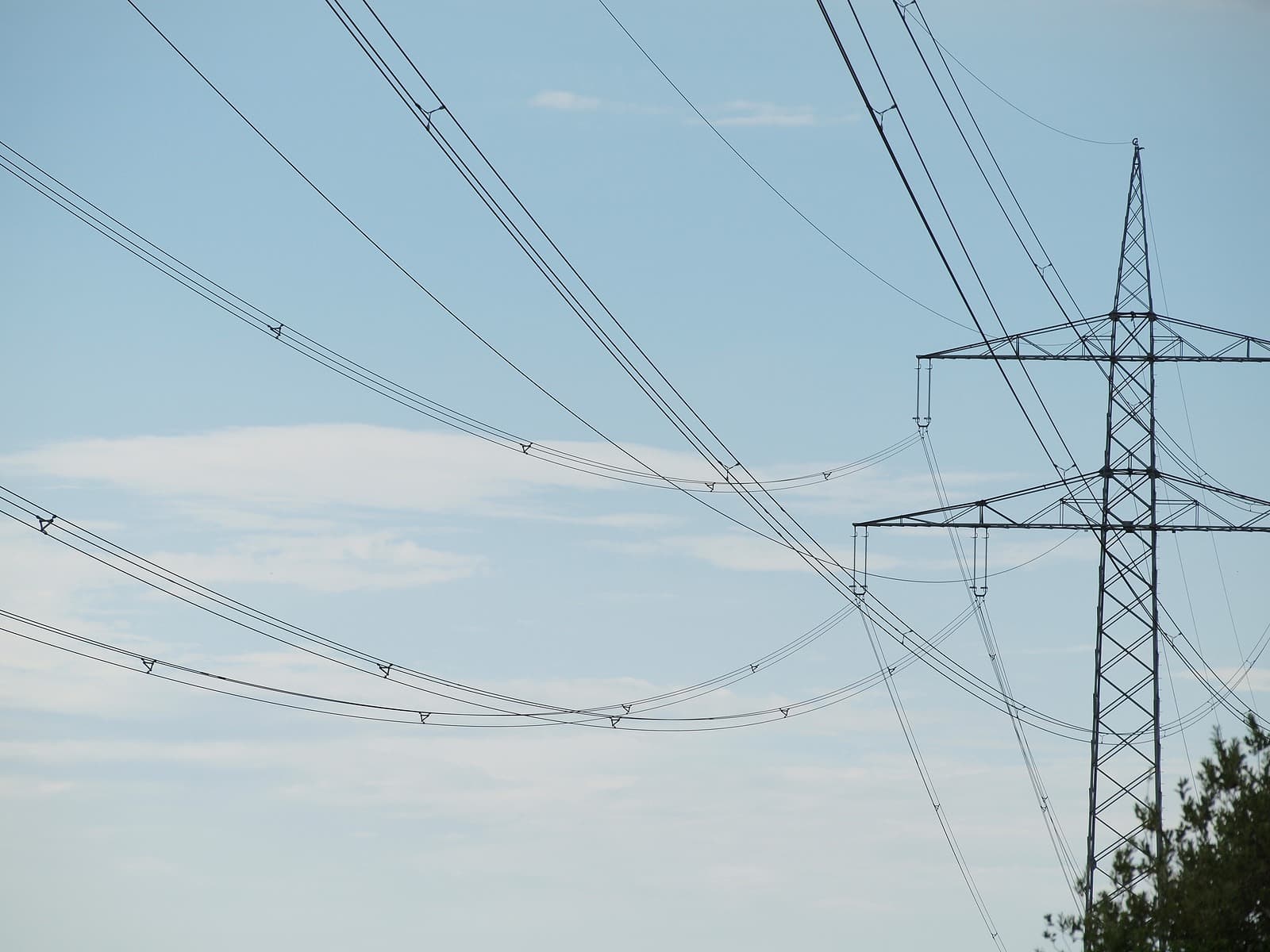
A transmission line consumes a manufactured electrical product, not an abstract exchange tonne. ASTM B233 specifies requirements for aluminium 1350 drawing stock used for electrical purposes, including composition, tensile properties and electrical resistivity. The industrial chain continues through rod, wire drawing, stranding, reinforcement, testing and project certification.
This converts commodity risk into manufacturing risk. A project can have access to primary metal and still miss a conductor slot. It can have the correct alloy family and still face a long queue at a fabricator. A tonne that fails the specification or delivery window is economically different from a tonne that can be installed immediately.
That is why SIAIntel's liquidity equation uses tonne × origin × location × specification × delivery date rather than tonne alone.
AI does not create the shortage — it compresses the clock
The IEA's Electricity 2026 grid analysis says more than 2,500 GW of renewable, storage and large-load projects are stalled in grid connection queues worldwide. Annual grid investment needs to rise roughly 50% by 2030 from around $400 billion today, while data centres can be built in one to three years and new grid infrastructure can take five to fifteen years.
The supply chain itself is slow. IEA's transmission supply-chain work finds that cable procurement can take two to three years and large power transformers up to four years, with lead times roughly doubling since 2021.
AI does not need to dominate aluminium demand to amplify the risk. It creates projects whose revenue depends on obtaining electricity quickly, while the grid components required to deliver that electricity move on much longer industrial clocks. The bottleneck becomes a race between compute deployment and physical network completion.
You can hedge the tonne; you cannot fully hedge the date
A project developer can hedge benchmark aluminium and, in some markets, parts of the regional premium. But a hedge cannot manufacture a cable slot or move a conductor through certification faster. The delivered project cost includes LME base + physical premium + origin basis + freight + conversion charge + manufacturing capacity + delay cost.
The last term can dominate. If conductor arrives after the data-centre hardware, the economic loss may be delayed energisation, unused servers, extended construction financing and deferred customer revenue. A financial hedge can be profitable while the infrastructure project still misses its commissioning date.
This is the deeper financial meaning of Deliverable Metal Fracture: price risk is hedgeable more completely than time risk.
What would break the thesis?
The thesis weakens if several independent signals improve together: non-Russian LME stocks rebuild, ownership concentration falls, Gulf hot-metal output recovers faster than inventory buffers are depleted, regional physical premiums normalise, cable and conductor lead times shorten, and large-load connection queues stop worsening.
It strengthens if total stock remains low while Russian legacy metal dominates, physical premiums stay elevated despite a calm LME base price, EGA and other Gulf producers consume finished inventory faster than hot-metal capacity returns, and conversion lead times remain long while data-centre connection demand accelerates.
The important point is falsifiability. SIAIntel is not predicting an inevitable aluminium squeeze. It is identifying a measurable wedge between financial benchmark liquidity and the physical liquidity required by infrastructure.
Final assessment
The market still asks the wrong first question: How much aluminium is there? For an AI-era electricity buildout, the economically useful question is narrower: how much acceptable aluminium can be converted into the required electrical product, delivered to the required geography and installed before the project's energisation deadline?
That is why a calm LME price does not invalidate the signal. The first serious warning may appear somewhere else — in a physical premium, a warehouse location, a reduction-cell restoration schedule, a tariff-adjusted netback or a conductor manufacturing slot that slips beyond the project schedule.
The aluminium market is becoming a live demonstration of a broader infrastructure truth: financial markets price commodities in tonnes, while real projects consume qualified tonnes in time and space.
SIAIntel Signal
Deliverable Metal Fracture — ACTIVE; watch origin-adjusted usable free float, regional physical basis and conversion-to-project lead time. If those deteriorate together while the benchmark remains calm, the physical grid is tightening before the futures screen fully says so.
Editorial Credit
This intelligence brief was prepared by the SIAIntel Editorial Desk.
Some contributors work in sensitive public-sector, regulatory, market, or editorial roles. Their identities may be withheld when professional duties, source protection, or safety require confidentiality.
Editorial and publishing accountability: Sefa Karahan, Founder & Publisher