"The ten-year Cerebras contract creates long-duration revenue visibility, but its full economic value still depends on delivering 40 MW and securing the second phase of financing."
SIAINTEL INTELLIGENCE DOSSIER
Analysis Brief
SIAIntel Verification Panel
Analysis, data context, source mapping and editorial boundaries are presented as one evidence chain.
Key Takeaways
- The story in 30 seconds Digi Power X is developing a 40 MW AI data-center campus in Columbiana, Alabama, for Cerebras Systems.
- The initial ten-year contract is valued at about $1.1 billion and could reach about $2.5 billion if a seven-year extension is exercised.
- Phase 1 covers 15 MW with a target ready-for-service date of December 15, 2026.
Data Snapshot
Coverage Area
Editorial category
AI
Read Time
Approximate duration
~6 min
Source Base
Source Map highlights 6 unique sources
9 visible source citations
Published
Updated: Aug 09, 2026
Aug 09, 2026
Evidence Frame
This layer summarizes visible sources, article context and editorial framing. It is analytical context, not transactional guidance.
The ten-year Cerebras contract creates long-duration revenue visibility, but its full economic value still depends on delivering 40 MW and securing the second phase of financing.
The story in 30 seconds
Digi Power X is developing a 40 MW AI data-center campus in Columbiana, Alabama, for Cerebras Systems. The initial ten-year contract is valued at about $1.1 billion and could reach about $2.5 billion if a seven-year extension is exercised. Phase 1 covers 15 MW with a target ready-for-service date of December 15, 2026. The additional 25 MW in Phase 2 remains subject to acceptable financing and Cerebras approval. A July 7, 2026 operational update said construction remained on schedule, all major long-lead Phase 1 equipment had been secured, and project-level financing for the next stage was being advanced. Contextual evidence: Digi Power X’s filed Form 8-K; Digi Power X’s official contract announcement
What SIAIntel sees
The central signal is not the headline contract value by itself. It is the sequencing. A long-duration commercial commitment arrives before the full physical capacity is operating. That commitment reduces customer-demand uncertainty and creates revenue visibility, while construction, financing and commissioning risk remain with Digi Power X.
SIAIntel Deep Reading: how AI demand finances infrastructure
Cerebras is not merely reserving 40 MW of future data-center capacity. Its ten-year commitment gives an unfinished power and data-center project a visible demand base that can support equipment orders, construction spending and project-finance discussions. The risk does not disappear; it changes form. Demand risk falls, while balance-sheet, financing, construction and commissioning risk become more important. SIAIntel’s evidence-derived transformation chain is: AI demand → customer commitment → revenue visibility → project financing → physical infrastructure → operating MW → real revenue. The first links are in place. The final links still depend on delivery. Phase 2 is therefore best understood as a conditional expansion structure: if financing is acceptable and Cerebras approves it, capacity can rise from 15 MW to 40 MW; otherwise the parties’ obligations may remain limited to Phase 1. Contextual evidence: the filed master services agreement; Digi Power X’s infrastructure-stack description
Has construction risk fallen?
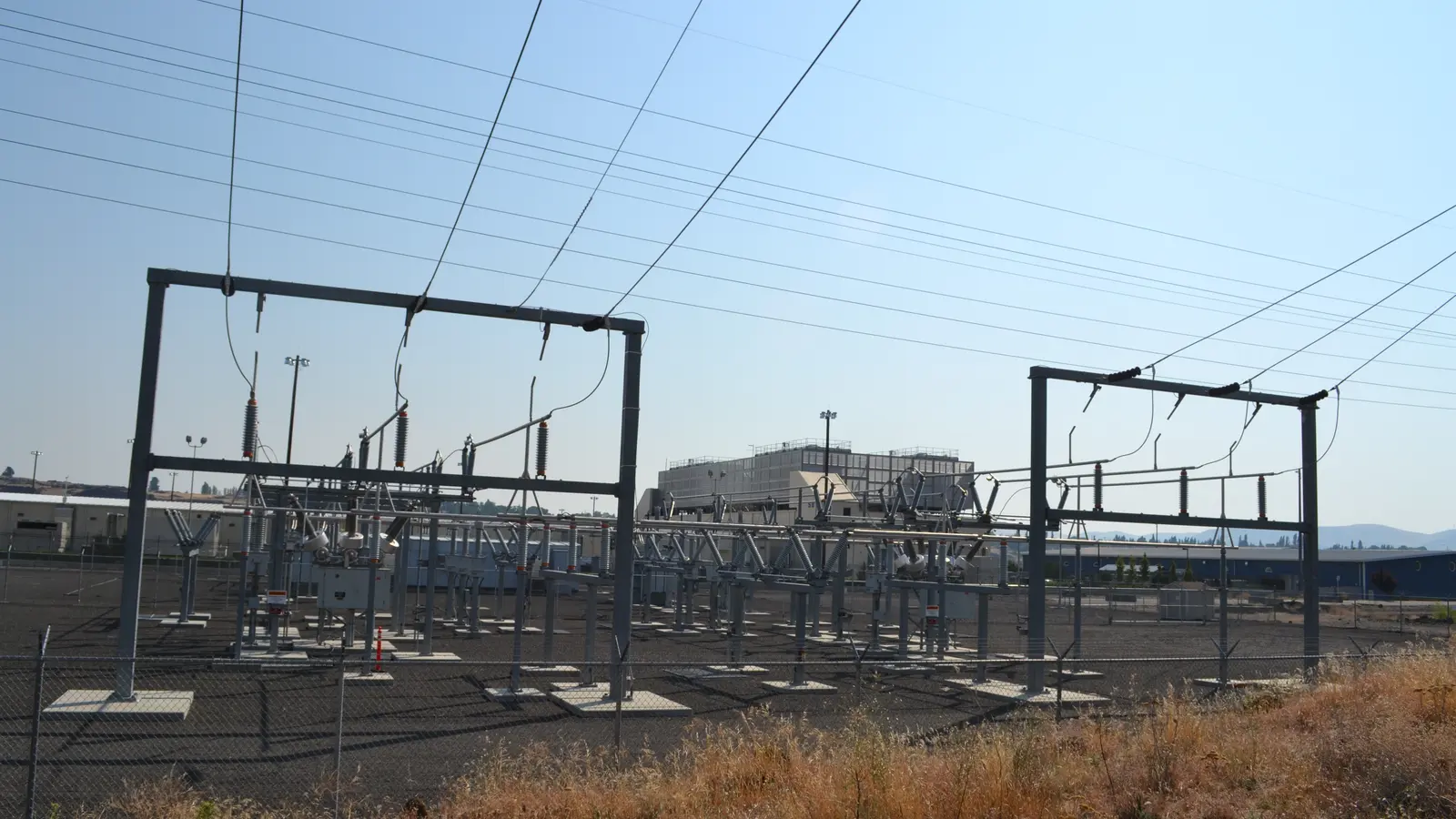
The project has moved beyond a purely announced plan. Digi Power X said the dedicated Phase 1 substation was complete, grid interconnection had been finalized and a power-delivery agreement was in place. The July 7 update added that vertical construction had begun, major long-lead equipment commitments had been secured and the December 2026 Phase 1 target remained intact. These developments reduce execution uncertainty, but they do not equal completed ready-for-service testing or operating revenue. Contextual evidence: the May filed material-change report; the July 7, 2026 operational update; Alabama Power’s large-load data-center policy
Where the financing bottleneck sits
Phase 1 and Phase 2 do not carry the same funding profile. Phase 1 was described as self-funded. The additional 25 MW requires acceptable financing and written Cerebras approval. As of July 3, 2026, Digi Power X reported about $155 million of cash and cash equivalents, about $95 million of year-to-date investment at the site and no long-term debt. That supports the near-term build, but it does not prove that the full Phase 2 package has been signed and is drawable.
SIAIntel original metric
The initial contract value equals about $27.5 million per planned megawatt over the ten-year term: $1.1 billion divided by 40 MW. This is not annual revenue, construction cost, enterprise value or value per operating MW. It is a commercial-intensity measure based on planned capacity. A second key ratio is that Phase 2 represents 62.5% of planned capacity: 25 MW divided by 40 MW. That does not mean Phase 2 represents 62.5% of contract value, because phase-level pricing details are not fully disclosed.
Why Cerebras needs the agreement
Large AI systems require more than chips. They require reliable electricity, cooling, networking and commissioned data-center capacity at the same time. The filed agreement gives Cerebras exclusive facility-use rights during the term and combines recurring colocation fees with construction-related and prepaid payments. The wider implication is that AI companies are reserving future power and infrastructure capacity, not just computing hardware. Contextual evidence: Cerebras’ official CS-3 system briefing; Cerebras’ official 200 MW expansion plan
The strongest counter-thesis
The project is not merely speculative. Digi Power X owns the site, reported a completed dedicated substation, finalized grid interconnection and an electricity-delivery agreement, described Phase 1 as self-funded, had already deployed about $95 million at the site by early July and said major long-lead equipment had been secured. The commercial contract also includes construction payments, prepayments and delay protections. These facts materially reduce the probability that the project is only a press-release story.
Who may benefit and who may face pressure
Potential beneficiaries include owners of power-connected data-center sites, grid and electrical-equipment suppliers, project-finance lenders and AI companies capable of reserving scarce infrastructure early. Pressure may rise for developers without secured interconnection, firms that order long-lead equipment too late, and operators seeking second-phase financing while capital costs remain high.
What would weaken the thesis
The thesis weakens if Phase 1 reaches ready-for-service on schedule, Phase 2 financing becomes signed and drawable, Cerebras approves the second phase, the full 40 MW enters service by the end of the first quarter of 2027, and colocation revenue begins without material cost overruns. Those developments would convert the current financing-and-delivery gap into measurable operating performance.
What to monitor
The critical indicators are the actual Phase 1 ready-for-service date, the amount and cost of Phase 2 financing, Cerebras approval, cash burn, construction spending, the full 40 MW commissioning date and the first reported colocation revenue. Digi Power X’s $80 million to $100 million 2027 AI-colocation revenue target should be treated as forward-looking and highly sensitive to delivery timing.
Bottom line
The agreement is commercially significant, and the July update shows that the project is advancing. But the decisive question is not whether Digi Power X signed a $1.1 billion contract. It is whether the company can convert that commitment into 40 MW of operating infrastructure and real colocation revenue on time.
Editorial Credit
This intelligence brief was prepared by the SIAIntel Editorial Desk.
Some contributors work in sensitive public-sector, regulatory, market, or editorial roles. Their identities may be withheld when professional duties, source protection, or safety require confidentiality.
Editorial and publishing accountability: Sefa Karahan, Founder & Publisher