"Treasuries are losing part of their hedge role as G7 debt stress, inflation risk and stock-bond correlation reshape global portfolio strategy."
SIAINTEL INTELLIGENCE DOSSIER
Analysis Brief
SIAIntel Verification Panel
Analysis, data context, source mapping and editorial boundaries are presented as one evidence chain.
Key Takeaways
- The 60/40 Breakdown: The Hidden Crack in Global Bond Markets 1.
- Executive Briefing - Main Signal: The structural hedge mechanism of the traditional 60/40 portfolio is weakening as stock-bond correlations turn positive, challenging the multi-decade…
- employment data (May 2026) showed an increase of 172,000 payrolls, pushing the 2-year Treasury yield to a 15-month high of 4.147% and raising concerns about further Fed tightening.
SIAIntel Perspective
SIAIntel frames this development not as a standalone headline, but as an intelligence brief shaped by source quality, structural implications and observable risk channels.
Data Snapshot
Coverage Area
Editorial category
ECONOMY
Read Time
Approximate duration
~5 min
Source Base
Visible evidence profile
Article context
Published
Updated: Jun 07, 2026
Jun 07, 2026
Evidence Frame
This layer summarizes visible sources, article context and editorial framing. It is analytical context, not transactional guidance.
1. Executive Briefing
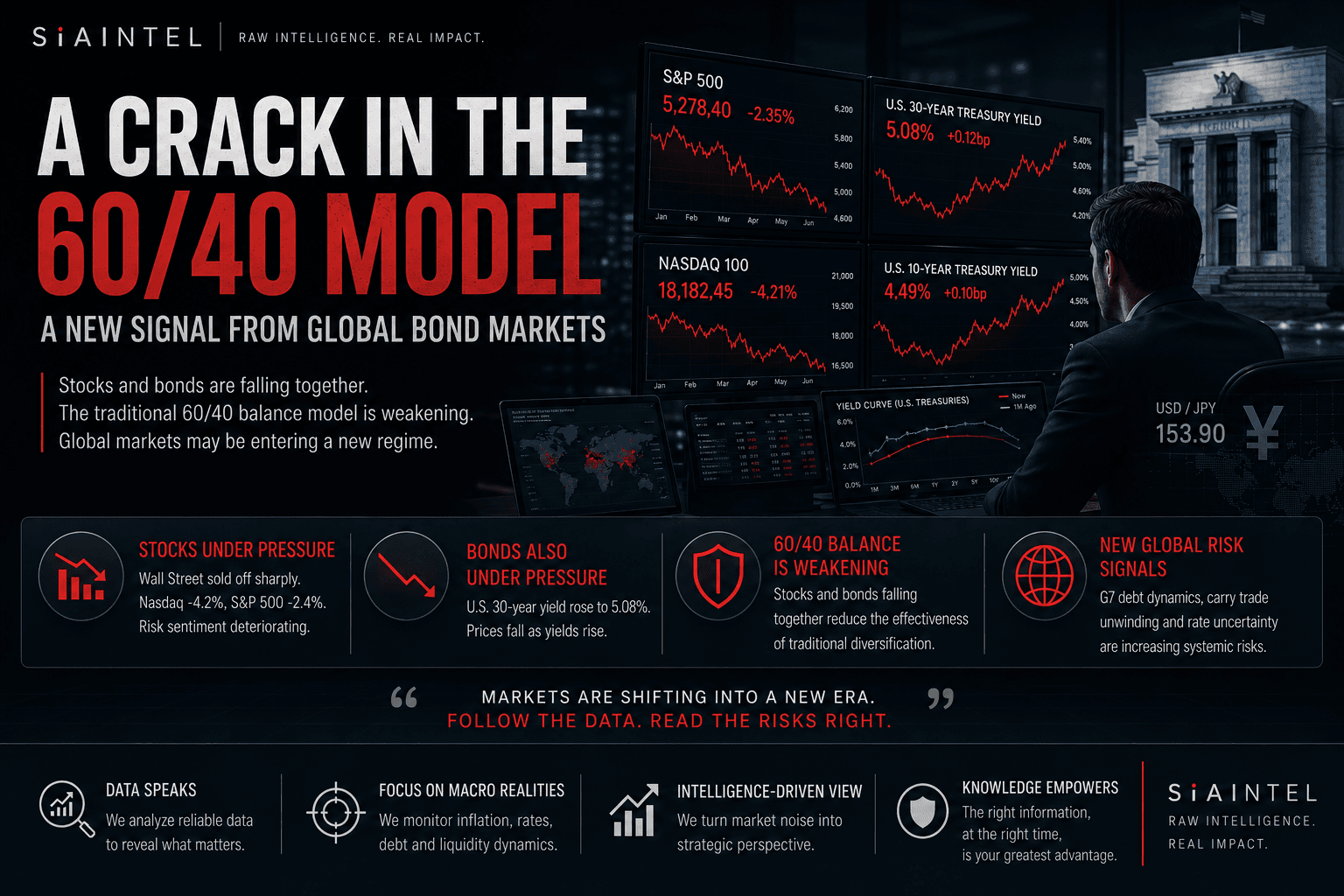
- Main Signal: The structural hedge mechanism of the traditional 60/40 portfolio is weakening as stock-bond correlations turn positive, challenging the multi-decade diversification paradigm.
- Market Trigger: Strong U.S. employment data (May 2026) showed an increase of 172,000 payrolls, pushing the 2-year Treasury yield to a 15-month high of 4.147% and raising concerns about further Fed tightening.
- Debt/Fiscal Risk: The CBO projects a $1.9 trillion federal budget deficit in 2026. Longer term, net interest outlays are projected to rise from 3.3% of GDP in 2026 to 4.6% of GDP in 2036.
- Portfolio Implication: Treasuries are losing part of their role as an automatic hedge against equity downturns as inflation risk and fiscal stress reshape global portfolio strategy.
2. Main Analysis
For nearly forty years, the 60/40 portfolio model—60% equities for growth and 40% bonds for safety—provided institutional-grade stability. The core assumption was a reliable negative correlation: when the S&P 500 fell, U.S. Treasuries usually rose as a safe haven, dampening total portfolio volatility.
This automatic protection is now experiencing a fundamental break. As inflation risk, large fiscal deficits, and interest rate repricing converge, the relationship between stocks and bonds has reached its strongest positive correlation in more than two decades. In this new regime, stocks and bonds are increasingly falling together during inflationary or rate shocks, leaving balanced portfolios without their traditional buffer.
This weakening of the automatic hedge does not imply the "end of bonds." Instead, it indicates that bonds no longer provide passive insurance. Investors are moving into a period where bond returns are dictated more by fiscal policy and inflation expectations than by simple safe-haven flows.
3. G7 Debt Stress and Japan Signal
The pressure on sovereign debt is not limited to the United States. G7 borrowing costs are rising across the board, with long-term yields reaching multi-decade highs.
- U.S. Yields: The 30-year U.S. Treasury yield has moved above 5%, a significant threshold that pressures mortgage rates and corporate financing costs.
- Japan Signal: Japan’s 10-year government bond yield has reached a 30-year high. Given Japan's role as a major source of global liquidity, this shift can trigger capital repatriation, pressuring global carry trades and bond markets worldwide.
Rising refinancing costs are pressuring public budgets, as governments must allocate a larger share of GDP to interest payments rather than investment or social programs.
4. Practical Impact: Who Should Care?
Companies: Higher long-term yields increase the cost of capital. Firms with high debt loads or significant refinancing needs in 2026 face margin compression and may need to delay capital expenditures.
Investors: The breakdown of the 60/40 hedge means that risk managers may need to separate duration, liquidity, inflation sensitivity and fiscal-risk exposure more carefully. Passive diversification is no longer a substitute for active risk monitoring.
Banks and Financial Institutions: Bond market volatility impacts balance sheets and duration risk management. Rising yields can lead to unrealized losses in securities portfolios, requiring tighter liquidity management.
Households: Mortgage rates track long-term Treasury yields. As the 30-year yield stays above 5%, housing affordability remains a significant constraint on household wealth and consumer confidence.
Policymakers: The CBO projection of net interest outlays reaching 4.6% of GDP by 2036 underscores the narrowing fiscal space. Governments face harder trade-offs between deficit reduction and public spending.
5. Country and Bloc Impact Map
- United States: Faces the largest absolute fiscal burden with a projected $1.9 trillion deficit in 2026. The repricing of Treasuries affects the "risk-free rate" for the entire global economy.
- Japan: As 10-year yields hit 30-year highs, the Bank of Japan faces a critical test of monetary-policy normalization and its role in global liquidity provision.
- Europe: G7 debt stress spreads to European sovereigns, where rising borrowing costs pressure national budgets and Eurozone fiscal rules.
- Developed Markets: Major economies are grappling with the transition from zero-rate environments to a regime of persistent fiscal pressure and higher debt-servicing costs.
- Emerging Markets: These regions are sensitive to capital flight as higher G7 yields pull liquidity back to developed markets. Currency pressure and higher external financing costs are the primary risks.
- Turkey: High sensitivity to external financing. Rising G7 yields and dollar strength put pressure on the currency and increase the cost of servicing external debt.
- Commodity Exporters: Vulnerable to a slowdown in global demand if high interest rates and debt stress trigger a broader economic contraction.
- Companies with Dollar Debt: Rising U.S. yields increase the real burden of debt servicing for non-U.S. firms, particularly in markets with weakening local currencies.
6. SIAIntel Watch
- U.S. 30-year Treasury yield: Tracking if the move above 5% is sustained as a new structural floor.
- Fed Reaction Function: Monitoring the Fed's stance following the May jobs data (172,000 payroll increase) and its impact on the terminal rate.
- Fiscal Projections: Monitoring CBO updates on the $1.9 trillion deficit and the trajectory toward the 2036 interest outlay target of 4.6% of GDP.
- Stock-Bond Correlation: Analyzing if the positive correlation persists during equity sell-offs.
- Japan Liquidity: Monitoring capital flow shifts as Japanese yields reach 30-year highs.
7. Editorial Safety Note
This analysis is for informational purposes and does not constitute investment advice. SIAIntel does not claim the 60/40 model is dead; rather, our core claim is that the automatic hedge mechanism is weakening, requiring more sophisticated risk separation and monitoring.
Sources
Editorial Credit
This intelligence brief was prepared by the SIAIntel Editorial Desk.
Some contributors work in sensitive public-sector, regulatory, market, or editorial roles. Their identities may be withheld when professional duties, source protection, or safety require confidentiality.
Editorial and publishing accountability: Sefa Karahan, Founder & Publisher
Related Intelligence
Related intelligence in this category · 6 briefs

The $310B Stablecoin Deadline Passed. No Rules Arrived.
The July 18 GENIUS Act deadline passed without a coordinated final rulebook, leaving a $310 billion stablecoin market in a legally unfinished transition.

AI's Credit Grid Squeeze: How Data Centers Turned Power Access Into a Bond Market Problem
Data center power demand is colliding with grid capacity, utility capex, and bond markets. Here is how AI's electricity problem became a credit-market problem.
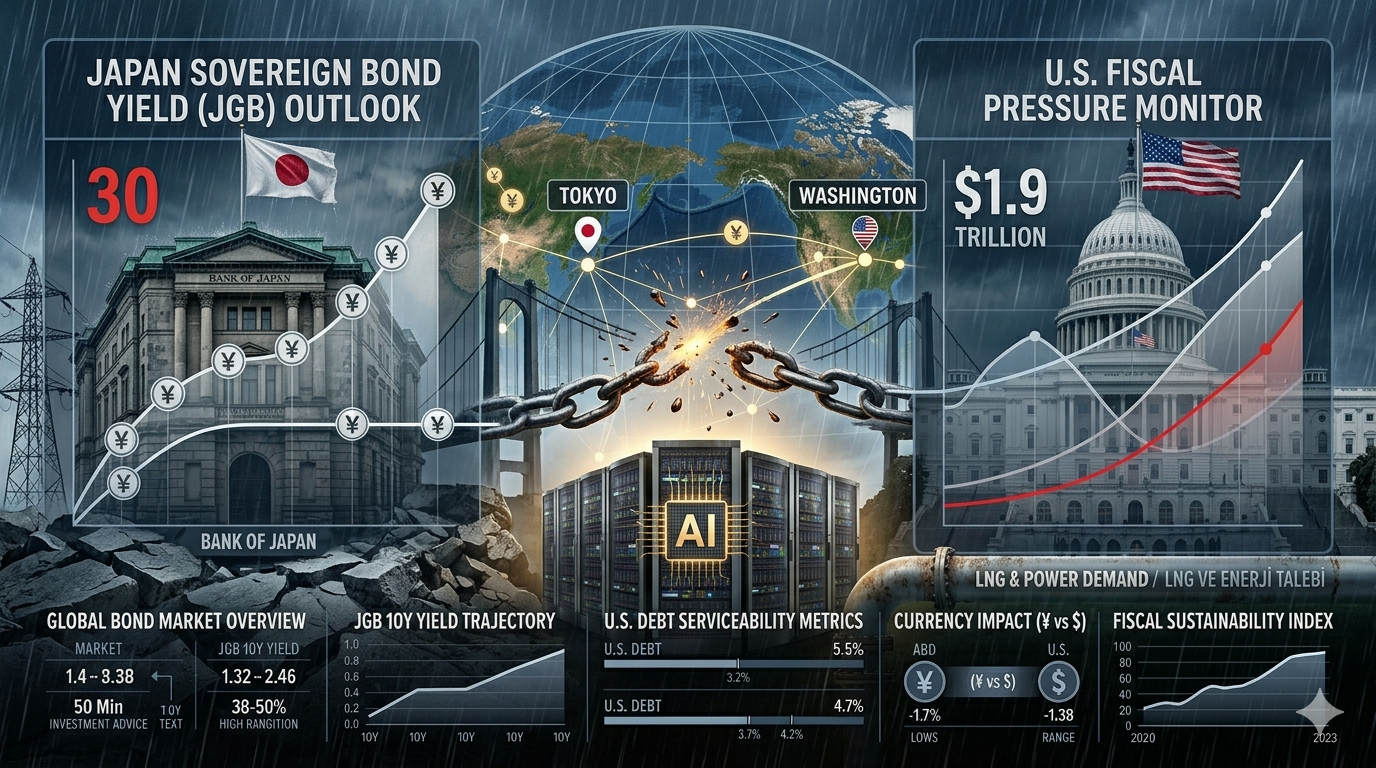
Japan’s Stablecoin Push Turns Sovereign Bonds Into the Next Crypto Battleground
Analysis of MUFG, SMBC, and Mizuho's 2027 stablecoin plans. Analyzing how digital yen reserves and on-chain repo could reshape JGB demand and Asian settlement rails.
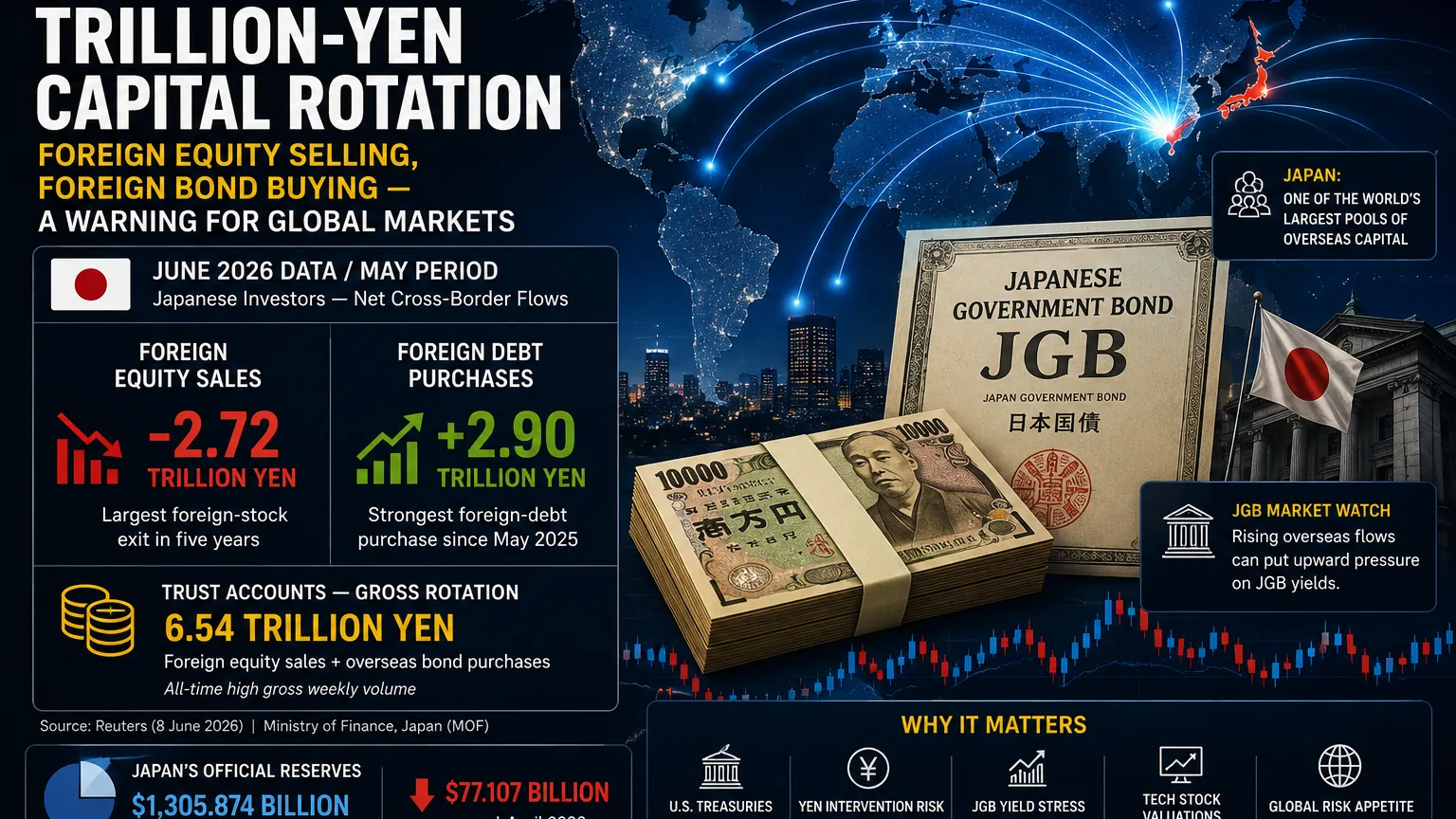
Japan’s Trillion-Yen Capital Rotation Sends a Warning Through Global Markets
Japanese investors sold foreign equities and bought foreign bonds in May, sending a warning through U.S. Treasuries, tech stocks, the yen and global risk appetite.
A 30-Year High and a $1.9 Trillion Deficit: How Japan's Bond Signal Is Feeding America's Fiscal Pressure
Japan's 30-year high bond yield and America's $1.9 trillion deficit projection are sending a global warning signal, from mortgages and pensions to emerging-market debt.

Fuel Pressure in the Skies: Why Flexible Tickets Are Becoming Travel Protection
Pressure in the jet fuel market could make flexibility, cancellation rights and safer connection times more important than simply choosing the cheapest ticket this summer.