Pressure in the jet fuel market could make flexibility, cancellation rights and safer connection times more important than simply choosing the cheapest ticket this summer.
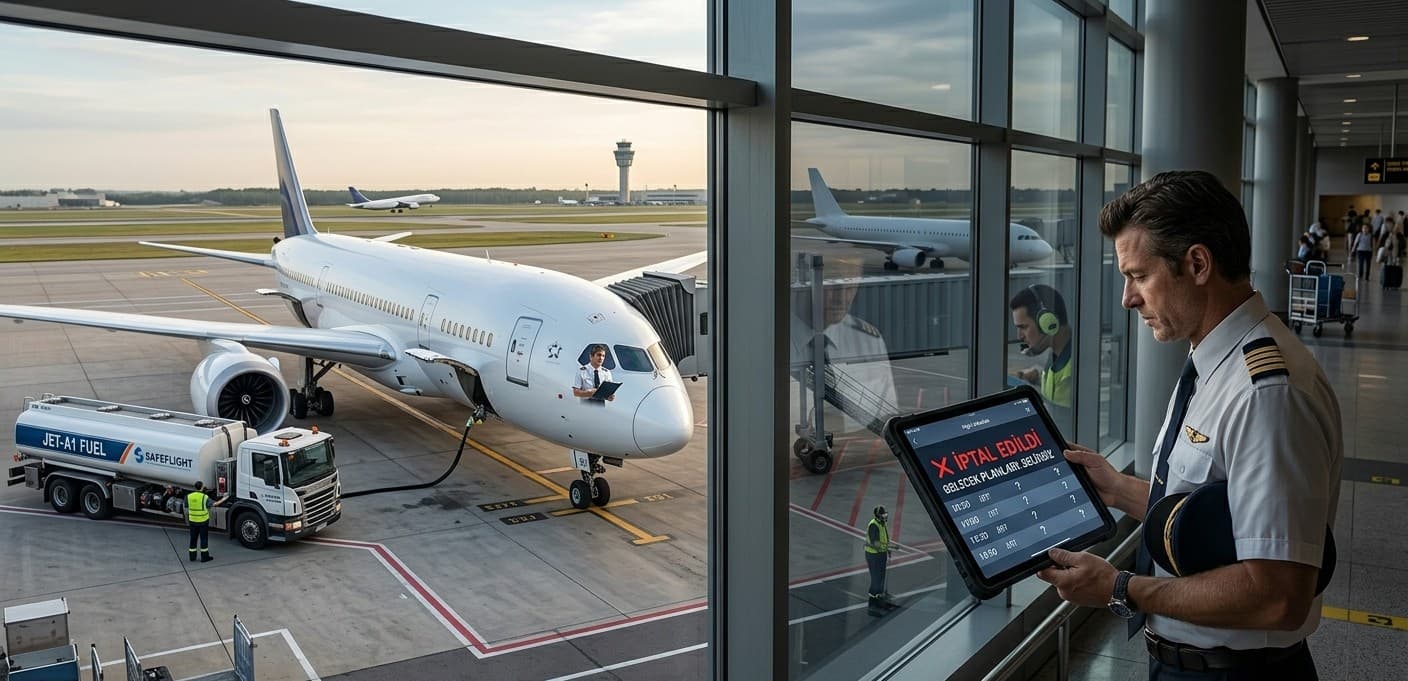
OPENING CONTEXT
For travelers planning summer trips, choosing a flight is no longer just a matter of comparing prices. Pressure in the jet fuel market is making airline costs and operating plans more sensitive, while a new question is moving to the front for passengers: should they choose the cheapest ticket, or a flexible fare with cancellation and change protection?
The European Commission has said the jet fuel market in the European Union could tighten in the coming weeks if the situation around the Strait of Hormuz does not improve. The Commission also noted that no consumer-level physical supply disruption has been reported so far, although price effects are already visible.
For travelers, this does not mean flights are about to stop. But it does mean that ticket conditions, cancellation rules, change rights, connection times and airline flexibility policies deserve more attention this summer.
WHY FLEXIBLE TICKETS MATTER
Jet fuel is one of the most important cost items for airlines. When fuel prices rise or supply uncertainty increases, airlines usually respond through several tools: adjusting fares, reducing capacity on some routes, changing aircraft planning, or looking for alternative supply sources.
According to Reuters analysis, turbulence around Hormuz has reshaped jet fuel trade routes, with Europe looking for more fuel from alternative sources such as the United States, Nigeria and India. That creates longer and more expensive logistics routes. In other words, the issue is not only the oil price; it is whether the right fuel can reach the right airport at the right time.
For passengers, the practical result is clear: this summer, the cheapest ticket may not always be the safest choice. Change rights, cancellation protection and connection flexibility are becoming part of the real value of a ticket.
THE CHEAPEST TICKET MAY NOT ALWAYS BE THE SMARTEST CHOICE
Under normal conditions, non-refundable and non-changeable tickets can look attractive. But when fuel costs, route planning and capacity decisions become more volatile, these tickets can shift more risk onto the passenger.
For family holidays, international travel, connecting flights, visa-linked trips, hotel reservations or business travel, a small fare difference can prevent much larger costs if plans change.
The International Energy Agency's May 2026 Oil Market Report says aviation and petrochemicals are among the sectors affected by the current energy shock. The report also says aviation activity remains below normal levels, while high prices and demand-related adjustments continue to weigh on global oil consumption.
That is why, in this period, a cheap ticket and a secure ticket may not always be the same thing.
PRACTICAL GUIDE FOR TRAVELERS
The purpose of this article is not to create panic. It is to give travelers an early warning so they can build a more resilient travel plan.
The most important checkpoint for anyone buying a flight ticket is whether the ticket can be changed. A very cheap but fully non-refundable ticket can become an expensive mistake if plans shift. Before buying, passengers should read the cancellation, change, voucher, fare difference and no-show rules.
Connection time is also becoming more important. If fuel, route or operational pressure increases, tight connections can become riskier. For international flights in particular, safer connection windows may be worth more than the lowest possible fare.
Travelers should also use the airline's official app, keep SMS and email notifications active, and save screenshots of fare rules shown during purchase. This small step can give passengers useful evidence if a cancellation or change dispute occurs later.
FIVE QUESTIONS BEFORE BUYING A TICKET
Before buying a flight, ask five questions:
- Can the ticket be changed?
- Is a refund, voucher or date change available if the trip changes?
- Is the connection time safe if there is a delay?
- Is the flexible fare difference lower than the potential change fee?
- Are hotel, visa, rental car or other bookings tied to this flight?
If even one of these questions points to meaningful risk, a flexible ticket may be the smarter option.
WHO SHOULD BE MORE CAREFUL?
Not every traveler faces the same level of risk. For some passengers, flexibility is more valuable.
Families should be more careful because the cost of changes rises with the number of passengers. Connecting passengers should be more careful because a single delay can create a chain reaction. Travelers whose flights are tied to visas, hotels or tour packages should also pay closer attention because a flight change can trigger other costs.
Business travelers may also face higher risk if a meeting date is fixed and last-minute tickets become much more expensive. Students and diaspora travelers can face similar pressure during peak travel periods, when alternative flights may be harder to find.
For these groups, a flexible ticket is no longer a luxury. It can become protection for the entire travel plan.
EARLY BOOKING: ADVANTAGE OR RISK?
Early booking can still offer an advantage. But in this period, cancellation and change rights should be checked alongside the ticket price.
A non-refundable ticket bought only because the price is low can become more expensive if plans change. A slightly more expensive ticket that allows a date change may be a safer choice during the summer season.
Reuters reported on May 14, 2026 that European airlines played down fears of a near-term summer jet fuel shortage, while the sector was still seeking alternative supply sources and prices had moved well above pre-war levels. That points to cautious planning, not panic.
WHAT AIRLINES MAY DO
Airlines usually respond to fuel pressure through pricing, capacity management and route optimization. This does not mean flights will be cancelled. But for passengers, it can mean more volatile fares, more limited seat capacity on some routes, and more sensitive planning by airlines.
The main message is simple: passengers do not need to become fuel market experts, but they do need to read ticket conditions more carefully.
INVESTOR SIGNAL: NOT JUST OIL, BUT THE REFINED PRODUCT CHAIN
This development is also an early warning signal for investors. Markets often focus on crude oil prices, but the real margin pressure can appear in refined products, jet fuel spreads, freight costs, fertilizer prices and airline capacity decisions.
The key investor question is whether this pressure is a temporary price shock or a longer-lasting cost regime change across aviation, logistics and agricultural input chains.
Reuters reported on May 28, 2026 that jet fuel flows had been redirected, Europe was looking to more distant sources, and logistics costs were adding to price pressure. That means investors should not only track crude oil, but also fuel mobility and refined product markets.
INDICATORS FOR INVESTORS AND CAPITAL OWNERS
This analysis is not investment advice. Energy shocks should be read not only through oil prices, but also through refinery margins, jet fuel spreads, airline capacity, freight costs, fertilizer prices and consumer demand.
Investors and capital owners should monitor the following indicators:
- Jet fuel crack spread
- ARA and Singapore jet fuel stocks
- European and Asian flight capacity data
- Airline fuel hedge disclosures
- Tanker, freight and insurance costs
- Fertilizer, sulfur and natural gas prices
- Passenger demand response to higher fares
These indicators should be read together. If fuel prices rise while passenger demand remains strong, airlines may be able to pass more costs into ticket prices. But if demand weakens, companies may face both higher costs and lower load factors.
AIRLINES, AIRPORTS AND LOGISTICS COMPANIES ARE NOT AFFECTED THE SAME WAY
For professional investors, the important point is not to put all companies in the same basket.
For airlines, fuel cost, load factor, capacity management and hedge policy should be analyzed together. For airport operators, passenger traffic, duty-free revenue, food and beverage spending, parking income and the strength of the tourism season matter.
For logistics and shipping companies, route length, insurance costs and freight prices come into focus. When energy routes become longer, the cost is not only fuel; it also includes shipping time and tied-up capital.
That is why simple conclusions such as "fuel is up, airlines must lose" or "oil is up, energy stocks must win" can be misleading. The professional question is which companies can pass higher costs into prices and which cannot.
BUSINESS OWNERS: CASH AND STOCK STRATEGY
For business owners with capital, the practical message is cash flow and cost planning.
Companies working in cargo, imports, exports, cosmetics, food, textiles, agricultural inputs or e-commerce may need to recalculate logistics costs. Dependence on a single supplier should be reduced, minimum stock levels should be defined for critical products, and delivery promises to customers should be written more carefully.
Price lists should also be reviewed more frequently against fuel, freight and currency costs. Otherwise, a company may think it is making a profit when selling, only to find later that higher logistics costs have eroded the margin.
FOOD AND FERTILIZER CONNECTION
While jet fuel pressure can affect passengers in the short term, the wider impact of Hormuz-related logistics pressure may appear in agriculture and food.
FAO has warned that disruption around Hormuz can affect oil, LNG, sulfur and fertilizer flows, raising agricultural input costs and increasing food security risks. According to FAO's warning, the chain can move from energy costs to fertilizer and seed costs, then to production and food prices.
This matters because jet fuel pressure is not only an airport issue. The same logistics fragility can become a wider economic pressure through food and agricultural costs.
WHAT SHOULD PEOPLE WITH CAPITAL DO?
The right strategy here is not panic buying. It is position protection.
Individual investors should not act on a single scenario. Aviation, energy, logistics, food and fertilizer chains should be monitored together. Fuel hedge ratios, debt levels, pricing power and demand sensitivity should be examined.
Business owners should recalculate cargo and logistics costs. They should research alternative sources for critical supplies, reduce dependence on distant suppliers, and write delivery times and price validity periods more carefully in large orders.
Consumers with cash flexibility should avoid leaving summer travel, hotel and flight plans to the last minute. Flexible tickets, cancellation protection and change rights in connected bookings may be worth more this summer.
READER VALUE: PLAN, NOT PANIC
The core message of this article is not "a crisis is coming." The better message is this: as cost and supply chain pressures increase, individuals and businesses can reduce risk through small decisions.
For travelers, that decision may be a flexible ticket. For small businesses, it may be supplier diversification. For farmers, it may be earlier fertilizer and fuel cost planning. For e-commerce sellers, it may be updating delivery times and shipping cost assumptions. For investors, it may be looking beyond price moves and asking where costs can actually be passed on.
The value of an early warning is not that it creates panic. It is that it gives people time to get ready.
SIAINTEL ANALYSIS
Markets often focus on crude oil. But the effect that reaches consumers faster usually appears in refined products and service prices. Jet fuel is one of the clearest examples.
The near-term risk is not that flights stop. It is that ticket prices become more volatile, some routes face capacity adjustments, and non-refundable tickets become riskier for passengers.
Over the medium term, the same logistics pressure can turn into broader economic pressure through fertilizer, energy and food prices. That is why the smartest approach for travelers this summer is not only to look for the cheapest ticket. Flexibility, cancellation rights and safer connection times are becoming part of the real value of a fare.
For investors, the same logic applies. Looking only at crude oil is an incomplete reading. The real question is where the energy shock can be passed into prices, where it compresses margins, and which companies are more resilient under that pressure.
CONCLUSION
Fuel pressure in the skies is not a direct reason for passengers to panic. But it does signal a period in which summer travelers should choose tickets more carefully.
This summer, the smartest choice may not always be the cheapest fare. For some passengers, flexible tickets, cancellation protection and safer connection times may become the most important safeguards for the travel plan.
For people with capital, the same process is a reminder to look beyond crude oil. Jet fuel, freight, fertilizer, food and consumer demand are parts of the same chain. Those who read that chain early do not only avoid risk; they gain time for better pricing, stronger cash management and more resilient decisions.
Sources
- Reuters: EU says jet fuel market may get tighter if Hormuz situation does not improve — May 28, 2026
- Reuters: Baton Rouge to Melbourne: Iran war and rising prices upend jet fuel trade — May 28, 2026
- Reuters: European airlines downplay fears of summer jet fuel shortage — May 14, 2026
- IEA: Oil Market Report, May 2026
- FAO: Strait of Hormuz: Time running out to avert global food security crisis
Source Map
5 highlighted sources
Reuters: EU says jet fuel market may get tighter if Hormuz situation does not improve
NewswireReuters: Baton Rouge to Melbourne: Iran war and rising prices upend jet fuel trade
NewswireEditorial Credit
This intelligence brief was prepared by the SIAIntel Editorial Desk.
Some contributors work in sensitive public-sector, regulatory, market, or editorial roles. Their identities may be withheld when professional duties, source protection, or safety require confidentiality.
Editorial and publishing accountability: Sefa Karahan, Founder & Publisher
Related Intelligence
Related intelligence in this category · 3 briefs

Europe’s Food Buffer Is Starting to Crack
A near-20-year low in EU maize output is arriving as Brazil loses access for key animal products. The hidden risk sits between feed, protein supply and food prices.

AI’s Capital Squeeze Reaches U.S. Treasuries
Waller says AI infrastructure is competing for capital as Norway’s fund proposes a sharp Treasury-weight cut. The signal is rotation, not dollar flight.

AI’s $29.6B Loan Pulls Banks Into the Boom
ByteDance’s $29.6B unsecured loan shows AI funding moving onto global bank balance sheets as bonds, revolvers and private credit expand.