PJM’s July 14 auction, a $325/MW-day cap and 160-week equipment delays show why AI’s next bottleneck may be firm power.

The AI boom is no longer only a chip story.
On July 14, 2026, after 4 p.m. Eastern time, PJM Interconnection is scheduled to publish the results of its 2028/2029 capacity auction. The auction window opened on June 30 and closed on July 7, according to PJM’s official auction notice. This is not just another electricity-market result. It is a live signal for whether AI data-center growth is becoming a capacity, equipment and credit-market problem.
SIAIntel classifies the event as:
STAGE 4 GRID-CREDIT SQUEEZE WATCH
The reason is simple. PJM’s current auction framework uses a price collar: roughly $325/MW-day on the cap and $175/MW-day on the floor, according to PJM’s pre-auction explanation. That collar may mute the headline price signal. But it does not remove the underlying shortage signal. If stress persists, the market signal migrates from price into capacity shortfall, interconnection queues, equipment lead times, utility capex, customer bills and credit spreads.
The core question is not whether the auction price looks calm.
The core question is whether firm power is becoming the next bottleneck in AI infrastructure.
Opening Thesis: From GPU Scarcity to Firm-Power Scarcity
For most of the AI cycle, investors focused on GPUs, HBM, cloud capacity and model-training cost. That was the visible bottleneck.
But the physical limit is moving.
A data center is not productive because it has land, permits, chips or tenants. It becomes productive when it can be energized with reliable, firm power. That is where the AI buildout is now colliding with the electric grid.
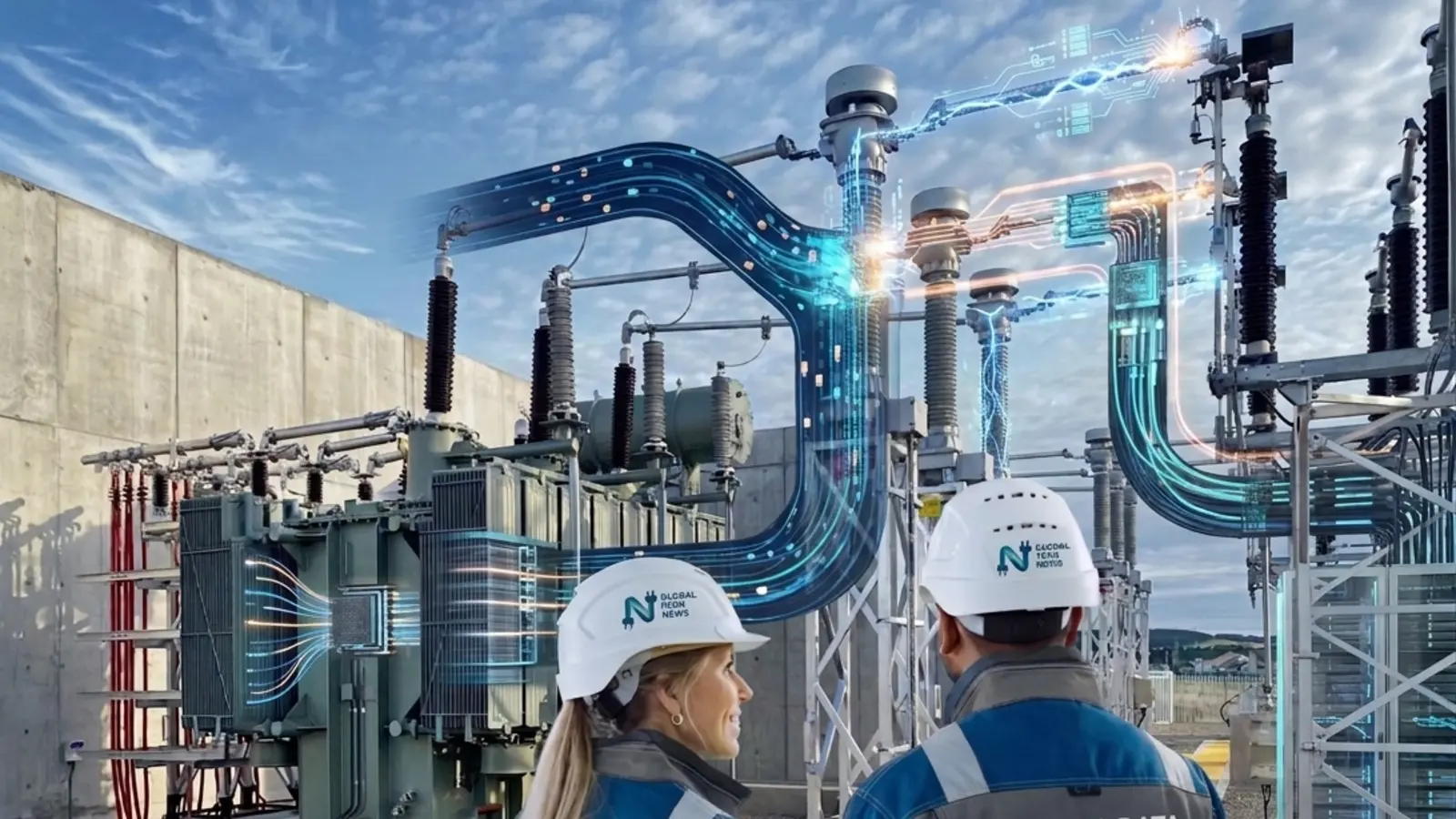
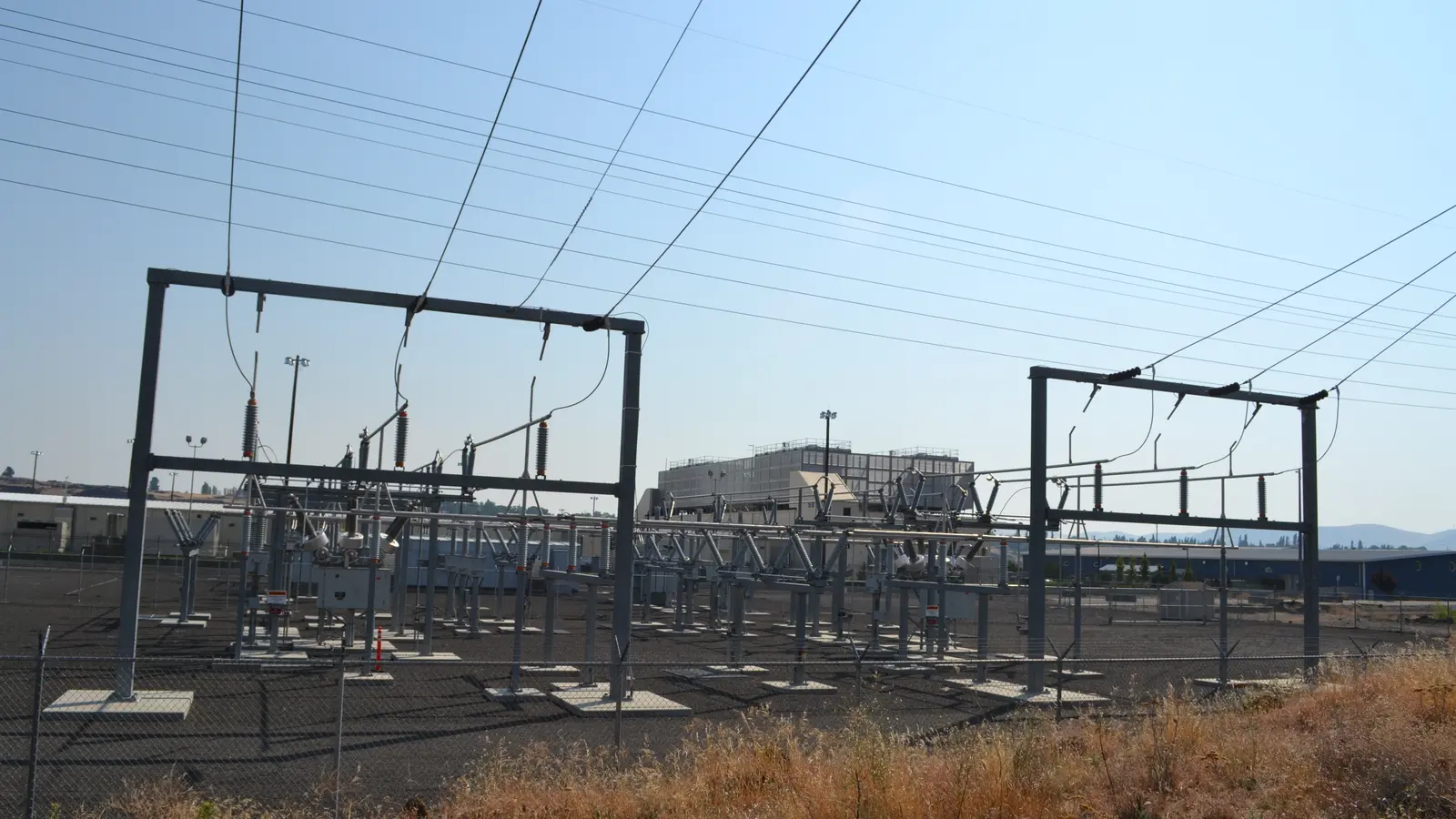
Reuters reported on July 9, 2026 that surging AI data-center demand is intensifying shortages of critical U.S. grid equipment, especially transformers, circuit breakers and switchgear. The same report noted that some critical equipment lead times have stretched dramatically, with generator step-up transformer lead times exceeding 160 weeks. Reuters’ equipment-supply report turns the AI power story from a demand forecast into a physical bottleneck.
That changes the investment question.
The market is no longer asking only: “Can AI companies buy enough chips?”
It must now ask: “Can the grid deliver enough power, on time, at a financeable cost?”
July 14 PJM Catalyst
PJM is the largest U.S. power grid operator, covering a major footprint across the Mid-Atlantic and Midwest. Its capacity auction pays resources to be available in future delivery years, creating a forward reliability signal for the power system.
For the 2028/2029 delivery year, PJM says the auction opened on June 30, the bidding window closed on July 7, and results will be posted after 4 p.m. Eastern on July 14. PJM’s auction-opening release makes this a near-term catalyst, not a distant policy debate.
The auction is also happening under a constrained price framework. PJM says prices are capped at approximately $325/MW-day, with a floor of $175/MW-day. PJM’s own pre-auction note says that under this structure, prices are unlikely to change significantly from year to year.
That sentence is the heart of the story.
If the price is structurally muted, the true stress may show up somewhere else.
The Shadow-Price Evidence: The Cap Hides Stress; It Does Not Remove It
The capacity price cap paradox is not just theory.
In an analysis of the 2026/2027 PJM capacity auction, Enel North America noted that the auction was subject to a floor and cap structure. It also reported that PJM’s simulation indicated the market would have cleared at $141,828/MW-year without the cap and floor, more than $20,000/MW-year above the capped clearing price. Enel North America’s PJM auction analysis provides a useful precedent: the price cap can protect customers from a sharper bill shock while compressing the visible price signal.
That is the paradox.
A price cap can reduce headline volatility, but it cannot manufacture transformers, turbines, substations, interconnection capacity or dispatchable supply.
If the market is tight, the stress does not disappear. It moves.
It can move into capacity shortfalls, zonal price splits, backstop procurement, delayed interconnection, higher utility capex, industrial bill pressure, data-center energization delays and wider credit spreads.
This is why the July 14 auction should not be read only as a price event. It should be read as a shortage-location event.
Zonal Watchlist: AEP, ComEd, Dominion and PJM Grid Stress
The July 14 auction results will reveal where physical scarcity is most acute through zonal price splits. While the RTO-wide price may be capped, specific zones often clear at a premium or show higher stress in the interconnection queue.
Dominion (Virginia): The epicenter of global data-center load. Watch for whether Dominion clears at the cap and the volume of unoffered capacity.
AEP and ComEd (Midwest): These zones are seeing rapid load growth as hyperscalers look for alternatives to constrained East Coast markets. Stress here indicates the squeeze is migrating inland.
BGE (Maryland): Historically a constrained zone that often clears above the RTO-wide price.
The zonal logic is simple: if the RTO clears at the cap but certain zones like Dominion or ComEd show reliability shortfalls, the physical grid bottleneck has outpaced the market’s ability to allocate power through price alone.
Equipment Bottleneck I: Transformers, Circuit Breakers and Switchgear
The first equipment bottleneck sits at the grid-connection layer.
Reuters reported that AI data-center demand is adding pressure to already strained supply chains for transformers, circuit breakers and switchgear. Reuters’ July 9, 2026 report described utilities and developers ordering years ahead, refurbishing older equipment and competing for scarce supply.
The signal is not just that equipment is expensive.
The signal is that lead time is becoming a financial variable.
If a transformer or substation component arrives years later than planned, a data center can be physically complete but economically idle. Revenue start dates slip. Tenant commitments become harder to match with delivery timelines. Construction loans, project loans and securitized structures face a new question: what happens when the building is ready before the power is?
That is the bridge from grid stress to credit stress.
Equipment Bottleneck II: Gas Turbines and Generation Capacity
The second bottleneck is more structural: generation equipment.
If the grid cannot deliver enough firm power, developers and hyperscalers may look for behind-the-meter generation, gas-fired capacity, long-term PPAs or dedicated power projects. But that creates a new constraint: the global heavy-duty gas turbine supply chain.
GE Vernova’s Q1 2026 filing and earnings materials frame the turbine constraint as a combined Gas Power equipment-backlog and slot-reservation pipeline rising from 83 GW to 100 GW. The bridge matters: the SEC-filed release breaks that move into 21 GW of new gas equipment contracts, 6 GW of slot reservations converted into orders, and 4 GW shipped, leaving equipment backlog at 44 GW and slot reservations at 56 GW. For PJM, the signal is not two competing backlog numbers; it is a queue-conversion channel in which turbine scarcity moves from commercial reservation into physical-delivery risk. GE Vernova’s Q1 2026 results; SEC filing; Power Engineering report.
This matters because the AI power bottleneck is no longer only about connecting to the grid. It is also about whether new generation capacity can be procured, financed, built and delivered fast enough.
The bottleneck has moved upstream.
Capacity Price Cap Paradox
The price collar creates a cleaner headline but a more complex signal.
If the auction clears near the cap, the market sees visible scarcity. If the auction clears below the cap but capacity remains tight, the signal becomes more subtle. It may appear through procurement interventions, emergency procedures, zonal outcomes or future rate filings.
That is why the July 14 result should be interpreted across three layers:
First, the clearing price.
Second, the quantity and location of capacity.
Third, the non-price stress indicators that follow.
Reuters reported in December 2025 that PJM capacity prices had reached record levels and that the prior auction cleared about 6.6 GW below reliability requirements. Reuters’ prior PJM auction report already showed that the system was tight before the July 2026 catalyst.
The new auction will show whether the price collar has calmed the market, or merely compressed the visible signal.
Backstop Procurement and Emergency Measures
When a market cannot solve a reliability constraint through price alone, the system begins to rely more heavily on operational and administrative tools.
PJM has already described the current auction and related reforms as part of a broader response to fast load growth, large-load interconnection pressure and reliability needs. PJM’s note on FERC approval of the price collar frames the collar as part of a larger package, not a cure for the underlying imbalance.
Emergency procedures are another warning sign. Reuters reported on July 2, 2026 that PJM ordered emergency steps during a heat-wave stress event, with operating reserves falling sharply during the day. Reuters’ emergency-grid report is not the same event as the capacity auction, but it adds operational context: reliability pressure is not theoretical.
For investors, the key is not panic.
The key is sequence.
Capacity price pressure comes first. Then equipment scarcity. Then interconnection delays. Then capex and bills. Then credit repricing.
Credit-Market Transmission
The grid-credit squeeze moves through eight channels.
1. Utility capex
Utilities must finance substations, transformers, transmission upgrades, interconnection work and grid-hardening investments. More capex can support long-term growth, but it also raises debt needs.
2. Rate recovery risk
The question is not only whether utilities spend. The question is whether regulators allow those costs to be recovered from customers quickly and predictably. If cost allocation becomes political, utility credit risk can rise.
3. Data-center energization delays
A project can be leased, financed and built, but still miss its economic timetable if power delivery lags. That creates revenue-delay risk.
4. Equipment prepayment cycles
Long lead times force earlier ordering and more capital tied up before revenue generation. The working-capital burden shifts deeper into the project-finance stack.
5. PPA and on-site power costs
If grid power is delayed or insufficient, hyperscalers and developers may use long-term PPAs, dedicated generation or behind-the-meter solutions. These can solve reliability but may weaken project economics.
6. Industrial bill pressure
Reuters reported that data-center growth is pushing power costs into the bills of Rust Belt manufacturers, including a Belden Brick example where monthly capacity charges rose sharply. Reuters’ Rust Belt power-bill report shows that the cost transmission is already reaching non-tech companies.
7. AI infrastructure spread risk
The final channel is credit-market absorption. Morgan Stanley estimated that global data-center construction costs could total about $2.9 trillion from 2025 to 2028, with a major financing gap requiring credit markets to play a larger role. Morgan Stanley’s data-center financing report makes the credit implication explicit: AI infrastructure is not only an equity capex story. It is becoming a debt-market funding event.
8. Dollar-Watt Loop / stablecoin-Treasury bridge — The PJM story is not only a power-market story. It also extends SIAIntel’s Dollar-Watt Loop: AI infrastructure turns electricity scarcity into credit exposure, while dollar collateral, Treasury-bill reserves and stablecoin liquidity shape the funding layer around the same buildout. The risk is a two-sided squeeze: physical grid scarcity raises the cost of serving AI load, while the dollar collateral system determines how cheaply the financing stack can absorb that scarcity.
Oracle as a Verified Parallel Credit Signal
Oracle should not be treated as a direct PJM causality story.
There is no source-gated basis to say that PJM capacity stress caused Oracle credit spreads to widen. That would be an overreach.
But Oracle is now too important to leave in the “unverified rumor" category.
Oracle’s own fiscal 2026 results show the scale of the AI infrastructure financing challenge. The company said it raised $43 billion in debt financing and $5 billion in equity financing in fiscal 2026, and expects to raise approximately $40 billion through debt and equity financing in fiscal 2027. Oracle’s FY2026 results also reported record remaining performance obligations, showing the scale of contracted future cloud demand.
Reuters reported on February 13, 2026 that Oracle’s up-to-$50 billion funding plan was intended to ease investor concerns about financing its data-center expansion tied to OpenAI. Reuters’ Oracle financing report links the market’s concern directly to AI data-center funding capacity.
The Wall Street Journal has also reported that Oracle-linked AI data-center borrowing is testing Wall Street’s appetite for debt tied to the data-center boom. WSJ’s Oracle AI-debt report is best read as a parallel credit-market signal, not as proof of PJM-specific causality.
SIAIntel’s classification:
Oracle AI debt and CDS pressure: verified parallel AI-infrastructure credit signal.
Not the headline.
Not the cause of PJM stress.
But a live example of how AI infrastructure is being repriced through balance-sheet capacity, financing access and debt-market absorption.
Evidence Stack
The evidence base rests on five source pillars.
PJM auction catalyst
PJM says the 2028/2029 auction opened June 30, closed July 7 and will report results after 4 p.m. Eastern on July 14. The same PJM framework places the auction under an approximate $325/MW-day cap and $175/MW-day floor.
PJM shadow-price precedent
Enel North America’s PJM auction analysis indicates that an earlier capped auction would have cleared materially higher without the cap/floor structure, supporting the view that caps can compress visible scarcity.
Grid equipment shortage
Reuters reports that AI data-center demand is worsening shortages in transformers, circuit breakers and switchgear, with some equipment lead times stretching into multi-year territory.
Generation equipment shortage
GE Vernova’s Q1 2026 results show its combined Gas Power equipment-backlog and slot-reservation pipeline reaching 100 GW, comprising 44 GW of equipment backlog and 56 GW of slot reservations.
Credit-market absorption
Oracle, Reuters, WSJ and Morgan Stanley collectively show that AI infrastructure is becoming a large-scale financing and debt-market issue, not only a technology growth story.
Strategic Impact Matrix
Utilities
Potential impact: higher capex, more debt issuance, rate-case pressure and regulatory scrutiny.
Stress signal: new grid capex guidance, transmission plans, rate filings and credit-rating commentary.
Hyperscalers
Potential impact: stronger need for secured power, PPAs, behind-the-meter generation and long-duration energy procurement.
Stress signal: power-linked data-center delays, nuclear/gas/renewable PPA announcements, dedicated-generation deals.
Data-center developers
Potential impact: time-to-power risk, project IRR pressure and financing delays.
Stress signal: energization delays, refinancing, tenant substitution or construction pause language.
Industrial users
Potential impact: higher electricity bills and weaker margins in energy-intensive sectors.
Stress signal: capacity-charge pass-throughs, manufacturing-margin pressure and state-level political backlash.
Equipment manufacturers
Potential impact: stronger order books but higher delivery, labor, working-capital and execution risk.
Stress signal: backlog growth, lead-time expansion and margin pressure despite demand.
Credit markets
Potential impact: spread widening in utility bonds, project finance, infrastructure debt and AI-linked borrowers.
Stress signal: rating outlook changes, new issue concessions, CDS moves and lender concentration concerns.
Investor Action Table
This section is a monitoring framework, not investment advice.
Watch: July 14 PJM clearing price and zonal outcomes
Potential meaning: the price collar may mute the headline, but zonal results can reveal where physical scarcity is concentrated.
Monitor: capacity shortfall language
Potential meaning: shortfall language would indicate that the price mechanism is not the only stress channel.
Track: transformer, switchgear and circuit-breaker lead times
Potential meaning: longer lead times convert power demand into time-to-revenue risk.
Review: gas turbine backlog and slot reservations
Potential meaning: if behind-the-meter generation becomes the workaround, turbine scarcity becomes part of the AI power bottleneck.
Follow: utility rate filings and capex plans
Potential meaning: grid investment becomes credit-sensitive when cost recovery is uncertain.
Stress lens: Oracle and AI-infrastructure credit
Potential meaning: Oracle is not a PJM causality proof, but it shows how AI infrastructure can move from growth narrative to balance-sheet test.
Country / Company / Asset Lens
United States / PJM footprint
The first-order exposure is in PJM states where data-center load growth, industrial electricity use and grid constraints overlap.
Utilities
Regulated utilities may gain long-term rate-base growth but face near-term capex funding and cost-recovery risks.
Independent power producers
Capacity scarcity can support revenue, but the political risk of high power bills rises with each auction shock.
Hyperscalers
Large technology companies with secured power procurement gain strategic advantage. Those dependent on delayed grid interconnection face time-to-power risk.
Data-center developers
The key credit variable becomes energization timing, not only construction progress.
Equipment OEMs
Transformer, switchgear and gas turbine suppliers become strategic bottleneck assets, but they also carry delivery-execution risk.
Credit investors
The relevant watch zone is utility bonds, project finance, securitized data-center debt, private credit and AI-infrastructure-linked issuers.
30 / 60 / 90 Watchlist
30 days
PJM July 14 results, clearing price, zonal outcomes, shortfall language and immediate utility/power-equity reaction.
60 days
PJM stakeholder response, interconnection queue movement, backstop procurement language, transformer lead-time updates and summer reliability commentary.
90 days
Utility rate filings, data-center delay disclosures, gas turbine backlog updates, Oracle/AI-infrastructure funding conditions and rating-agency commentary.
Counter-Thesis
There is a credible counter-thesis.
The price collar may reduce near-term auction volatility and soften the bill shock. Hyperscalers may secure enough private power to reduce pressure on grid capacity. Equipment manufacturers may expand capacity. Policy intervention may accelerate interconnection. Demand response, delayed retirements and flexible AI workloads may reduce peak-load stress.
This counter-thesis matters.
But it does not eliminate the signal. It mainly changes the speed of transmission.
Even if the squeeze is delayed, the market still has to answer the same question: can AI infrastructure secure firm power at a cost and timeline that supports the debt behind the buildout?
Analyst Intelligence Box
Primary Signal
PJM’s July 14 capacity auction under a price collar.
Secondary Signal
Transformer, circuit-breaker, switchgear and gas turbine bottlenecks.
Credit Signal
AI infrastructure financing is already being tested through Oracle’s debt plans, data-center funding structures and wider credit-market absorption.
Do Not Overstate
Do not claim that PJM grid stress caused Oracle CDS movement. The causal link is not source-gated.
Correct Framing
Oracle is a verified parallel credit signal. PJM is the grid catalyst. The shared theme is the same: AI infrastructure is moving from growth story to balance-sheet test.
SIAIntel Final Judgment
The July 14 PJM auction is not just about the price of capacity.
It is about whether the AI buildout has entered its grid-credit phase.
If the auction clears calmly and capacity appears adequate, the market may treat grid stress as manageable. But if the result shows persistent scarcity, zonal pressure or a need for non-price interventions, the signal will not stay inside the power market.
It will move into equipment procurement.
Then into utility capex.
Then into industrial bills.
Then into data-center financing.
Then into credit spreads.
The strategic conclusion is clear:
The next AI bottleneck may not be chips. It may be firm power, equipment delivery and balance-sheet capacity.
SIAIntel classification:
STAGE 4 GRID-CREDIT SQUEEZE WATCH
Oracle classification:
Verified parallel AI-infrastructure credit signal, not direct PJM causality.
Publication stance:
Ready as pre-news premium brief before July 14. Requires result-update after official PJM auction results.
Key Takeaways
- PJM’s July 14 AI Power Test: Data Centers Face the Grid-Credit Squeeze The AI boom is no longer only a chip story.
- Eastern time, PJM Interconnection is scheduled to publish the results of its 2028/2029 capacity auction.
- The auction window opened on June 30 and closed on July 7, according to PJM’s official auction notice.
Data Snapshot
Coverage Area
MARKET / MACRO / AI INFRASTRUCTURE
Editorial category
Read Time
~16 min
Approximate duration
Source Base
18 visible source citations
Source Map highlights 6 unique sources
Published
Jul 10, 2026
Updated: Jul 10, 2026
Source Map
6 highlighted sources
Evidence Stack & Decision Relevance
This panel shows which decision areas the story prioritizes for citizens, companies, investors and policy makers; the full capital and risk lens should be read in the article below.
Citizens and households
Relevant for budget resilience, debt management, income security and cost-of-living exposure.
Companies, SMEs, B2B and B2C
Relevant for cash flow, pricing power, supply-chain resilience, customer risk and efficiency investment.
Investors and portfolio managers
Not an investment recommendation; a monitoring frame for risk regime, liquidity, valuation discipline and balance-sheet quality.
Regulators and policy makers
Provides signals for financial stability, capital flows, debt sustainability, investment climate and policy credibility.
The full Strategic Impact Matrix and Capital, Risk & Strategic Priority Lens appear below.
Who This Helps
General Reader
General readers can understand that the AI boom is no longer only about chips or software. The article shows why electricity access, grid capacity and equipment delays can affect future technology growth and even household or industrial power costs.
Investors
Investors can use the article as a monitoring framework for AI infrastructure risk. The key signal is not a buy or sell trigger, but whether firm power, equipment delivery and credit-market funding are becoming constraints on the data-center buildout.
Companies
Companies can see why energy availability, power contracts, grid connection timing and equipment lead times now belong inside operational planning, capital budgeting and risk management.
Developing Markets
Developing markets can read the story as a competitiveness signal. Countries with cheaper power, faster grid expansion and reliable equipment procurement may gain leverage in AI infrastructure, while weaker grids may fall behind.
Developed Markets
Developed markets can see the pressure created when legacy grids, permitting systems and industrial power users compete with fast-growing AI data-center demand.
Credit Markets or Financial Markets
Credit and financial markets can monitor how AI infrastructure moves from an equity growth story into a debt absorption, project-finance, utility-capex and spread-risk story.
Policy Makers or Regulators
Policy makers and regulators can use the article to understand the cost-allocation problem between data centers, utilities, industrial users and consumers as grid investment accelerates.
SIAIntel Bottom Line
SIAIntel Bottom Line: this article helps readers see the AI cycle moving from chips to firm power, from firm power to equipment scarcity, and from equipment scarcity to balance-sheet and credit-market risk.
Evidence Frame
This layer summarizes visible sources, article context and editorial framing. It is analytical context, not transactional guidance.
Editorial Credit
This intelligence brief was prepared by the SIAIntel Editorial Desk.
Some contributors work in sensitive public-sector, regulatory, market, or editorial roles. Their identities may be withheld when professional duties, source protection, or safety require confidentiality.
Editorial and publishing accountability: Sefa Karahan, Founder & Publisher
Related Intelligence
Related intelligence in this category · 3 briefs

3 GW Vanished: Data Centers Shock America’s Largest Grid
More than 3 GW of data-center load vanished from PJM. See the hidden AI grid risk, investor impact, Virginia tax cost and next regulatory catalysts.
AI’s Megawatt Margin Call Has Begun: Ofgem Turns Grid Access Into a Credit Test
Ofgem’s £71.3m collateral proposal, Oracle’s BBB- rating and a 73 GW queue turn AI data-centre grid access into a live credit test.
AI’s Dollar-Watt Squeeze: Fed Meets PJM’s 6.8 GW Gap
A 9–3 Fed split and PJM’s 6.8 GW reliability gap show why AI infrastructure is being repriced through both capital and firm power.